Daijiworld Media Network - Tehran
Tehran, Jun 25: Iran’s Islamic Revolutionary Guard Corps (IRGC) has warned vessels against crossing the Strait of Hormuz without authorisation, saying ships that fail to comply with the approved route “will be dealt with”.
The warning comes amid ongoing tensions over the strategic waterway, a key route for global energy shipments, which was effectively blocked by Iran during the over 100-day war between the United States and Iran. Control of the strait has emerged as a major issue in negotiations between Tehran and Washington.
The IRGC, the ideological wing of Iran’s military, said the only authorised passage route through the Strait of Hormuz is the one announced by Iran.
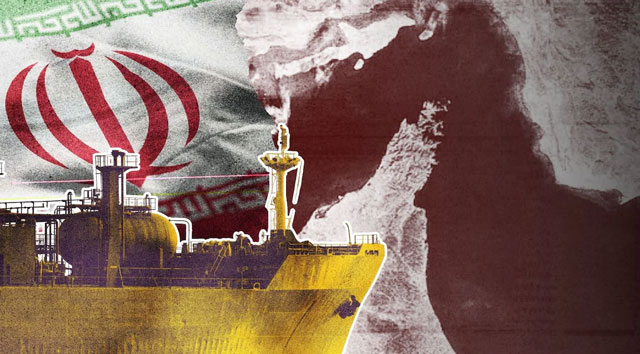
“Any crossing without authorisation is unacceptable and extremely dangerous,” the force said in a statement, while also criticising a new maritime route announced by certain authorities.
The warning followed the movement of a Liberian-flagged oil tanker, Stoic Warrior, which exited the strait on Thursday using a route close to the coast of Oman. The vessel travelled along the UAE and Oman coastline before passing around Oman’s Musandam Peninsula.
The route was reportedly developed by Oman in coordination with the International Maritime Organization, a United Nations agency responsible for regulating shipping.
According to reports, the IRGC is opposed to the new route as it could reduce Tehran’s control over the strategic waterway.
Analysts said Iran has used control over the Strait of Hormuz as a major strategic advantage to pressure rivals and influence global energy markets. Tehran has indicated that even after any agreement with the US, it would not give up its control over the passage.
The Strait of Hormuz, located between Iran and Oman, is one of the world’s most important energy routes, with around 20 per cent of global crude oil and liquefied natural gas shipments passing through it. At its narrowest point, the waterway is around 30 km wide.
Iran’s currently approved route passes through a corridor along its coastline.
A memorandum of understanding signed recently between Tehran and Washington to extend their ceasefire allows commercial ships to pass through the strait without charges for 60 days. However, uncertainty remains over future arrangements after the period ends as both countries continue talks on a permanent settlement.
Iran and Oman had earlier announced plans to study costs related to maritime services for managing the strait. Tehran has described these as service fees rather than tolls.
However, US Secretary of State Marco Rubio has rejected any charges, saying international waterways cannot be controlled by any single country.
“No country on Earth has the right to charge for the use of international waterways,” Rubio said, adding that such a condition would not be accepted in any agreement.
Bahrain’s Foreign Minister Abdullatif bin Rashid Al Zayani welcomed Oman’s announcement of a corridor aimed at ensuring safe passage for vessels through the Strait of Hormuz.