Daijiworld Media Network - Washington
Washington, May 4: Democratic senator Raphael Warnock has strongly criticised a recent Supreme Court of the United States ruling on voting rights, calling it a severe setback for American democracy and warning it could disproportionately affect Black and minority voters.
Speaking in an interview with CBS News, Warnock described the decision as a “massive and devastating blow,” arguing that it undermines decades of progress in protecting voting rights, particularly in southern states with histories of racial discrimination.
The ruling narrows the scope of Section 2 of the Voting Rights Act, making it more difficult to challenge electoral district maps on grounds of racial bias unless intentional discrimination can be proven. Warnock argued that this legal standard fails to reflect the historical reality of voter suppression in the United States.
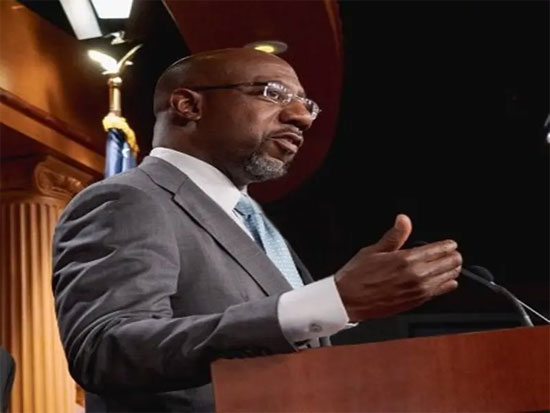
He said that Black Americans were historically disenfranchised through systems that appeared neutral on paper but were discriminatory in practice. He also linked the ruling to earlier court decisions, including the 2013 Shelby County v. Holder case, which weakened federal oversight of election laws.
According to Warnock, since that decision, disparities in voter participation have widened, particularly in states that were previously subject to federal preclearance requirements. He warned that the latest ruling could further accelerate these trends and enable partisan redrawing of electoral districts that dilute minority voting power.
The senator also urged the US Congress to restore key provisions of the 1965 Voting Rights Act, including federal approval for changes to election laws in jurisdictions with a history of discrimination. He compared removing voting protections to abandoning an umbrella during a storm, echoing a well-known judicial dissent.
Warnock further pointed to issues such as polling station closures and voter roll purges, arguing that such measures disproportionately impact Black and minority communities. He warned that the ruling could intensify ongoing partisan gerrymandering battles across the country.
Describing the broader political implications, he said the decision may fuel what he called a “redistricting arms race,” where both major political parties redraw electoral boundaries for advantage.
He also called for a complete ban on partisan gerrymandering, arguing that it distorts democratic representation by allowing politicians to choose voters rather than voters choosing their representatives. While he has introduced related legislation, he acknowledged that it has yet to gain bipartisan support.
The ruling has already prompted several US states to explore redistricting changes ahead of upcoming elections, raising concerns among voting rights advocates about its potential long-term impact on electoral fairness and representation.