Daijiworld Media Network - Tel Aviv
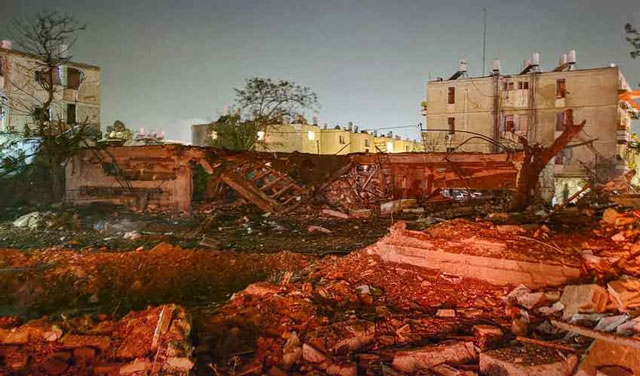
Tel Aviv, Mar 22: More than 100 people were injured after Iranian missile strikes hit southern Israeli cities, including Dimona—home to Israel’s key nuclear facility—marking a sharp escalation in the ongoing conflict.
Israeli emergency services said at least 88 people were wounded in Arad, including 10 in serious condition, while another 39 were injured in Dimona. Among them was a 10-year-old boy reported to be in critical condition after suffering multiple shrapnel wounds.
The strikes come amid the intensifying conflict between Iran and Israel, with Tehran describing the ???? as retaliation for an earlier strike on its Natanz nuclear enrichment complex.
Israeli Prime Minister Benjamin Netanyahu termed it a “difficult evening” and vowed continued military action against Iran.
Officials said Israel’s air defence systems were activated but failed to intercept some incoming missiles. Firefighters reported that at least two ballistic missiles directly struck their targets in Dimona and Arad, causing extensive damage to residential buildings.
The International Atomic Energy Agency said there was no indication of damage to the Shimon Peres Negev Nuclear Research Center in Dimona and no abnormal radiation levels were detected.
IAEA Director General Rafael Grossi called for “maximum military restraint,” especially around nuclear facilities.
Reports indicated multiple impact sites in Dimona, with at least one building collapsing and fires breaking out. Authorities also cancelled school in nearby areas as a precaution.
Earlier in the day, Israel said it had struck a research facility at Tehran’s Malek Ashtar University, allegedly linked to nuclear and missile development. Iran confirmed attacks on its Natanz facility but said there was no radioactive leakage.
The Dimona site has been central to Israel’s nuclear programme since the late 1950s, though the country maintains a policy of ambiguity regarding its nuclear weapons capability.
Analysts say Iran’s latest strikes reflect an “eye-for-an-eye” strategy aimed at restoring deterrence in the region, raising fears of a broader conflict.