Daijiworld Media Network - Riyadh
Riyadh, Mar 19: A coalition of Arab and regional countries has issued a strong condemnation of recent Iranian attacks targeting civilian areas and critical infrastructure, while reaffirming the right of nations to defend themselves under international law.
During a consultative ministerial meeting held in Riyadh on Wednesday, foreign ministers from multiple countries—including Qatar, Bahrain, Egypt, Jordan, Kuwait, Lebanon, Pakistan, Saudi Arabia, Syria, Turkey, United Arab Emirates, and Azerbaijan—voiced concern over escalating instability in the region.
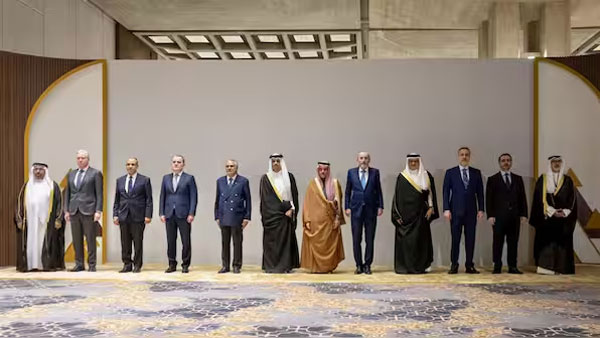
In a joint statement, the ministers denounced what they described as deliberate Iranian missile and drone strikes on residential zones and key civilian infrastructure, including oil installations, desalination plants, airports, diplomatic missions, and housing complexes. They emphasized that such actions cannot be justified under any circumstances.
The statement called on Iran to immediately halt all attacks and adhere to international law, including humanitarian principles and norms of good neighbourly conduct. Particular concern was raised over threats to maritime security, with ministers urging Iran to avoid any disruption to critical shipping routes such as the Strait of Hormuz and Bab al-Mandab.
The ministers also reiterated their backing for Lebanon, stressing the importance of safeguarding its sovereignty, stability, and territorial integrity. They supported efforts by the Lebanese government to ensure that all weapons remain under state control, while also condemning Israel for its ongoing military actions and what they termed expansionist policies in the region.
Referring to United Nations frameworks, the group highlighted the relevance of Article 51 of the UN Charter, which affirms the right to self-defense. They also called on Iran to comply with Security Council Resolution 2817 (2026), which mandates an immediate cessation of hostilities and prohibits support for armed groups operating in neighboring countries.
The statement comes against the backdrop of heightened conflict in West Asia following the US-Israeli strikes on Iran February 2026, which reportedly resulted in the death of Iran’s Supreme Leader Ayatollah Ali Khamenei and several senior military officials. In retaliation, Iran launched a series of drone and missile attacks targeting US and Israeli interests, as well as allied positions across the region.
Concluding the meeting, the ministers pledged continued coordination and consultation to monitor developments and adopt necessary measures to safeguard regional security, stability, and sovereignty while working toward de-escalation through diplomatic means.