Daijiworld Media Network – UAE
United Arab Emirates, Mar 8: Millions of residents across the UAE are awaiting official confirmation of the date for Eid al-Fitr, one of the most important Islamic festivals marking the end of the holy month of Ramadan.
The Sharjah Academy for Astronomy, Space Sciences and Technology, represented by the Sharjah Astronomical Observatory, has issued an early astronomical prediction indicating that Eid Al Fitr in the UAE is likely to fall on March 20, 2026.
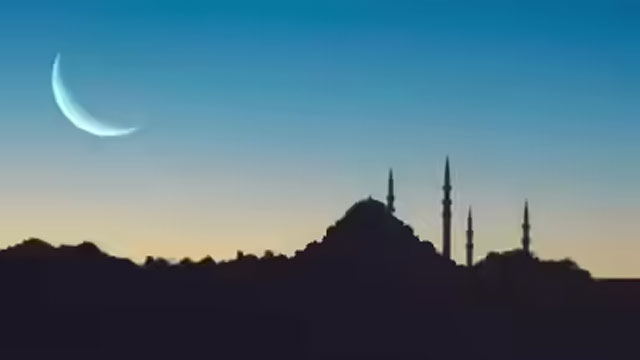
According to the academy, calculations suggest that Ramadan in the Islamic year 1447 AH will complete 30 days, making Friday the first day of the month of Shawwal and the start of Eid celebrations.
Astronomers said that on March 18, which marks the 29th day of Ramadan and the traditional evening for moon sighting, the crescent moon will not be visible in the UAE because it will set before sunset in the western sky.
As a result, Ramadan is expected to continue, with March 19 completing the 30th day of fasting.
The observatory noted that the new moon will occur over Sharjah at 4.24 am UAE time on March 19, 2026. At sunset that day, the crescent moon will be approximately 14 hours and six minutes old, with an angular separation from the sun of 6.5 degrees and an altitude of about six degrees above the western horizon, remaining visible for around 29 minutes after sunset.
Despite these conditions, astronomers said sighting the crescent moon within the UAE will be extremely difficult.
The observatory described the viewing conditions as “critical”, noting that the crescent may not be visible even through telescopes and could only be detected using advanced techniques such as image stacking.
However, some Arab and Islamic countries located further west may have better chances of sighting the crescent due to more favourable geographical and astronomical conditions.
Based on these calculations, the academy said March 20 is likely to mark the beginning of Shawwal and the first day of Eid Al Fitr in the UAE and several other Islamic countries, though the final confirmation will depend on the official moon sighting announcement.