Daijiworld Media Network - Mumbai
Mumbai, Oct 29: Nearly 14 years after four men were murdered at a farmhouse in Chinchavali, the Panvel Additional Sessions Court has acquitted the two surviving accused, Ramdas Govind Patil, 42, and Surendrakumar Rajmani Shukla, 59, citing lack of evidence.
In its judgment, Additional Sessions Judge Santosh R Chavan held that the prosecution had failed to establish the alleged criminal conspiracy, the chain of firearm transfers or the involvement of the two accused in the murders and related offences.
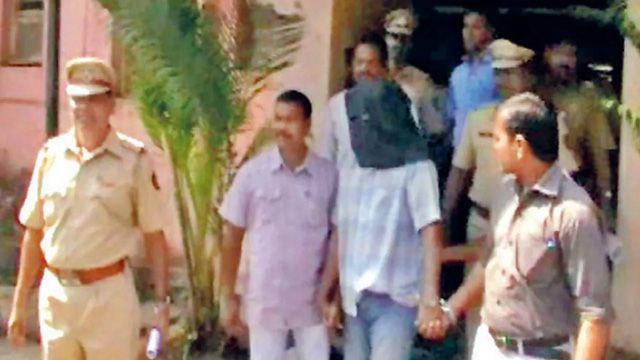
According to the prosecution, complainant Dattatray Nago Patil owned the three-and-a-half-acre Patil Farm in Chinchavali, which was managed by watchman Ladku Durge. On November 10, 2012, Dattatray handed over the keys to his cousin Ramdas Patil for land-related dealings.
Three days later, Dattatray received a call from Ramdas, who handed the phone to an unidentified Marathi-speaking man expressing interest in purchasing the property. When Ramdas’s phone was found switched off the following day, the family sent the watchman’s son, Baliram, to check the farmhouse.
Baliram discovered the bodies, prompting Dattatray’s sons to rush to the spot. Ramdas was found dead outside near parked vehicles, having sustained injuries from stone strikes. Three other men, Balaram Tople, Nitin Joshi and Pritham Gharat, were found dead inside the hall with gunshot wounds to the head.
Investigators alleged that the prime accused, Waghmare, had lured the victims to the farmhouse with promises of a “money-rain” scheme that would multiply an investment of Rs 1 lakh into crores. He allegedly persuaded them to bring large amounts of cash before seizing the money and carrying out the killings.
Police claimed to have recovered Rs 2.99 lakh, clothing, a motorcycle and keys based on a statement attributed to Waghmare. However, the court found that the prosecution had failed to connect the two surviving accused to the alleged fraud or the murders.
A key part of the prosecution’s case concerned the alleged transfer of a country-made pistol among the accused. The state claimed Shukla supplied the weapon to Khutle, who passed it to Ramdas Govind Patil before it reached Waghmare, who allegedly used it in the killings. The prosecution argued that the available evidence established the surviving accused’s role despite Waghmare’s death during the trial.
The defence maintained that there was no evidence linking the surviving accused to the weapon or the murders. After examining the material, the court concluded that the alleged chain of firearm transfers had not been proved and that the prosecution had failed to establish their involvement beyond reasonable doubt.
The prosecution examined three witnesses: complainant Dattatray Patil, who described the farmhouse and the discovery of the bodies; Dr Bhushan Jain, who conducted the post-mortems; and investigating officer Sunil Bajare, who detailed the investigation and seizures.
Medical evidence established that Tople, Joshi and Gharat died from gunshot injuries to the head, while Ramdas Patil died from injuries caused by a stone. The court observed that establishing the homicidal nature of the deaths was insufficient to prove the involvement of the surviving accused.
The court acquitted Patil and Shukla under Section 235(1) of the Code of Criminal Procedure, holding that the charges under the Indian Penal Code, Arms Act and Mumbai Police Act had not been proved against them.
Their bail bonds were cancelled, but both were directed to furnish personal bonds of Rs 50,000 each, along with sureties, under Section 437-A of the CrPC to ensure their appearance before a higher court if required.