Daijiworld Media Network - New Delhi
New Delhi, Sep 13: The Supreme Court has ruled that an electricity demand raised years after the relevant billing period can be barred by the two-year limitation under Section 56(2) of the Electricity Act, 2003, if no bill was issued at the time and the amount was not continuously shown as recoverable arrears in subsequent bills.
A bench of Justices S V Bhatti and N V Anjaria dismissed an appeal filed by Dakshinanchal Vidyut Vitran Nigam Ltd against a decision setting aside a demand of Rs 57.74 lakh raised in 2007 towards minimum consumption guarantee charges for the period from February to September 1998.
In its judgment delivered on September 10, 2026, the court held that the demand was unsustainable both on facts and on limitation.
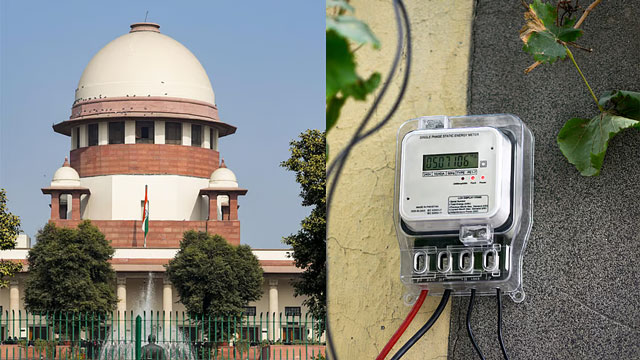
The dispute originated from an agreement executed in 1997. The consumer had applied for a 4,000-KVA load but was initially sanctioned 2,000 KVA. In January 1998, the electricity distribution licensee offered an additional 2,000 KVA. However, the consumer declined the additional load through a letter dated September 14, 1998.
Nearly nine years later, on February 13, 2007, the licensee raised a demand of Rs 57.74 lakh towards minimum consumption guarantee charges for February to September 1998, treating the contracted capacity as 4,000 KVA.
The Electricity Ombudsman subsequently set aside the demand, holding that the consumer had never consented to the additional load and that there was no evidence that the additional supply had actually been released. The Ombudsman also held that the demand was barred under Section 56(2) of the Electricity Act.
The Allahabad High Court's Lucknow Bench upheld the Ombudsman's decision in January 2012, observing that liability would arise only when the agreed quantum of electricity was actually released.
The Supreme Court relied on its earlier judgment in Assistant Engineer (D1), Ajmer Vidyut Vitran Nigam Ltd v. Rahamatullah Khan (2020), and reiterated that an electricity charge becomes “first due” when the licensee issues a bill quantifying the amount payable.
The bench clarified that the two-year limitation under Section 56(2) begins from the date on which the charges first become due.
At the same time, the court noted that the provision does not completely prevent a licensee from raising a supplementary demand after two years. However, disconnection for non-payment cannot be made on the basis of such a delayed demand unless the amount had been continuously shown as arrears in successive bills.
In the present case, no bill had been raised for the disputed period and the amount had never been continuously carried forward as arrears. The demand raised in 2007 was therefore time-barred, the court held.
The court also found that there was no consent or acceptance from the consumer for the additional 2,000-KVA load. In the absence of such consent or evidence that the additional capacity had actually been supplied, the claim for minimum consumption guarantee charges could not be sustained.
The Supreme Court consequently dismissed the appeal filed by Dakshinanchal Vidyut Vitran Nigam Ltd and affirmed the orders passed by the Electricity Ombudsman and the Allahabad High Court.