Daijiworld Media Network – Jerusalem
Jerusalem, Jun 11: Palestinian families in annexed East Jerusalem are facing mounting demolitions and evictions as Israeli authorities continue expanding settlements and tightening housing restrictions, according to residents and rights groups.
One of the affected residents, Fakhri Abu Diab, has been fighting for decades to save his home in the al-Bustan area of Silwan. However, his house was demolished two years ago, leaving him and his wife to live in a mobile structure amid the rubble of their former residence.
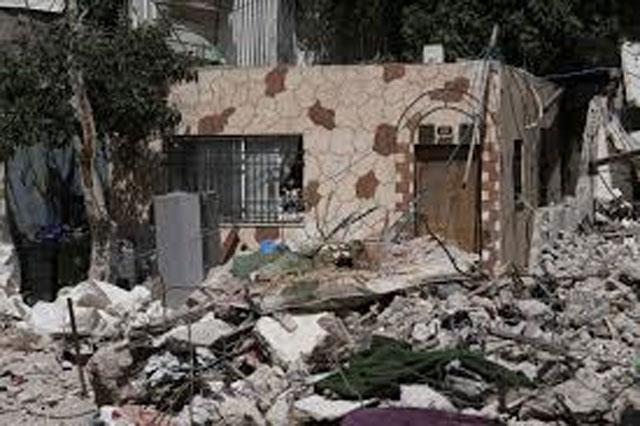
Abu Diab said he is now surrounded by fragments of his past, including personal belongings and remnants of his home, describing the situation as an attempt to erase his memories and identity.
Rights groups say demolition activity in East Jerusalem has intensified in recent years, with more than 260 structures demolished in 2025 alone — a sharp rise compared to previous years. So far this year, at least 116 demolitions have been recorded.
According to Israeli and Palestinian rights organisations, including Ir Amim and Bimkom, Palestinians in East Jerusalem face severe restrictions on construction permits, while Jewish settlement development continues to expand. Data cited by rights groups suggests thousands of building permits are approved for Jewish residents annually, compared to only a few hundred for Palestinians.
Residents say building without permits leads to demolition orders, leaving many families in legal and financial uncertainty. Authorities argue that structures are often built illegally in non-zoned residential areas and say alternative housing solutions have been proposed.
In nearby Silwan neighbourhoods such as Batan al-Hawah, multiple Palestinian families have also been evicted following long-running legal disputes. Some residents claim they are being displaced despite presenting historical ownership documents, while settler organisations assert property claims dating back decades.
Israeli settler groups say their actions are aimed at restoring historical property rights, while critics accuse them of working in coordination with state policies that favour Jewish settlement expansion in East Jerusalem.
The issue remains central to the broader Israeli-Palestinian conflict, with East Jerusalem — home to key Jewish, Christian and Muslim religious sites — considered a focal point of competing national and historical claims.