Daijiworld Media Network - Addis Ababa
Addis Ababa, May 16: The Africa Centres for Disease Control and Prevention (Africa Centres for Disease Control and Prevention) has warned that several African countries remain underprepared to detect and respond to potential hantavirus threats, highlighting serious gaps in surveillance and early warning systems across the continent.
Speaking during an online briefing, Yap Boum II, head of emergency preparedness and response at the Africa CDC, said a recent assessment revealed that around 40% of African countries lack functional surveillance systems capable of early detection of suspected hantavirus cases. He noted that this leaves a significant portion of the continent vulnerable to undetected outbreaks.
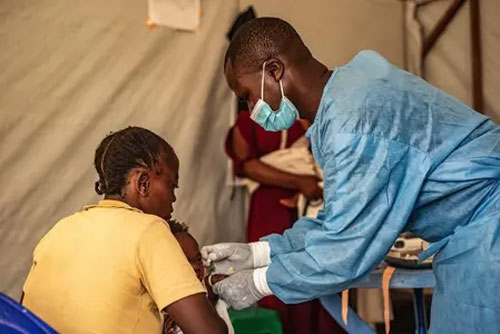
Health officials also stressed the importance of strengthening response mechanisms. Tolbert Nyenswah, director of pandemic prevention, preparedness and response at the Africa CDC, emphasised the need for early case recognition and strict implementation of a 45-day monitoring protocol for individuals exposed or at risk. He also called for stronger infection prevention and control measures to reduce transmission risks.
The agency said it is working to improve laboratory capacity across member states, focusing on molecular diagnostic techniques to enable faster and more accurate detection of hantavirus infections. The virus, which is carried by rodents, can spread to humans through contact with infected animals or exposure to their droppings, urine, or saliva, and can cause severe illness.
Meanwhile, health authorities also reported a separate public health emergency involving Ebola virus disease in eastern Democratic Republic of the Congo (DRC). According to Africa CDC updates, hundreds of suspected cases have been recorded in Ituri Province, with preliminary testing confirming infections in 13 of 20 samples.
The outbreak has reportedly resulted in about 246 suspected cases and 65 deaths, mainly in Mongwalu and Rwampara, with additional suspected cases emerging in Bunia, raising concerns about further spread in the region.