Daijiworld Media Network - New Delhi
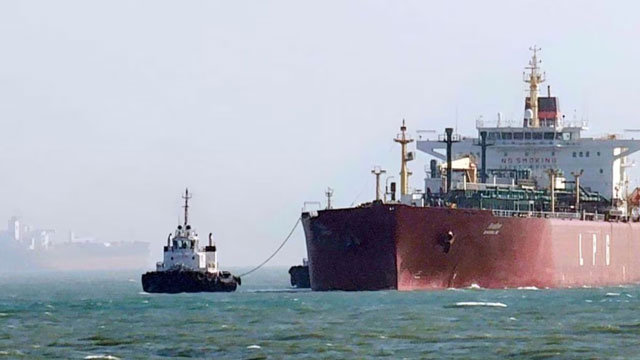
New Delhi, Apr 3: A US-sanctioned tanker carrying Iranian crude oil has rerouted mid-voyage from its previously indicated destination of India to China, in a move that underscores growing uncertainties in oil trade amid financial constraints.
The Aframax tanker Ping Shun, sanctioned by the United States in 2025, had earlier signalled Vadinar in Gujarat as its destination. However, according to ship-tracking firm Kpler, it is now indicating Dongying in China instead.
There is no confirmation whether the updated destination, shown through the ship’s Automatic Identification System (AIS), will remain final, as such signals can change during transit.
Sumit Ritolia, Lead Research Analyst at Kpler, said the vessel had been en route to India for the past three days before dropping the destination near arrival. He noted that such changes, though not uncommon for Iranian crude shipments, reflect increasing sensitivity of trade flows to financial terms.
The cargo aboard Ping Shun would have marked India’s first purchase of Iranian crude since 2019. Indian refiners have recently been exploring opportunities to procure limited volumes following a temporary sanctions waiver by Washington.
According to Ritolia, the diversion appears linked to payment-related issues, with sellers tightening terms and moving away from earlier credit windows of 30-60 days towards upfront or near-term settlement.
Vadinar houses a 20-million-tonne-per-year refinery operated by Nayara Energy, backed by Russian energy major Rosneft.
“If payment issues are resolved, the cargo could still head to India. However, the episode highlights how commercial terms are becoming as critical as logistics in determining Iranian crude flows,” Ritolia said.
India’s oil ministry has maintained that any decision on resuming imports will depend on techno-commercial feasibility.
India was once a major importer of Iranian oil, with shipments accounting for up to 11.5 per cent of total imports. In 2018, India imported about 518,000 barrels per day (bpd), which fell to 268,000 bpd between January and May 2019 after US waivers were granted. Imports ceased entirely from May 2019 following tightening sanctions.
Last month, the US allowed a 30-day waiver for the purchase of Iranian oil stored at sea, a move aimed at easing global oil prices amid the ongoing conflict involving Iran and Israel. The waiver is set to expire on April 19.
The Ping Shun is estimated to be carrying around 600,000 barrels of crude loaded from Kharg Island in early March, with an earlier expected arrival at Vadinar on April 4.
However, payment challenges persist as Iran remains cut off from SWIFT, restricting its ability to receive international payments. Previous transactions were routed through alternative banking channels, which are no longer viable.
Iran’s exclusion from SWIFT, first imposed in 2012 and reinforced in 2018, continues to significantly impact its oil trade and access to global financial systems.