Daijiworld Media Network - New Delhi
New Delhi, Mar 17: Ladakh activist Sonam Wangchuk on Tuesday said the government’s willingness to engage in “constructive and meaningful dialogue” was the central objective of his movement.
Addressing the media in his first public remarks after being released from detention under the National Security Act, Wangchuk described the offer for talks as a positive step and said it aligned with what he and his supporters had sought from the beginning.
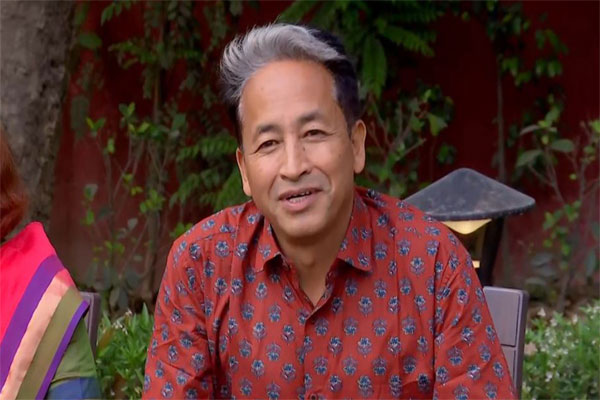
“As I said, they have offered constructive, meaningful dialogue. Actually, this is all that we were struggling for — to start dialogue,” he said.
Referring to the protest methods he adopted during the movement, Wangchuk said hunger strikes were never his preferred approach but were undertaken out of necessity. “I have always said that I don’t want to do a hunger strike. Who cares if one is hungry for weeks? I never want to fast. I do it out of compulsion,” he said.
He added that legal proceedings and public scrutiny gradually brought clarity to the developments surrounding the protests in Ladakh.
“What happened in Ladakh happened because of them. But the way the curtains kept opening one after another in the Supreme Court of India, the truth and falsehood started becoming clear,” Wangchuk said.
The activist had been detained under the National Security Act and lodged in Jodhpur Central Jail. Speaking about his time in custody, he described the experience as one of extreme isolation.
“In jail, it is believed that detainees are the most dangerous. It was total isolation — so isolated that I did not see any face without a uniform,” he said.
Wangchuk also expressed gratitude to his legal team, noting that their pro bono support strengthened his confidence in the judicial process.
“Thanks to our amazing team of lawyers who have been supporting us pro bono as their social responsibility, we were sure of a victory in the court,” he said.
He further thanked supporters across the country for their solidarity, saying the widespread support played a key role in bringing attention to the issue.
Meanwhile, his wife Gitanjali J. Angmo urged people to move beyond the narrative of victory or defeat and focus instead on dialogue.
“We should move ahead of the talk of winning and losing. This is not about bowing down to anyone,” she said, emphasising that perseverance and truth ultimately lead to positive outcomes.
Angmo expressed hope that discussions with authorities would soon begin and lead to a lasting solution for Ladakh’s governance and development concerns.
Wangchuk was released from Jodhpur Central Jail on Saturday after the Centre revoked his detention under the National Security Act, raising hopes for renewed dialogue on issues related to Ladakh’s governance, environment, and development.