Daijiworld Media Network - New Delhi
New Delhi, Mar 17: Union Minister of State for Social Justice and Empowerment Ramdas Athawale on Tuesday said that Census 2027 India will provide a crucial opportunity to recognise all 21 categories of disabilities through improved enumeration and better data collection.
Speaking at the launch of “Beyond the Visible: A Handbook on Disability Inclusion for Parliamentarians”, India’s first handbook on disability issues designed specifically for lawmakers, Athawale noted that the upcoming census will be the first such exercise after the implementation of the Rights of Persons with Disabilities Act 2016.
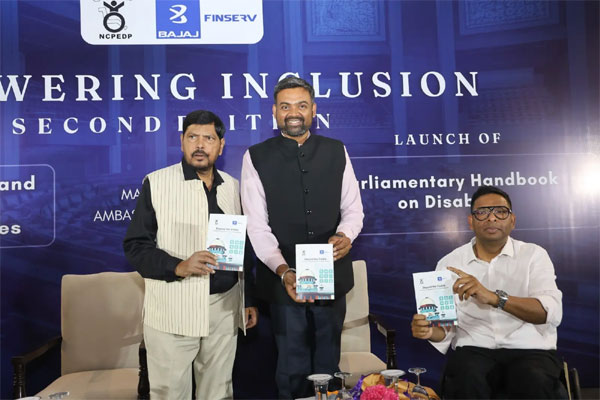
The handbook was prepared by the National Centre for Promotion of Employment for Disabled People (NCPEDP). According to the minister, collecting accurate and detailed data will help the Union government design more targeted welfare programmes and policies for persons with disabilities across the country.
The event also included a panel discussion on inclusive healthcare and political participation. Among those present were E. T. Mohammed Basheer, Lok Sabha MP from the Indian Union Muslim League and member of the Central Advisory Board on Disability; Eatala Rajender, BJP Lok Sabha MP; Fauzia Khan, Rajya Sabha MP from the Nationalist Congress Party; Guru Prakash Paswan, BJP national spokesperson; Neha Joshi, vice-president of the Bharatiya Janata Yuva Morcha; and Anish Gawande, national spokesperson of the Nationalist Congress Party Sharadchandra Pawar.
Arman Ali, Executive Director of NCPEDP, said the handbook aims to ensure that Parliamentarians actively address the barriers faced by persons with disabilities and translate the provisions of the RPwD Act into meaningful legislative action.
Athawale congratulated the NCPEDP team, the National Disability Network, and Bajaj Finserv’s CSR initiative for contributing to the publication, stating that the handbook would guide lawmakers in strengthening inclusive policymaking.
The minister also highlighted several flagship initiatives launched under the leadership of Narendra Modi, including the Accessible India Campaign, the Unique Disability ID (UDID) portal, skill development programmes under PM-DAKSH, and healthcare initiatives linked to Ayushman Bharat.
The Rights of Persons with Disabilities Act 2016 significantly expanded the recognition of disabilities in India to 21 categories and shifted the approach from welfare-based assistance to a rights-based framework, aligning India with the United Nations’ United Nations Convention on the Rights of Persons with Disabilities (UNCRPD).
Ali also raised concerns about healthcare access for persons with disabilities, citing an NCPEDP survey that found more than 80 per cent of such individuals lack health insurance due to high premiums, exclusion of disability-related treatments, and denial of coverage.
He said inclusive healthcare initiatives such as Ayushman Bharat should explicitly address the needs of persons with disabilities by covering assistive devices, rehabilitation services, and long-term disability-related care.
Athawale said the handbook launch and accompanying discussions would help bring disability rights and inclusive policymaking into mainstream parliamentary discourse, calling the initiative an important step toward building an inclusive and developed India.
Reaffirming the government’s guiding vision of “Sabka Saath, Sabka Vikas, Sabka Vishwas,” the minister said efforts would continue to ensure that no citizen is left behind.
Speaking at the event, Jebi Mather, Rajya Sabha MP from the Indian National Congress, said the handbook would help lawmakers become more sensitive in their language and approach toward persons with disabilities and guide them in raising relevant issues in Parliament, including during Zero Hour.