Daijiworld Media Network - Guwahati
Guwahati, Mar 16: Bee envenomation, long considered a minor issue, is emerging as a serious public health concern in Assam, with mass attacks by giant honey bees becoming increasingly frequent and sometimes fatal, a medical expert has warned.
Dr Surajit Giri, a snakebite specialist associated with the ICMR Zero Snakebite Death Project, said healthcare workers in the state are witnessing a worrying rise in such incidents.
“Until recently such cases were rare. A massive bee attack can cause instant death. Although Assam does not have accurate statistics, various sources suggest that approximately 15–20 people die every year in the state from such incidents. Importantly, many of these deaths are preventable — if both the public and healthcare providers remain alert and informed,” Dr Giri said.
He compared the situation with snakebite, another long-neglected health issue that was once seen primarily as a problem affecting poor farmers and daily wage labourers. According to him, changing environmental conditions have now spread the risk of bee attacks across different socioeconomic groups.
Dr Giri explained that the danger from bee attacks can escalate rapidly. Severe allergic reactions may cause sudden collapse, while complications such as kidney failure can develop within 48 to 72 hours if treatment is delayed.
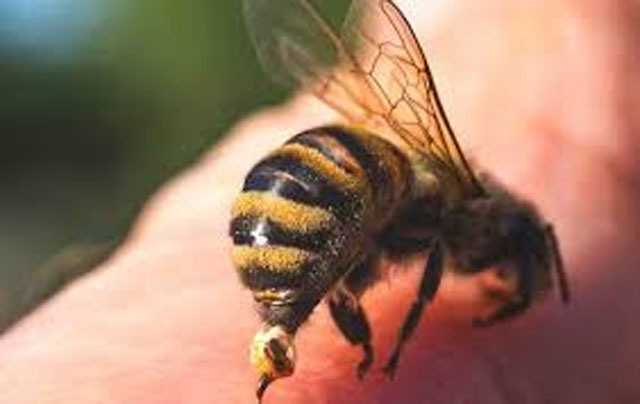
He also pointed out that stingers left in the skin continue to release venom slowly even after the attack ends, which can prove fatal for people with allergic reactions.
“It is important that doctors, especially those working in rural areas, are well aware of the medications required for treating bee sting patients,” he said.
The expert also shared practical safety measures for people caught in a bee attack. He advised against jumping into water bodies for protection, as a person cannot remain submerged long enough and bees may continue hovering above the surface.
Instead, he suggested seeking shelter in dense vegetation where possible.
To remove bee stingers, Dr Giri recommended gently scraping them out with fingernails in the opposite direction of entry. He warned against squeezing or forcefully pulling the stingers, as this could release more venom.
He further advised washing the affected area with soap and water, seeking immediate medical care, and remaining under observation for at least 24 hours, since serious symptoms may develop later.