Daijiworld Media Network - New Delhi
New Delhi, Mar 8: India has significantly expanded its digital infrastructure, connecting more than 2.15 lac Gram Panchayats through the government’s flagship rural broadband initiative BharatNet, according to an official statement released on Sunday.
The expansion is part of the government’s larger push to strengthen digital connectivity through optical fibre networks, widespread 5G deployment, and enhanced digital public infrastructure across the country.
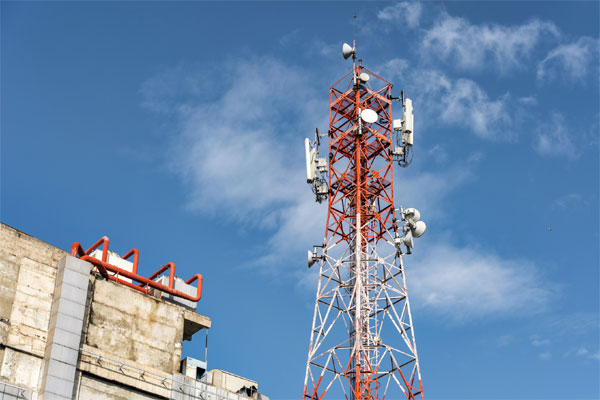
Nationwide optical fibre deployment has grown sharply from 19.35 lakh route kilometres in 2019 to 42.36 lakh route kilometres in 2025. Meanwhile, 5G services now reach 99.9 per cent of districts in India, supported by more than 5.18 lakh base transceiver stations as of December 2025.
Public internet access has also expanded through the Prime Minister Wi Fi Access Network Interface (PM WANI) initiative. As of February 2026, the programme has enabled 4,09,111 Wi-Fi hotspots with support from 207 Public Data Office (PDO) aggregators and 113 application providers. The initiative aims to provide affordable, high-speed internet connectivity, particularly in rural and remote areas.
The government said that combining last-mile connectivity with digital literacy programmes and affordable internet services is helping strengthen rural livelihoods and improve the delivery of welfare schemes. These efforts also enable greater participation of rural communities in India’s digital economy.
India’s cloud and data centre infrastructure is also expanding rapidly to support digital governance and emerging technologies such as artificial intelligence. Current data centre capacity stands at around 1,280 megawatts and is projected to increase four to five times by 2030.
Under the government’s cloud initiative MeghRaj (GI Cloud), more than 2,170 ministries and departments are now hosting applications on secure and scalable government cloud platforms.
The government also highlighted a sharp drop in data costs, which have fallen from Rs 269 per GB in 2014 to around Rs 8–10 per GB in 2025–26, making India one of the most affordable data markets globally. Broadband subscriptions crossed 100 crore in November 2025, a sixfold increase from 13.15 crore a decade earlier.
Meanwhile, the National Supercomputing Mission has deployed 38 supercomputers with a combined capacity of 44 petaflops across research institutions nationwide. The initiative aims to expand high-performance computing infrastructure beyond major metropolitan centres and support research in fields such as artificial intelligence, climate modelling, biotechnology, and advanced manufacturing.
The government also pointed to the role of digital public infrastructure platforms such as Aadhaar, Unified Payments Interface (UPI), and DigiLocker. These systems, it said, are transforming internet access into practical social and economic benefits by enabling seamless service delivery, improving financial inclusion, and strengthening secure digital interactions across the country.