Media Release
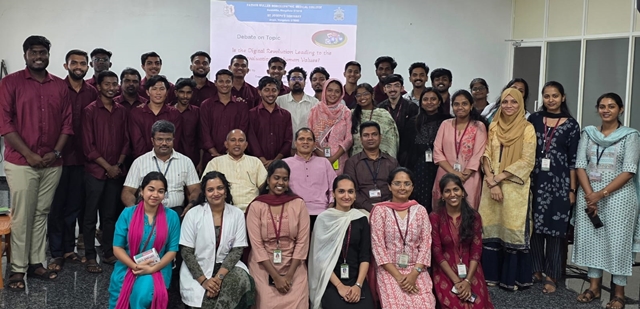
Mangaluru, Feb 26: St Joseph’s Institute of Philosophy (SJIP), in collaboration with Father Muller Homeopathic Medical College (FMHMC), organized a joint debate on the theme, “Is the Digital Revolution Leading to the Devaluation of Human Values?” The programme was held on February 26 at the Father Muller Seminar Hall, Deralakatte, Mangaluru. The event brought together students of philosophy and medicine for an engaging academic exchange on a topic of contemporary relevance.
The dignitaries present for the occasion included Rev. Fr Donald Nelesh Crasta, administrator of Father Muller Homeopathic Medical College; Rev Dr Rajesh Rosario, rector of St Joseph’s Seminary; Dr Sebastian and Fr Nelson Almeida, the convenors of the event. Their presence underscored the significance of the collaboration and the shared commitment to meaningful academic dialogue.
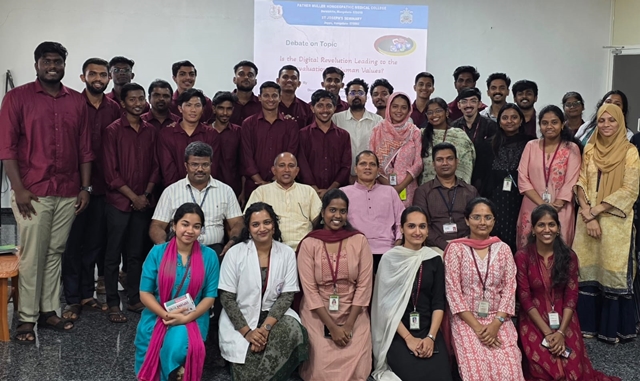
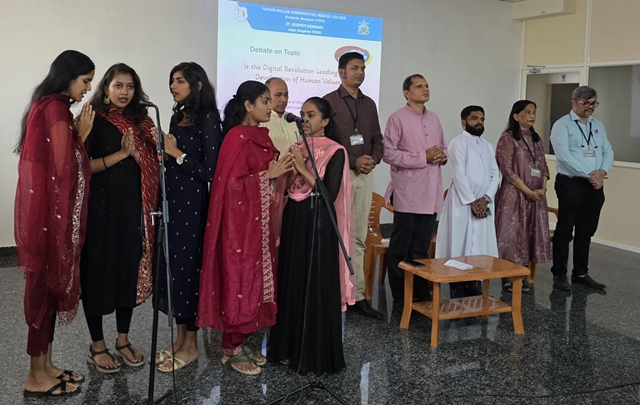
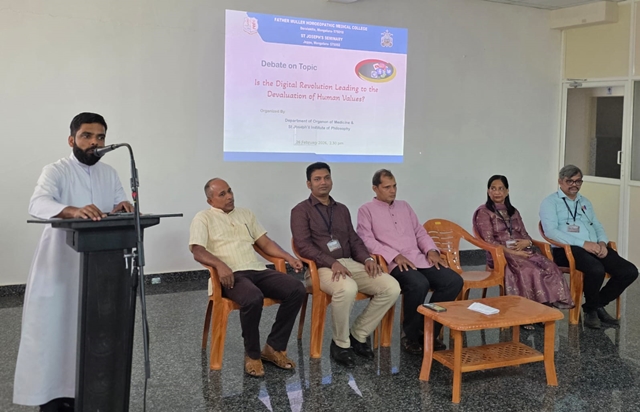
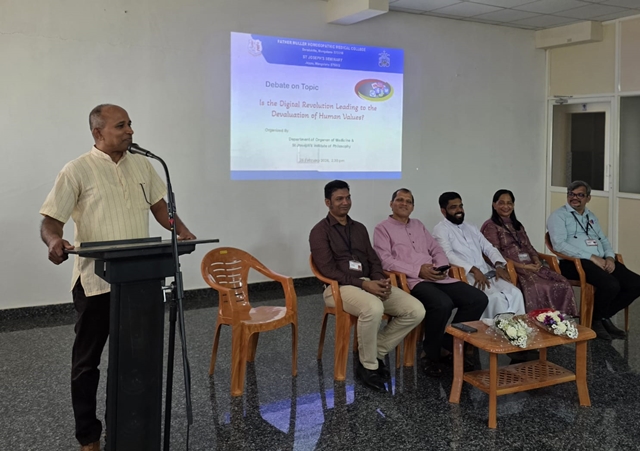
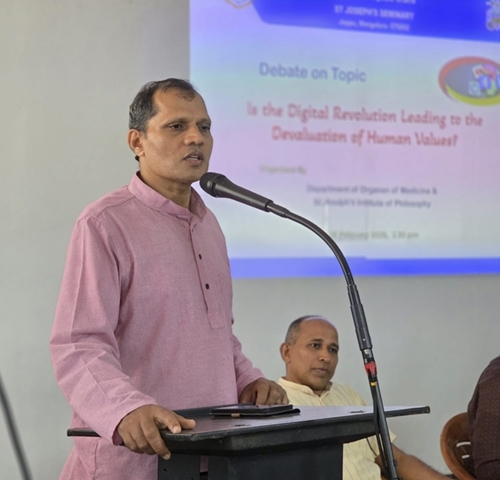
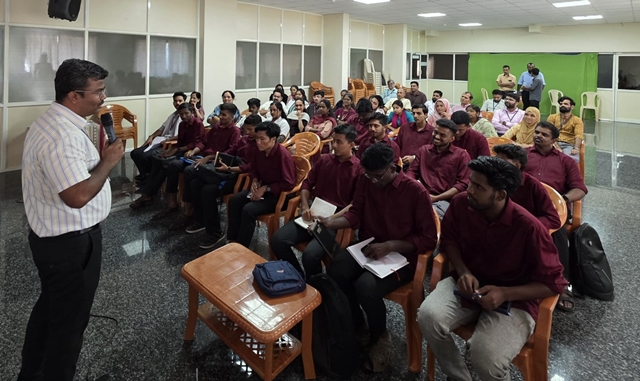
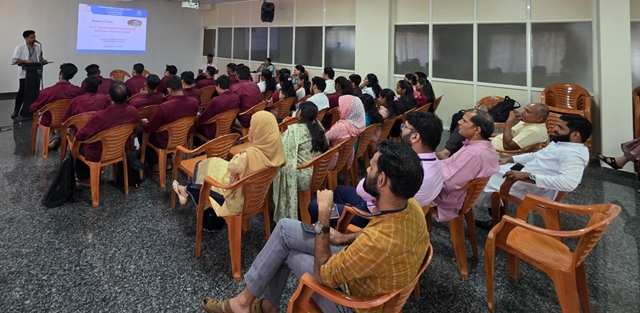
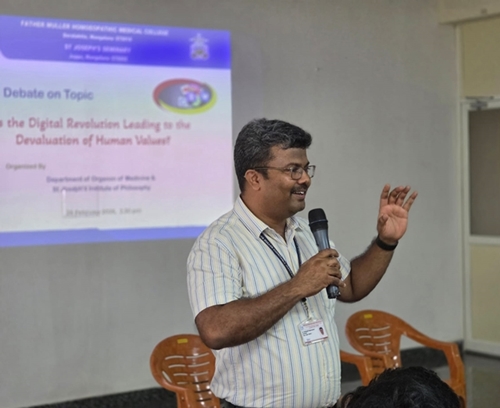
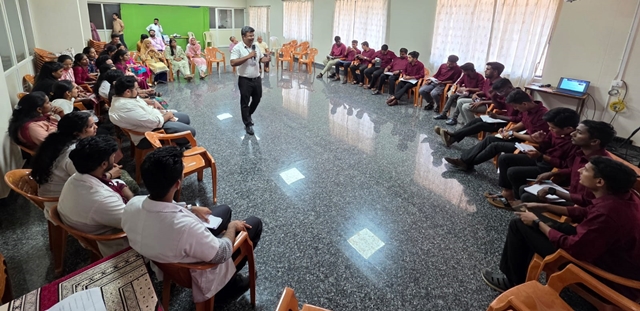
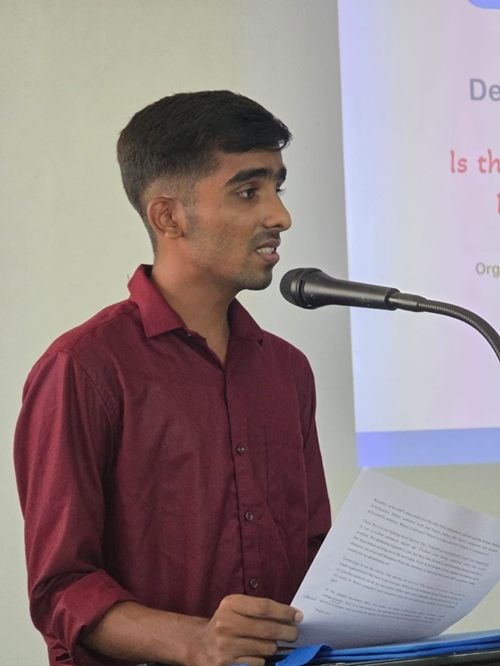
The programme began with a prayer song led by the students of Father Muller Homeopathic Medical College. Fr Donald Nelesh Crasta then delivered the welcome address, expressing his appreciation for the joint initiative and emphasizing the importance of examining contemporary concerns through responsible and thoughtful discussion. The debate was moderated by Dr R C Rajendra, professor in the Department of Practice of Medicine, who guided the proceedings with balance and clarity. The formal debate commenced with introductory remarks from representatives of both institutions, each presenting their initial stand on the theme. These opening reflections set the direction for the structured exchange of arguments that followed.
The philosophy students engaged the topic through ethical and philosophical reflection, raising existential concerns and drawing from classical as well as contemporary thinkers to support their perspectives. They examined how the digital revolution influences human dignity, freedom and moral responsibility. The medical students, in turn, contributed from lived experience, referring to practical situations encountered in their academic and clinical training. By presenting concrete examples and observations, they highlighted the impact of digital advancements on patient care, communication and human relationships in healthcare settings.
The discussion was marked by active participation and respectful engagement from both sides. More than a formal exchange of arguments, it became a space that opened an opportunity for deeper personal and intellectual reflection, encouraging participants to reconsider how the digital revolution shapes not only society at large but also their own responsibilities and value systems.
The programme concluded on a positive note, marking a meaningful step toward continued collaboration between the two institutions. It also stood as a significant moment in which students of the seminary stepped beyond the seminary setting into a wider academic space, engaging with another professional field and broadening their perspectives through shared learning.