Daijiworld Media Network – New Delhi
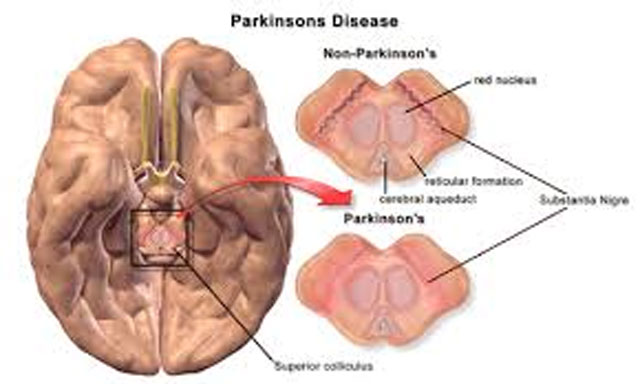
New Delhi, Feb 12: Parkinson’s disease is widely known for causing tremors and difficulty in walking. However, scientists say the disorder goes far beyond movement problems, affecting sleep, digestion, smell, blood pressure and even thinking — possibly due to disruption in a crucial brain network that connects the body and mind.
A new study published in the journal Nature has identified disturbances in what researchers call the somato-cognitive action network (SCAN), a brain system that links movement, emotion and cognition.
“It almost feels like a tunnel is jammed, so no traffic can go normally,” said Hesheng Liu, a brain scientist at Changping Laboratory and Peking University in Beijing, and one of the study’s authors.
The findings add to growing evidence that Parkinson’s is a network disorder rather than a condition limited to brain regions controlling movement. Peter Strick, professor and chair of neurobiology at the University of Pittsburgh, who was not involved in the research, said the results align with the evolving understanding of the disease.
“In the past, people thought of Parkinson’s disease as the classic movement disorder. But it’s clear now that multiple systems are involved,” Strick noted.
Parkinson’s affects nearly one million people in the United States alone. While tremors, slurred speech and shuffling gait are common symptoms, patients frequently report lesser-known issues such as chronic constipation, loss of smell, sleep disturbances, fatigue and memory lapses.
Researchers say these varied symptoms have long puzzled doctors. For instance, some patients who struggle to stand may suddenly leap into action during an emergency. Others who can walk normally may “freeze” if they attempt to hold a conversation simultaneously.
“So you know that their movement problems are not simply related to their motor circuits,” Liu explained, pointing instead to the involvement of circuits responsible for thinking and emotion.
In 2023, researchers at WashU Medicine in St. Louis identified the SCAN network, believed to connect movement and cognition. Liu’s team examined MRI data from over 800 brains to compare SCAN activity in healthy individuals and Parkinson’s patients.
They discovered abnormally strong connections between the SCAN network and brain regions affected by Parkinson’s. Rather than improving communication, these heightened connections appeared to create a “traffic jam,” preventing normal signal flow.
The study also explored how treatments influence the SCAN network. Patients undergoing deep brain stimulation (DBS) — a therapy that delivers electrical pulses to targeted brain areas — showed immediate reduction in abnormal connectivity when the device was activated.
“When the stimulator is turned on, the connectivity was immediately lowered,” Liu said, allowing brain signals to move more normally.
Similar effects were observed with other therapies, including levodopa medication, transcranial magnetic stimulation and focused ultrasound stimulation.
“All these effective treatments are actually acting on this same circuitry, and the effect is remarkably identical,” Liu added.
The findings may also shed light on symptoms that are often misunderstood. Strick recalled a patient whose sudden blood pressure drops caused him to fall unexpectedly.
“People thought he was a drunk,” Strick said, noting that the man felt relieved when he received a medical diagnosis explaining his condition.
Researchers say this may occur because the SCAN network includes brain regions that regulate involuntary functions such as heart rate, digestion and blood pressure. It also connects areas involved in REM sleep and certain types of memory and thinking.
Current treatments primarily target motor symptoms and often do not address non-motor complications. However, scientists believe that better understanding of the SCAN network could pave the way for therapies aimed at these overlooked aspects of the disease.
The study marks another step in redefining Parkinson’s — not merely as a movement disorder, but as a complex condition affecting interconnected brain systems.