Daijiworld Media Network - Mumbai
Mumbai, Feb 9: Indian home remedies continue to find strong endorsement, even among celebrities, with desi ghee once again in the spotlight. Actress Aditi Rao Hydari recently shared her fondness for ghee on comedian Kapil Sharma’s Netflix show, saying, “I have a bowl of it. India’s home remedies are the best.” Judge Archana Puran Singh echoed the sentiment, asserting that desi ghee has been unfairly blamed for weight gain despite its health benefits.
Joining the conversation, co-judge Navjot Singh Sidhu advocated starting the day with ghee, claiming it helps the body burn fat when consumed in the morning, especially when paired with turmeric. He contrasted this with sugar-laden tea, which he said triggers cravings for heavier foods later in the day.
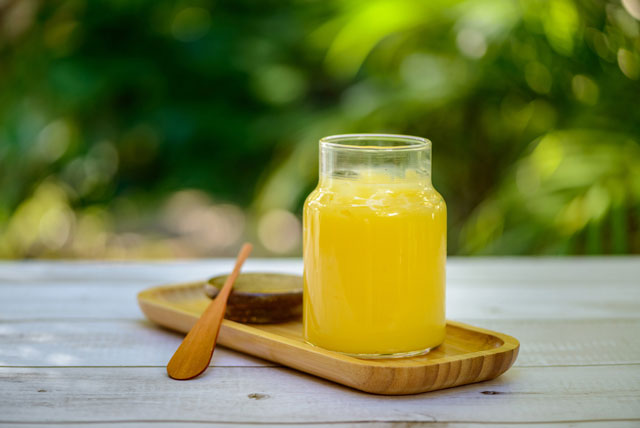
To separate myth from fact, dietitian Amreen Sheikh, chief dietitian at KIMS Hospitals, Thane, said ghee has long been misunderstood. She clarified that weight gain does not occur due to a single food item but from excess calorie intake and an imbalanced diet. “When used in small, controlled amounts, ghee does not automatically cause weight gain and can actually support digestion and satiety,” she said.
Sheikh explained that ghee’s bad reputation largely stems from its excessive use alongside heavy, refined meals and sedentary lifestyles. Being calorie-dense, overconsumption can add up quickly, but moderation makes all the difference. She noted that ghee contains fat-soluble vitamins A, D, E and K, along with beneficial short-chain fatty acids like butyrate, which supports gut health. It is also lactose- and casein-free, making it easier to digest for many people compared to butter.
According to Sheikh, ghee helps people feel full sooner and stay satisfied longer, which may reduce mindless snacking and sugar cravings. Its ability to enhance flavour can also make healthy meals more enjoyable and sustainable.
On quantity, she advised that one to two teaspoons per day is sufficient for most healthy adults, including ghee used in cooking. Measuring intake, rather than using it freely, is crucial.
For individuals with high cholesterol or heart disease, Sheikh cautioned that ghee should be consumed occasionally and in small portions, as part of a diet rich in vegetables, fibre and unsaturated fats.
Summing up, she warned against the assumption that “natural” foods can be consumed without limits. “Ghee can be beneficial, but only when used thoughtfully. Balance, portion control and overall diet quality matter more than any single ingredient,” she said.