Daijiworld Media Network - New Delhi
New Delhi, Feb 7: As tuberculosis continues to claim more lives than any other infectious disease worldwide, researchers are turning to artificial intelligence to bridge long-standing gaps in detection, particularly in underserved and remote regions. A new study suggests that AI-enabled digital stethoscopes could significantly strengthen TB screening efforts where traditional tools fall short.
In a commentary published in Med (Cell Press), international experts argue that combining stethoscopes with digital technology and artificial intelligence offers a practical and affordable alternative to existing screening methods, which often struggle with under-detection, high costs, and limited accessibility.
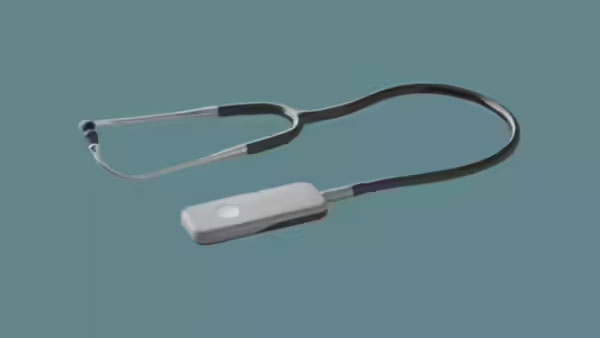
The researchers point out that AI-powered digital stethoscopes have already shown encouraging accuracy in identifying lung and heart abnormalities, with early studies indicating their potential usefulness in detecting tuberculosis. However, they stress that wider training and validation across diverse, high-burden settings will be crucial to fully assess the technology’s impact.
Despite progress in diagnostics, the World Health Organization estimates that around 2.7 million TB cases are still missed each year. Conventional symptom-based screening frequently fails to identify people with asymptomatic or subclinical TB, allowing the disease to spread undetected. While the WHO has endorsed AI-based computer-aided detection software and portable X-ray systems, their high costs, infrastructure needs, and concerns around radiation exposure—especially in primary care and among pregnant women—limit their reach.
Against this backdrop, AI-driven analysis of sound is gaining attention. By interpreting subtle acoustic markers that the human ear may overlook, artificial intelligence can analyse cough patterns and breath sounds captured through lung auscultation. This opens up new possibilities for screening without reliance on imaging.
Evidence from studies conducted in TB high-burden countries such as India, Peru, South Africa, Uganda, and Vietnam indicates that AI-assisted auscultation could serve as an effective screening and triage tool. Researchers believe this approach could complement—or in some cases replace—radiography-based screening, particularly in resource-limited settings.
Experts say AI-enabled digital stethoscopes hold promise as a scalable, low-cost, and patient-friendly solution that could expand access to TB screening and help close the gap in undiagnosed cases. If deployed widely, the technology could play a key role in accelerating progress toward global TB detection and elimination goals.