Daijiworld Media Network - Yangon
Yangon, Dec 26: Myanmar will hold the first phase of its general election on Sunday, marking the country’s first vote in five years, even as critics warn that the exercise will neither restore democracy nor bring an end to the devastating civil war unleashed by the 2021 military coup.
The military regime has projected the polls as a return to multi-party democracy, but opposition groups and rights organisations say the vote is designed to provide a veneer of legitimacy to continued army rule under Senior General Min Aung Hlaing, who seized power after overthrowing the elected government of Aung San Suu Kyi four years ago.
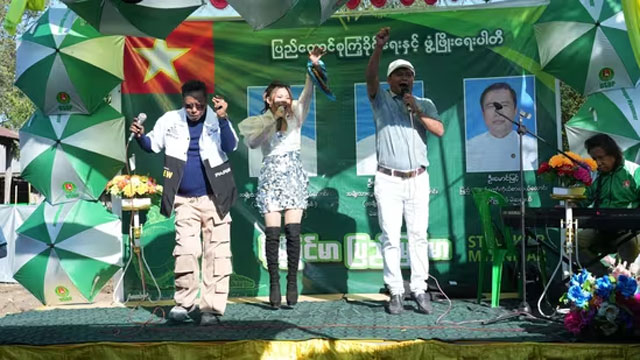
The coup triggered widespread resistance that has since escalated into a nationwide conflict, severely complicating election preparations in many regions. Voting will be conducted in three phases — on Sunday, January 11, and January 25.
On Sunday, polling will take place in 102 of Myanmar’s 330 townships. However, 65 townships will see no voting due to ongoing clashes between the military, ethnic armed groups and resistance forces.
Human rights groups and political analysts have dismissed the polls as neither free nor fair, pointing out that parties which won decisively in the 2020 elections are absent.
“These elections are not credible at all,” said Richard Horsey of the International Crisis Group, noting that the process is being overseen by the same military that orchestrated the coup. “None of the parties that performed well in the last election are participating.”
Horsey said the military’s strategy appears aimed at securing a landslide victory for its proxy, the Union Solidarity and Development Party (USDP), allowing a transition from direct military rule to a civilian-led government dominated by the army.
Such a move could help the junta claim progress under the ASEAN peace proposal, which calls for inclusive dialogue to resolve the crisis, while also enabling neighbouring countries such as China, India and Thailand to continue engagement with the regime in the name of stability.
Myanmar’s former leader Aung San Suu Kyi, now 80, and her National League for Democracy (NLD) are not participating. Suu Kyi is serving a 27-year prison sentence on charges widely viewed as politically motivated, while her party was dissolved after refusing to register under new military-imposed rules.
Several other parties have boycotted the election or declined to contest, citing unfair conditions. Opposition groups have also urged voters to stay away from the polls.
Though 57 parties have fielded candidates, most are contesting only in limited regions. Just six parties are running nationwide. In total, nearly 5,000 candidates are competing for over 1,100 seats in the national and regional legislatures, though fewer seats will actually be filled due to security-related exclusions.
An Election Protection Law enacted this year imposes severe penalties for criticism of the polls. More than 200 people have been charged in recent months for distributing leaflets or expressing dissent online.
Analysts say the conditions strongly favour the USDP, raising the likelihood that Min Aung Hlaing could assume the presidency following the elections.
Humanitarian Crisis Deepens
The human toll of Myanmar’s conflict remains severe. According to the Assistance Association for Political Prisoners, more than 22,000 people are currently detained for political reasons, while over 7,600 civilians have been killed by security forces since the coup.
The fighting has displaced more than 3.6 million people, creating a deepening humanitarian crisis.
The UN Human Rights Office has warned of intensified repression and intimidation ahead of the polls, stating that civilians face threats from both military authorities and armed opposition groups regarding participation.
Amnesty International researcher Joe Freeman said many fear the elections will only entrench the power of those responsible for years of abuses.
Horsey warned that rather than easing tensions, the elections could trigger increased violence, as resistance forces seek to demonstrate that the military still lacks popular legitimacy.