Daijiworld Media Network - New Delhi
New Delhi, Oct 23: Millions of Indians using WhatsApp, Telegram and other messaging platforms will have to comply with new SIM-binding rules from January 1, 2027, following a directive issued by the Department of Telecommunications (DoT).
The compliance deadline has been extended to December 31, 2026. Under the directive, messaging platforms must ensure that accounts remain linked to the active SIM card associated with the mobile number used for registration.
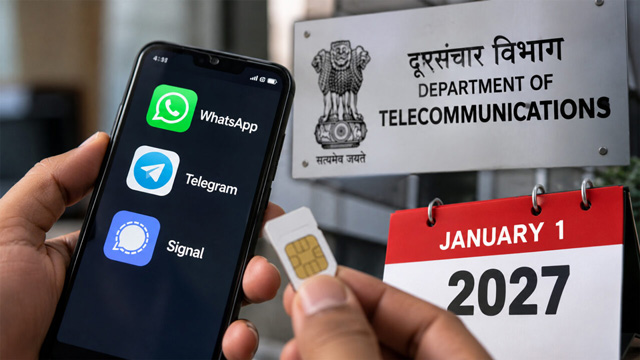
SIM binding refers to maintaining a connection between a messaging account and the active SIM card linked to the registered mobile number. Currently, users can continue accessing messaging services even after removing the SIM used during registration. They can also access their accounts on linked devices such as laptops and tablets.
The new requirement seeks to change this arrangement by requiring messaging applications to maintain the link with the relevant active SIM card. The DoT's November 2025 directions cover WhatsApp, Telegram, Signal, Snapchat, ShareChat, JioChat, Arattai and Josh, among other communication services that use mobile numbers to identify users.
The department said some platforms allowed users to access their services even when the associated SIM card was no longer present in the device, creating opportunities for misuse.
The primary objective of the directive is to curb cybercrime, including impersonation, phishing, investment scams and digital arrest frauds. According to the government, fraudsters can authenticate accounts using Indian mobile numbers and continue operating them remotely even after removing or deactivating the associated SIM cards. Some operations are reportedly run from outside India, making it difficult for investigators to trace those responsible.
The DoT said the existing arrangement was being misused to commit cyber fraud, particularly by people operating from outside the country. The government believes that maintaining a continuous link between the SIM card, mobile number and messaging service will improve traceability and make it harder for criminals to misuse accounts.
According to the DoT's December 2025 statement, cyber fraud losses in India exceeded Rs 22,800 crore in 2024.
The directive also addresses linked devices and web-based access. Under the original directions, platforms were required to log users out of web-service sessions periodically, with the interval not exceeding six hours, while allowing them to reconnect through QR-code linking.
This could mean that people who keep WhatsApp Web open throughout the working day may have to scan a QR code again after being logged out. However, the government has subsequently indicated that web-session logout timings will be determined through risk-based analysis, rather than a universal fixed interval under the latest compliance timeline.
In a written reply to the Rajya Sabha, Minister of State for Communications Pemmasani Chandra Sekhar said the government had directed certain app-based communication service providers to link the SIM card associated with the mobile number used for user identification or service delivery to the relevant communication applications, with compliance required by December 31, 2026.
For users, the practical implication is to keep the SIM card associated with their messaging account active and available in the device used to access the service. Those using Wi-Fi-only tablets, secondary phones without SIM cards or multiple devices may experience disruptions, depending on how platforms implement the rules. Users who frequently change devices or SIM cards may also need to adjust their usage.
The directive does not mean WhatsApp or Telegram will be shut down in India. Instead, it introduces stricter requirements for accessing accounts associated with Indian mobile numbers.
The impact of the new rules will become clearer as messaging platforms complete implementation and the requirements take effect.