Daijiworld Media Network – New Delhi
New Delhi, Jun 18: India emerged as one of the strongest performers in the global shift towards clean energy, advancing two places to rank 70th in the World Economic Forum's (WEF) Energy Transition Index (ETI) 2026, even as global energy transition readiness declined for the first time in more than a decade.
According to the report released on Thursday, Sweden, Finland and Denmark retained the top three positions globally, while India recorded one of the largest gains in transition readiness, strengthening its position as a key player in the next phase of the global energy transition.
The WEF attributed India's progress to stronger energy transition readiness and broad-based improvements across the energy system. The gains were driven by a sharp rise in infrastructure development, along with advances in energy equity, sustainability and financial investment.
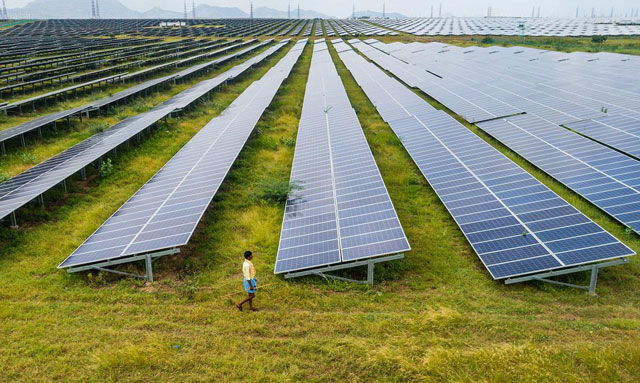
The report highlighted that the proportion of low-carbon jobs in India increased by 24 per cent in 2024. Employment in the renewable energy sector reached 1.3 million jobs, marking a 25 per cent rise compared to 2023, with hydropower emerging as the largest source of employment within the sector.
India's infrastructure-led clean energy strategy, including rapid expansion of renewable energy capacity, grid development and green hydrogen initiatives, was identified as a key factor behind the country's improved performance.
Despite record global investments in clean energy, the WEF noted that the overall pace of energy transition has slowed. The report stated that global transition readiness declined for the first time in over a decade amid rising geopolitical tensions, energy security concerns and increasing fragmentation of the global energy landscape.
Developed in collaboration with Accenture, the report found that while global investment in energy transition reached a record USD 3.3 trillion in 2025, including USD 2.3 trillion in clean energy, progress towards more sustainable, equitable and secure energy systems has stalled.
The study pointed to a widening gap between investment levels and actual transition readiness, indicating that financial commitments alone are no longer sufficient to sustain momentum.
The report also cited disruptions in the Strait of Hormuz as an example of vulnerabilities in global energy systems already facing pressure from growing energy demand, infrastructure bottlenecks and concentrated clean energy investments.
Nordic countries continued to dominate the rankings, while Singapore was among the biggest gainers, climbing 10 places to 42nd position due to stronger political commitment and regulatory reforms.
Advanced economies occupied 14 of the top 20 positions in the index, although overall progress remained slow, with average scores rising by only 0.2 per cent year-on-year. In contrast, India improved its overall score by 1.9 per cent.
Among G20 nations, Germany ranked ninth, followed by France (10th), the United Kingdom (11th), China (14th), Brazil (17th) and the United States (19th).
The report noted that China continued to lead in clean energy investments, India registered significant gains in transition readiness, and the United States maintained strong energy security despite a slight decline in its overall ranking.
Global electricity demand grew by 3 per cent, driven by electrification, cooling requirements, digital infrastructure expansion and artificial intelligence. The report identified rising electricity demand as a major challenge for future energy transitions.
Emerging economies accounted for nearly 80 per cent of global demand growth but continued to face challenges such as higher financing costs and infrastructure gaps.
Published for the 16th year, the Energy Transition Index assesses 120 countries using 44 indicators to evaluate current energy system performance and preparedness for a sustainable energy future.