Daijiworld Media Network – Anchorage
Anchorage, May 7: A court in Alaska has allowed state wildlife officials to resume shooting black and brown bears, including from helicopters, as part of a controversial programme aimed at helping the recovery of the declining Mulchatna caribou herd.
Superior Court Judge Adolf Zeman on Wednesday ruled against two conservation organisations — the Alaska Wildlife Alliance and the Center for Biological Diversity — which had sought to temporarily halt the predator-control programme while a legal challenge against it continues.
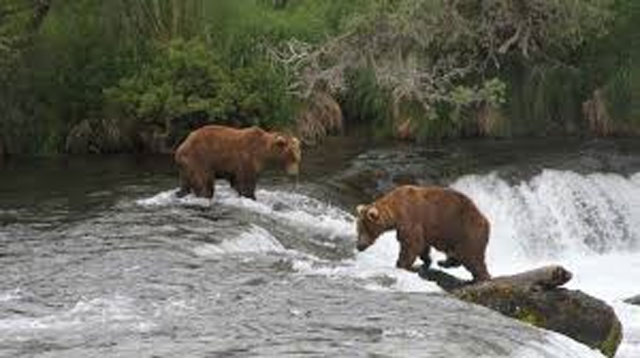
The judge stated that the groups had failed to prove that Alaska authorities acted without a reasonable basis in approving the bear-removal plan.
The ruling comes at a crucial time as the Mulchatna caribou herd in southwest Alaska is expected to begin calving soon. Wildlife officials believe newborn caribou are especially vulnerable to predators such as bears and wolves during this period.
Alaska authorities argue that reducing predator numbers is necessary to help revive the once-thriving herd, which historically served as an important food source for Alaska Native subsistence hunters across dozens of communities.
According to state data, the herd had once grown to nearly 190,000 animals and supported annual harvesting of up to 4,770 caribou by local hunters. However, the population began sharply declining in the late 1990s and early 2000s.
By 2019, the herd size had fallen to around 13,000 animals. State wildlife officials estimated the population at approximately 16,280 last year. Caribou hunting in the region has remained banned since 2021.
The conservation groups’ lawsuit stated that Alaska killed around 180 bears between 2023 and 2024, most of them brown bears, along with 11 additional bears last year under the programme.
Environmental groups argued that the Alaska Board of Game approved continuation of the programme without sufficient scientific data regarding bear population sustainability and long-term ecological impact.
“We want to see the caribou herd thrive, but the state simply hasn’t shown that the unrestrained killing of bears is going to help us get there,” said Cooper Freeman, Alaska director at the Center for Biological Diversity.
The groups also criticised the programme as a misuse of state resources and called for wildlife management policies based on stronger scientific evidence.
State attorneys, however, defended the programme and said officials had carefully reviewed scientific and environmental factors before reauthorising the plan.
“The herd has persisted at low numbers but started showing a positive response since 2023, when bear removal during calving seasons began,” state lawyers argued in court filings.
The Alaska Department of Law welcomed the court ruling, calling the upcoming calving season a critical period for the herd’s recovery.
Officials added that continuing the predator-control programme was supported by the available scientific record.
The controversy surrounding the programme has led to repeated legal challenges in recent years. A judge last year had criticised the earlier approval process and found that the state lacked adequate data on bear sustainability.
Emergency regulations adopted afterwards were also struck down before Alaska authorities later reauthorised the programme following a new public review process in July last year.