Daijiworld Media Network - New Delhi
New Delhi, Apr 27: In a key ruling on bail jurisprudence, the Supreme Court of India has held that bail cannot be cancelled solely because an accused is involved in a subsequent offence, unless specific legal conditions under the Bharatiya Nagarik Suraksha Sanhita (BNSS), 2023 are satisfied.
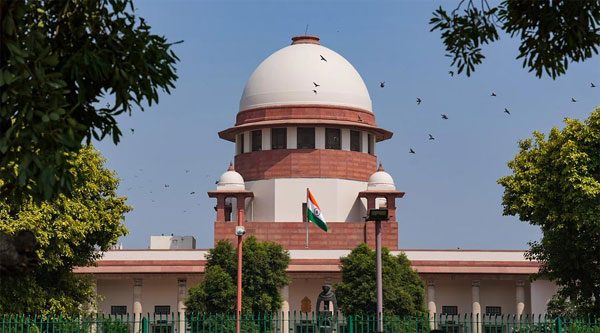
A Bench comprising Justices J.K. Maheshwari and Atul S. Chandurkar delivered the judgment while allowing an appeal filed by Narayan, whose bail had earlier been cancelled by the Madhya Pradesh High Court in an excise-related case.
The appellant had originally been granted bail in November 2024 in a case registered in Dewas district under provisions of the Madhya Pradesh Excise Act, 1915. However, the prosecution later sought cancellation of bail, citing his alleged involvement in another offence, and the High Court subsequently revoked the bail.
Examining the legal framework, the apex court clarified that Section 480(3) of the BNSS—which allows courts to impose stricter conditions—applies only to serious offences punishable with imprisonment of seven years or more, or to specific categories defined under the law.
In this case, the court noted that the alleged subsequent offence carried a maximum punishment of less than five years. As a result, the conditions required under Section 480(3) were not met, making the cancellation of bail unjustified on that ground alone.
The Supreme Court therefore set aside the High Court’s order and restored the appellant’s bail. At the same time, it cautioned the accused against engaging in any further criminal activity and granted liberty to the state to seek cancellation of bail again if warranted under applicable legal provisions.
The ruling is significant as it reinforces that bail cancellation must strictly adhere to statutory requirements and cannot be based merely on fresh allegations unless they meet the legal thresholds outlined in the BNSS.