Daijiworld Media Network - New Delhi
New Delhi, Jan 7: India has achieved a major benchmark in strengthening the quality of its public healthcare system, with 50,373 public health facilities across states and union territories certified under the National Quality Assurance Standards (NQAS) as of December 31, the government announced on Wednesday.
Developed by the Ministry of Health and Family Welfare (MoHFW), the NQAS framework sets comprehensive benchmarks for safety, quality, and patient-centric care in public health institutions. The Health Ministry described the milestone as a significant leap toward ensuring equitable and reliable healthcare services, particularly for poor, vulnerable, and marginalised communities.
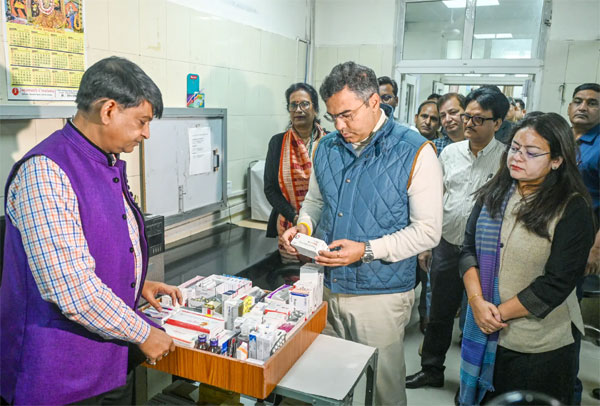
Calling it a “proud moment” for the country’s public health system, the ministry said crossing the 50,000-certification mark reflects the government’s sustained commitment to improving standards of care and building public trust in government-run facilities.
The NQAS initiative was launched in 2015 with just 10 certified facilities, initially limited to district hospitals. Over the years, its scope has expanded to cover sub-district hospitals, community health centres, Ayushman Arogya Mandir–Primary Health Centres (PHCs), urban PHCs, and sub-health centres, bringing quality assurance to every level of the public healthcare network.
A key driver of this rapid expansion has been the introduction of virtual assessments, which significantly accelerated the certification process. The number of certified facilities rose from 6,506 in December 2023 to 22,786 by December 2024, before more than doubling to 50,373 by December 2025 — a sharp scale-up within a single year.
Of the total certified institutions, 48,663 are Ayushman Arogya Mandirs, including sub-health centres and primary and urban PHCs, while 1,710 are secondary-care facilities such as community, sub-district and district hospitals. This distribution highlights the deep integration of quality standards across the entire public healthcare system.
The ministry noted that the achievement aligns closely with India’s goal of Universal Health Coverage under the National Health Policy 2017, which prioritises affordable, quality healthcare without financial hardship. The rapid growth of NQAS-certified facilities has been supported by continuous capacity building, digital innovations, expansion of trained assessors, and robust quality improvement mechanisms.