Media Release
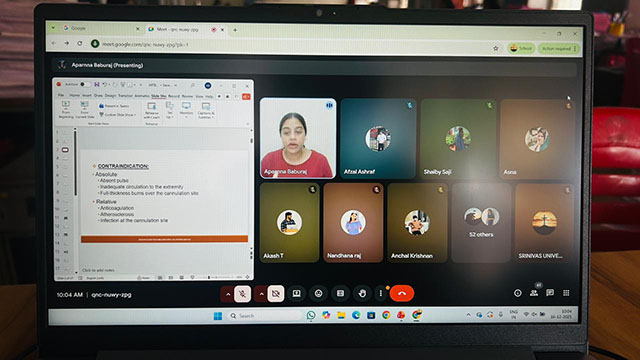
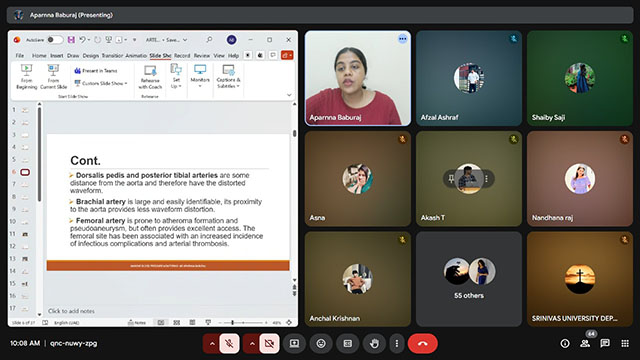
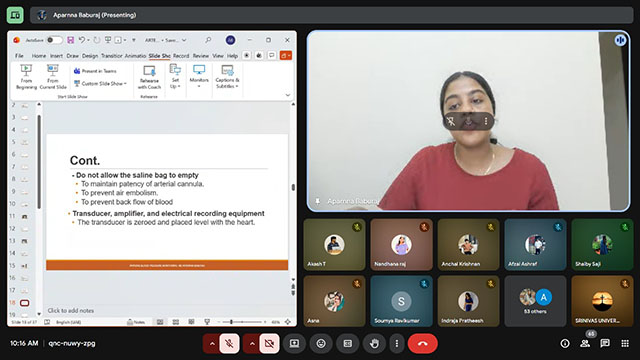
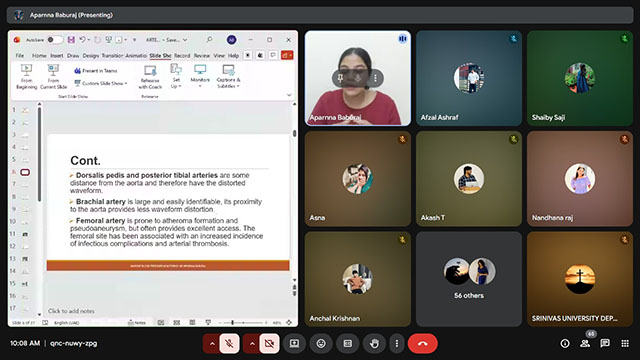
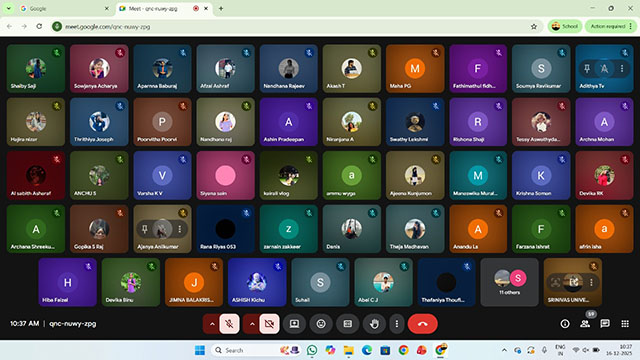
Mangaluru, Dec 18: The Institute of Allied Health Sciences, Srinivas University, organized an international student development programme and webinar under the theme “Advancing competence in invasive monitoring for patient safety.” The programme aimed to enhance the knowledge and clinical understanding of students in critical aspects of invasive monitoring.
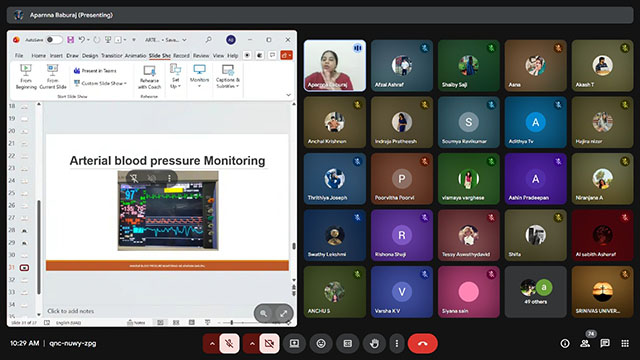
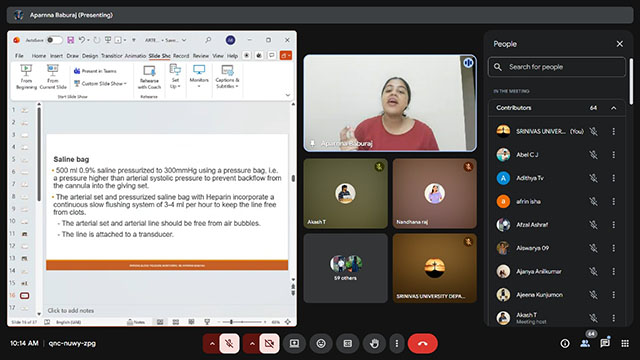
As part of this initiative, the webinar focused on arterial cannulation, a vital invasive procedure widely used in anaesthesia, critical care, and perioperative settings. The session highlighted the principles, indications, techniques, and safety considerations of arterial cannulation, emphasizing its role in accurate hemodynamic monitoring and improved patient outcomes. The programme provided an academic platform for students to strengthen theoretical concepts and correlate them with clinical practice.

Objectives of the programme:
1. Enhance students’ understanding of the principles and clinical significance of arterial cannulation.
2. Explain the indications, contraindications, and anatomical considerations involved in arterial line placement.
3. Familiarize participants with the equipment and techniques used in arterial cannulation.
4. Create awareness about patient safety, complication prevention, and monitoring standards.
5. Promote clinical competence and confidence in invasive monitoring practices
Highlights of the programme:
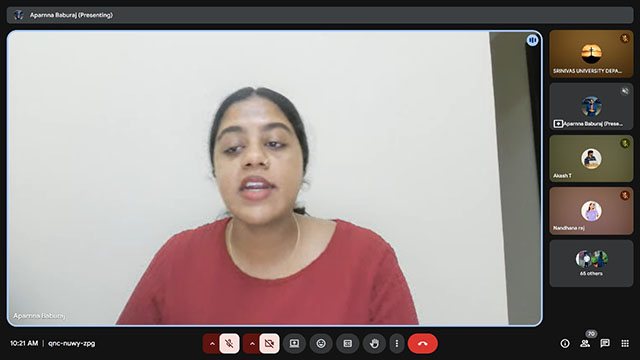
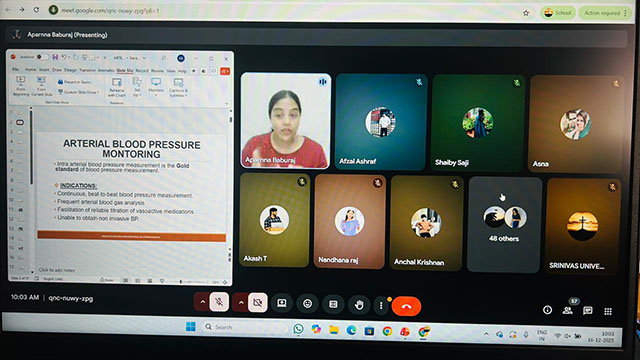
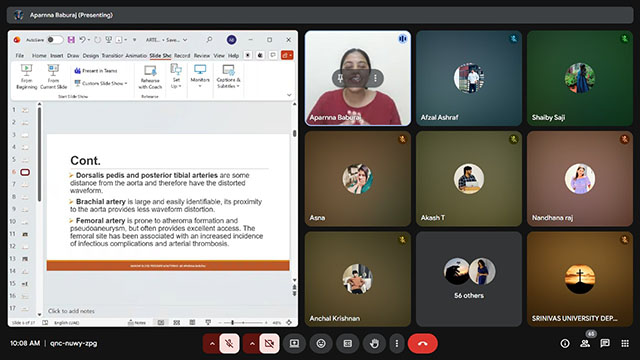
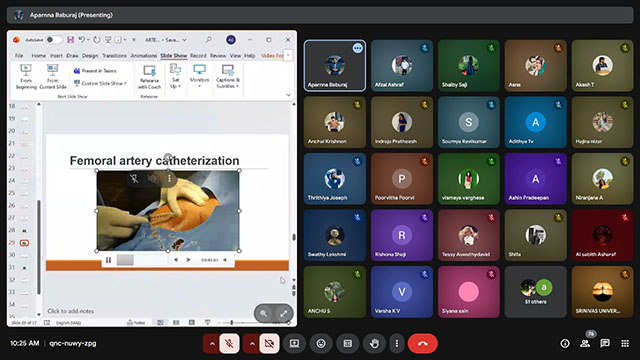
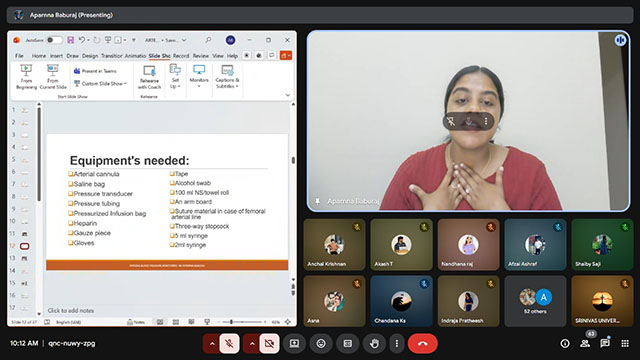
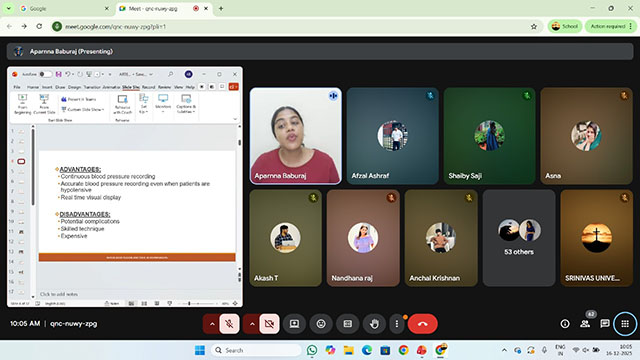
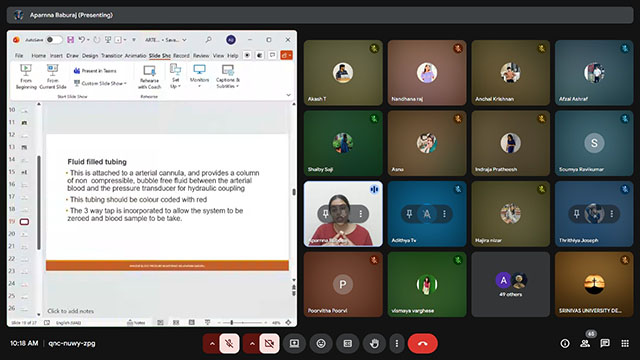
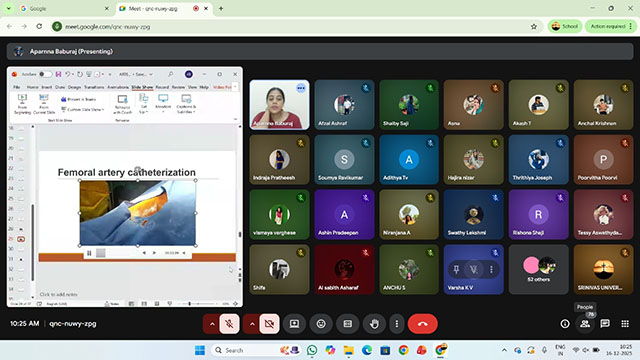
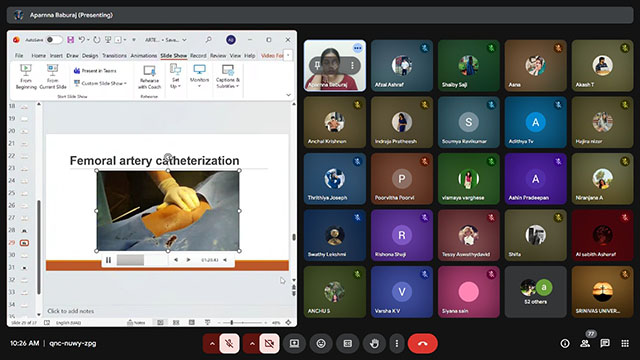
Aparnna Baburaj delivered an informative and engaging session on arterial cannulation, highlighting its significance in invasive monitoring and patient safety. She comprehensively discussed the indications, contraindications, and relevant arterial anatomy, followed by a clear explanation of the procedural steps involved in arterial line insertion. The session emphasized adherence to aseptic techniques, prevention of complications, and effective monitoring practices. By integrating theoretical concepts with practical clinical insights, the speaker enhanced participants’ understanding and confidence in arterial cannulation, making the session highly beneficial for students and healthcare professional
The event was coordinated by:
Prof Pavana Krishnamoorthy, dean, SIAHS, SU
Akash T, convener, Assistant professor, SIAHS
Sowjanya organizing secretary, lecture, SIAHS
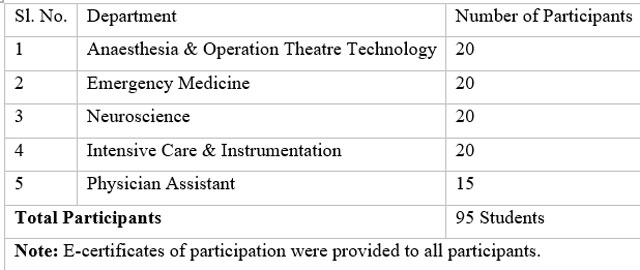
Participant data
Key activities conducted
An expert lecture was delivered by Aparnna Baburaj on arterial cannulation, highlighting its role in invasive hemodynamic monitoring and patient safety. The session covered indications, contraindications, anatomical considerations, equipment, procedural steps, and complication prevention. Emphasis was placed on aseptic practices and adherence to standard safety protocols.
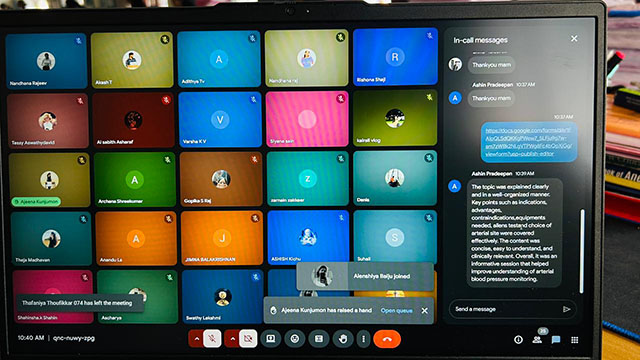
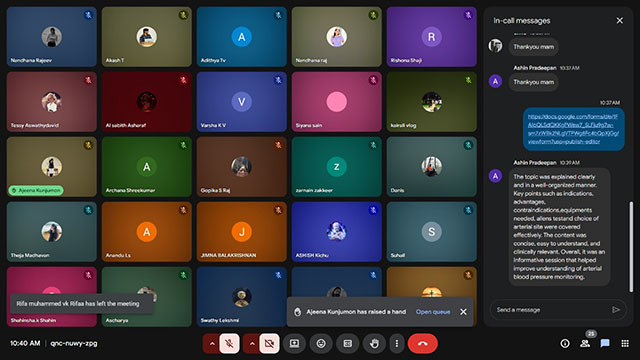
An interactive question-and-answer session followed, during which participants actively engaged with the speaker and clarified clinical and procedural queries.
Outcome
The programme effectively enhanced the knowledge and clinical awareness of students and faculty regarding arterial cannulation. Participants demonstrated improved understanding of invasive monitoring principles, patient safety measures, complication prevention, and increased confidence in applying arterial cannulation practices in clinical settings.
SDG linkages
SDG 4 – Quality Education:
The international student development programme and webinar on arterial cannulation contributed to SDG 4 by promoting inclusive and quality education through structured academic engagement, expert-led learning, and skill-based training. The programme enhanced students’ theoretical knowledge and clinical competencies in invasive monitoring, supporting lifelong learning and professional development in healthcare education.
SDG 8 – Decent work and economic growth:
The program aligned with SDG 8 by strengthening employability and professional competence of allied health science students through advanced clinical skill enhancement. By emphasizing patient safety, standardized practices, and invasive monitoring proficiency, the webinar supported the development of a skilled healthcare workforce capable of delivering safe and efficient clinical services.
Conclusion
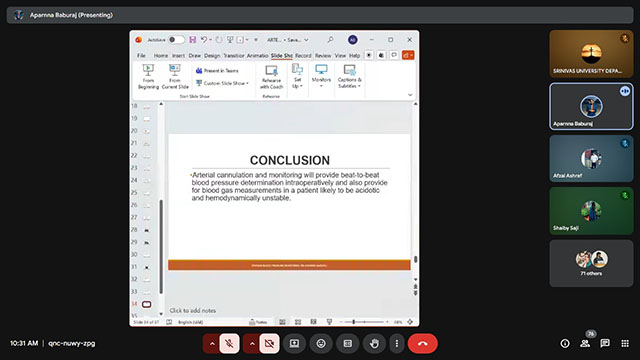
The webinar on Arterial Cannulation was highly informative and emphasized the importance of invasive monitoring in ensuring patient safety. The session enhanced participants’ knowledge of arterial cannulation techniques, safety precautions, and complication prevention. It effectively strengthened clinical awareness and fulfilled the educational objectives of advancing competence in invasive monitoring practices.