September 21, 2026
This article has nothing to do with the visit of Chief Minister D K Shivakumar or his cabinet colleagues to Mangaluru or the special Cabinet meeting they held here. But it is about what happened before and after the meeting. Also, it goes beyond the special package of Rs 32,000 crore and how the locals danced to the tune of drums when Chief Minister D K Shivakumar announced that Tulu, the dominant language of the undivided Dakshina Kannada district on the west coast of Karnataka, extending until the territory of Kasaragod district, would be the second official language of the state but would only be official in South Kanara and Udupi districts.
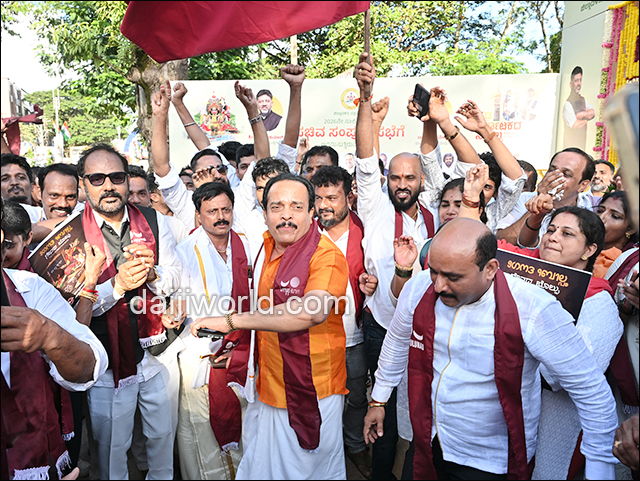
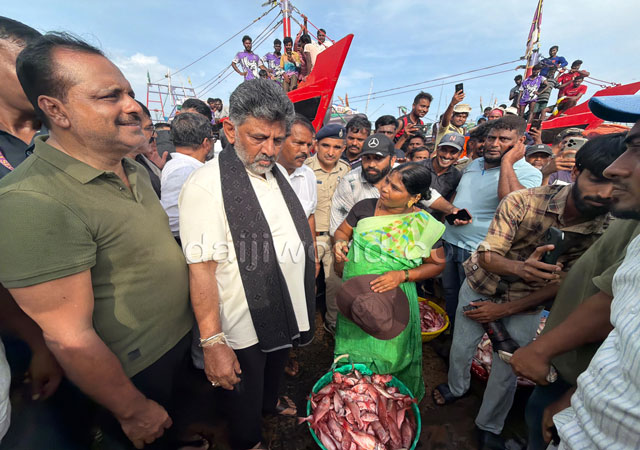
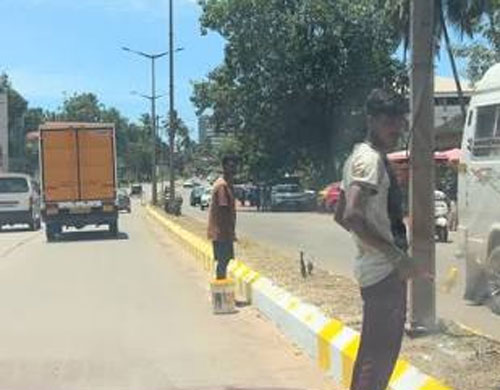
Why not? There was not a better time and occasion to announce this, whether U T Khader, the erstwhile Speaker of the Karnataka Legislative Assembly (now the Minister of Health and Family Welfare), was responsible for the Cabinet meeting being held in Mangaluru, or Puttur MLA Ashok Kumar Rai, who was said to be behind this move, which has attracted many votes for him and his party, no doubt. It was a default announcement that was waiting for its time.
Although Karkala MLA V Sunil Kumar had mooted the plan and had requested Dr Mohan Alva to submit a report on its advantages, ironically, his party had NO guts to carry on the mission, although they were ruling the country (and still ruling) for the past 12-plus years. It is only a face-saving tactic that prompted Dr Mohan Alva to thank Sunil Kumar, among others.
You may call it a political gimmick or whatever you call it behind the announcement, but it is done at an apt and appropriate moment, for which we must hail S D Shivakumar for his long-lasting vision and the votes that got converted to his party.
A day before CM D K Shivakumar and his cabinet members visited the city, I received a long message from B M Farook, the erstwhile National President of Janata Dal (Secular) and an MLC. He asked me to hand over 17 demands of our people to the Chief Minister, which I did through my sources, but I wrote to Farook that his message had come late. The CM already had certain steps and projects (although recognising Tulu as the second language was done after reaching the city) to be announced by him, and it was a futile exercise to remind the CM about other issues.
It is said that the Tulu language is one of the coherent and prominent languages in the Dravidian language family, in the cultural region comprising the present-day Udupi, Dakshina Kannada and Kasaragod districts. Not only was Tulu spoken by the majority of the people of the region, but it was also spoken by other people who visited the regions, including German missionaries who came to Mangaluru in the early 19th century and started printing and publishing the Bible in Tulu and translated many books for school children.
Linguist Dr Robert Caldwell, in his Comparative Grammar of the Dravidian Languages, stated that Tulu is the most well-developed and scientific language in the Dravidian language family. Tulu is said to be about 2,000 years old and has an abundance of oral heritage. Folk literature, sandhi, poem, ural, songs, madipu, story, proverb, riddle, mythology, mythic phraseology and such multiple forms of oral literature are rich in Tulu, while written literature in Tulu is the most prolific.
A Manor's Collection of Tulu Dictionaries and Tulu Pardana, by Reverend J. Scholarly publications such as Bruegel's Tulu Grammar were published. Further, in the early 20th century, in the wake of the national movement, a new awareness of literature in seven languages appeared in Tulunadu. Paniyadi Srinivasa Upadhyay established a publishing house called Tulu Sahitya Maale in Udupi, which led to the publication of Tulu works by many senior authors. Amunje Guthu Sheenappa Hegde, Narayana Kille, Badakabailu Parameswaraiah, Satyamitra Bangera, Madhava Mannaya, etc., were the pioneers of modern Tulu literary production, leading to the creation of various forms of Tulu literature. Further, Tulu dramatic literature production and theatre activities took Tulu to the masses. The production and performances of Yakshagana episodes in Tulu brought strength and uniqueness to Tulu in rural areas. It is a historical event that the history of Tulunadu, Tulu language and literature, and folklore studies have been given an opportunity to learn the subject of Tulu in M.A. education at the Mangala Gangotri Post Graduate Centre of the present Mangaluru University.
Due to this, special opportunities for studying Tulu in the University were obtained at the National Poet Govinda Pai Research Centre in Udupi under the direction of late Dr Ku Shi Haridas Bhatta. The six volumes of the Tulu dictionary produced under the editorship of Upadhyaya received international recognition. The Karnataka Sahitya Akademi, established by the Karnataka government in 1994, opened a new study in Tulu literature, providing training and opportunities for the production of creative literature for young writers. Many organisations like Tulukoota have been continuously making the case for the Tulu language and literature outside and within the state. Tulu dramas and Tulu cinemas have also provided greater interaction through the media for the dissemination of Tulu language and literature.
In Mangaluru, the Department of Kannada Studies of the University and institutes like Tulupeeta have done very important work in the field of Ph.D. and M.Phil research in Tulu language, literature and folklore. They conducted research and brought out publications. Sahitya Akademi, New Delhi, for the first time, in recognition of a regional language like Tulu, gave an honorary award called Bhasha Samman to two senior writers of Tulu, Mandara Keshav Bhatta and Kelambadi Jattappa Rai, which is significant in the Indian context. Thus, the language and its literary cultures at the level of a district, from the point of view of India, have engaged themselves in the process of development in modern society as well as being noticed at the global level.
The work of officially documenting all linguistic and cultural achievements available in Tulu must have been done. A literature centre was created for the languages of Tulu, Kannada, Tamil, Telugu and Malayalam, but that work was not done in Tulu. Now, it is a good thing that it is being done by Kannada University. It can be called an encyclopaedia. The various organisations that nurtured Tulu language and culture have been scientifically documented for the first time, with all the details of their works.
This project of Kannada University took root in Tulu Chavadi during the period of the Karnataka Tulu Sahitya Academy. Prof. Amrita Someswara and Prof. Chinnappa Gowda were involved in finalising the outline for a sound historical consensus. Was CM Shivakumar aware of this history of the Tulu language until he came to Mangaluru and heaped laurels on this language, its implications and the amount of following it enjoyed in the hearts and minds of the locals?
The first people to get upset with the decision of the Chief Minister were the Horticulture Department officials affiliated with Mangaluru Municipal Corporation (MCC). Ages had passed since the roadside kerbstones or plants were taken care of; bougainvillea had long died a natural death in spite of much-delayed sprinkling rain. Who had expected that the Chief Minister would extend the Cabinet meeting to be held here in this city of learned people? Once it was decided, they had only two days to paint and cut the shrubs off the public eye, where all the ministers were to drive down the road. Even the roads and roadsides saw a quick dressing. Hell with these ministers who think the impossible; they must have cursed their subordinates, although the latter felt such visits should take place every month so that the officials get accustomed to reading the scriptures on the wall. Within no time, the kerbstones were painted, the shrubs were cut and the city was beautified, although the bougainvillea had died long ago.
The next day of his visit, the Chief Minister decided to visit the Dakke, the old port of Mangaluru city. He did not know someone had announced a day off, so that the aggrieved people were not on site to call on the CM about their plight. The CM was furious and agitated; it was not his intention to just visit the place, although many ministers and even the city corporators were visiting the place for the first time in their lives. Who cares how the fisher ladies live and operate? After all, they source the fish and come running to our plate.
Now that the glamour is gone, or has died down, many parties blame the people at the grassroots level for why these issues were not brought to the attention of those higher up. Committees have been formed to pinpoint the problems faced by the locals, civic servants, fisherwomen, the police and the general public. The political parties have formed their committees to see how best they can bring back the votes of Tulu-speaking people, the fisher ladies and so on.
Hitherto, many people in the government went to Goa when the temptations of good nature, good fish and other things attracted them. But no one knew Mangaluru had it all and much beyond.
We applaud the vision and foresight of our Chief Minister D K Shivakumar for introducing our beautiful city to the world. They came, they saw, and they were surprised that a city called Mangaluru also existed.