Childhood In The 21st Century

March 24, 2026

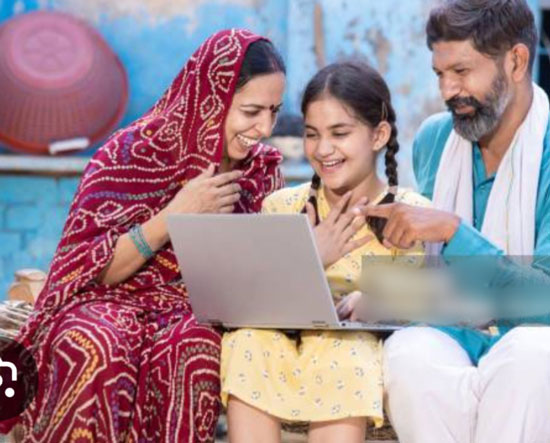
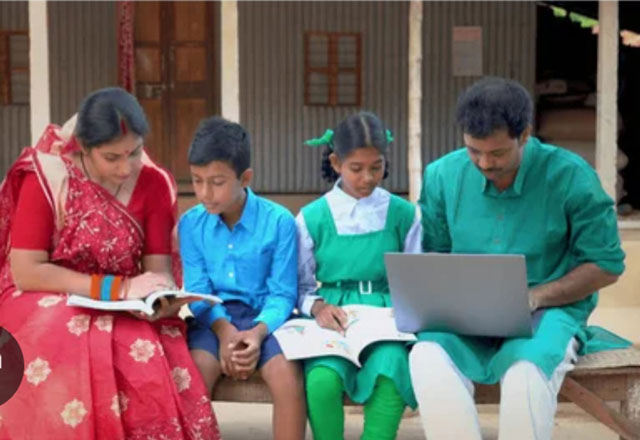
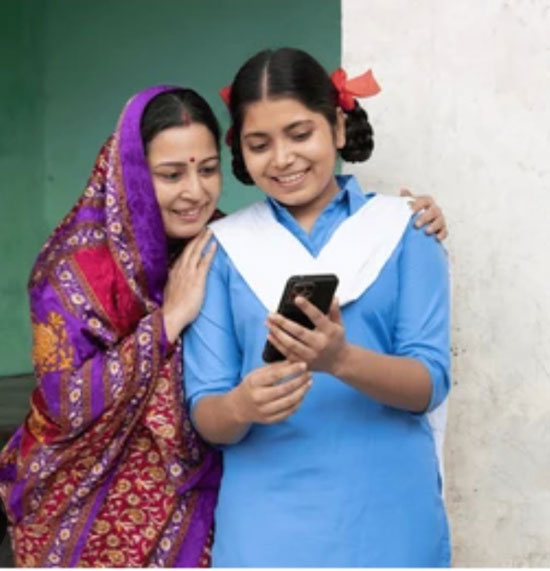
Children are taught by their parents and learn by sight and observation. Be it knowledge, life skills, or life itself. This methodology has been going on for centuries, but now we live in an era where children for the first time ever have the upper hand in a skill and knowledge that most parents struggle with, ‘the technology’. The majority of parents were born when the thought of mobile phones, internet and social media were alien and now suddenly in the span of 20 years, they are confused and forced to accept the fact that they are in a changed modern era.
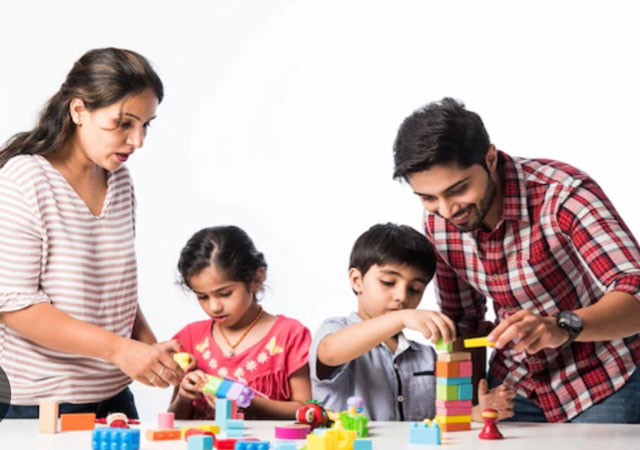
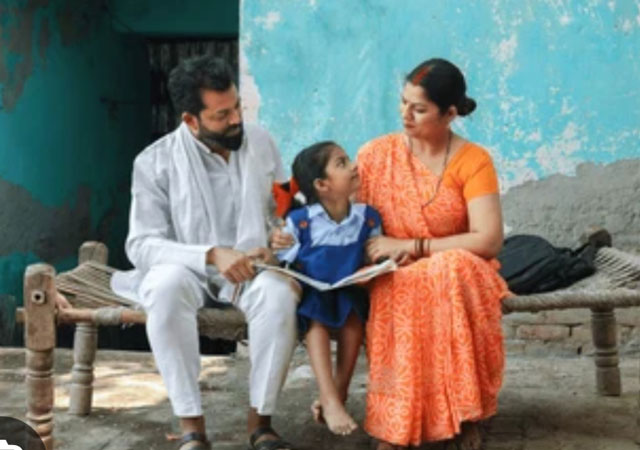
As parents struggle to adapt to the ongoing technological advancements, the children often demonstrate rapid proficiency in these developments, creating a significant disparity. This gap frequently leads parents to question their ability to keep pace with their children's digital expertise. This situation leads to significant confusion and anxiety among parents, who may find it challenging to guide children that possess advanced knowledge of the world yet exhibit heightened emotional needs. Parents navigating the challenges of raising children in the 21st century, while recalling their own childhood experiences, often encounter significant internal conflict and question why contemporary childhood differs from their own. Thus, the parents overburdened by the situation start to analyse and find answers to the main question on understanding the ‘Childhood’ of the children, often resume the role of a child psychologist and scientist to analyse and understand every action and behaviour of ‘the Child’ as mentioned by Ennis Richmond in her book ‘ The Mind of a Child’ in 1901. Even though this was written a century back by the author it makes more sense in the modern world about parenting. She wrote parents often focus on understanding every action and finding out the reason for such action that they end up in treating the child as a ‘specimen’ to be studied rather than as a ‘person’. In her book the author mentions that the adults focus on ‘the child’ losing most important sight of ‘the childhood’. This brings us to the task of finding the answer to the important question that is ‘What do we mean by childhood?’

According to the Oxford English Dictionary the word ‘childhood’ means the state of being a child. Therefore, childhood includes the freedom of expression, carefree nature, curiosity, joyfulness, playful activities, imaginary playtime and many more activities the child does without being judged. It’s the period with spans from birth to puberty. Childhood, in its ideal terms, should be happy for every child. Let us apply this understanding of childhood to the modern world and reflect upon ‘How does life look like for the children of 21st century? How do parents, teachers and communities work together to provide guidance, a safe and healthy environment to the children to enjoy their childhood, in this digital age?

Modern childhood is marked by the digital footprint of the child even before the birth. The phrase ‘21 st century children’ evoke images of radical change with a paradigm shift in childhood from the previous way of being. These children enjoy better facilities in terms of health, education and standard of living. Technological advancements have favoured the children’s development in many areas such as getting information at the fingertips, connection with their well-wishers and friends, exploration of any area of their interest online, cross border connections, umpteen learning opportunities and many more. There are also a number of dangers associated with the exposure to digital media such as online bullying, gap between knowledge and emotional development, online addiction etc. Given these changes, it's essential to examine childhood within a holistic framework that considers both opportunities and challenges.

Children today face stress for several reasons. Their curiosity now has endless sources for information, which often draws them deeper than they intended. Many business organisations are eager to profit from children's curiosity, often without ethical consideration, causing increased screen addiction among youngsters. They struggle with time management as they addictively spend time on digital media and then parents try to engage children with structured activities thinking of all round development of the children. Whether children get time to really relax and or explore on their own is a big question mark. This might cause a deep conflict within the child regarding external pressure and unmet internal wants.

Beyond challenges within the family, schools provide a highly supervised environment where children are frequently reminded by teachers and administrators not to touch each other or run, in order to prevent injuries. Today's education systems aim to equip children with the skills needed to tackle unpredictable future challenges brought about by technological advancements. This approach places additional pressure on students to acquire knowledge and skills beyond what is included in their curriculum. Moreover, children are required to face the ‘Parent Teacher Meeting’ to be evaluated (or to be judged?) of their ‘academic progress’ every quarter. This system steals freedom of children to enjoy the childhood, where the children are systematically controlled and moulded as per the wishes of the adults, rather than providing them the safe environment and required guidance for realizing their own potential and dreams.

Our communities have provided better living standards in terms of health care and recreational facilities for the children. Expectation of communities also being elevated for the child disciple, better performance, sports performance, structural play rather than free play etc. The scope of ‘explore and learn’ by the children is systematically reduced as the communities often demand and encourage only what they define as success, discouraging any effort of the children to explore on their own to learn to succeed. Therefore, the communities have built tuition centres, various sports facilities for structuring the child, and art classes. In this machinery built by the society children rather not think of childhood but become simply the raw material for getting moulded to become the good, complacent members of the society.

Therefore, it is important for all of us the ‘adults’ to pause and reflect upon the fact that the ‘future’ was and is unseen from the time of the beginning of humanity. Children should be given a fair chance to enjoy that precious childhood. Children must be treated as persons more than mere problem solvers of the future. This world is of theirs as much as it is ours. How about letting them explore, experience and learn rather than forcing them to learn through the dark lenses that we wear?

By Savita Maria D'Souza
Savita Maria D'Souza is a student of Aloysius University.
To submit your article / poem / short story to Daijiworld, please email it to news@daijiworld.com mentioning 'Article/poem submission for daijiworld' in the subject line. Please note the following:

  • The article / poem / short story should be original and previously unpublished in other websites except in the personal blog of the author. We will cross-check the originality of the article, and if found to be copied from another source in whole or in parts without appropriate acknowledgment, the submission will be rejected.
  • The author of the poem / article / short story should include a brief self-introduction limited to 500 characters and his/her recent picture (optional). Pictures relevant to the article may also be sent (optional), provided they are not bound by copyright. Travelogues should be sent along with relevant pictures not sourced from the Internet. Travelogues without relevant pictures will be rejected.
  • In case of a short story / article, the write-up should be at least one-and-a-half pages in word document in Times New Roman font 12 (or, about 700-800 words). Contributors are requested to keep their write-ups limited to a maximum of four pages. Longer write-ups may be sent in parts to publish in installments. Each installment should be sent within a week of the previous installment. A single poem sent for publication should be at least 3/4th of a page in length. Multiple short poems may be submitted for single publication.
  • All submissions should be in Microsoft Word format or text file. Pictures should not be larger than 1000 pixels in width, and of good resolution. Pictures should be attached separately in the mail and may be numbered if the author wants them to be placed in order.
  • Submission of the article / poem / short story does not automatically entail that it would be published. Daijiworld editors will examine each submission and decide on its acceptance/rejection purely based on merit.
  • Daijiworld reserves the right to edit the submission if necessary for grammar and spelling, without compromising on the author's tone and message.
  • Daijiworld reserves the right to reject submissions without prior notice. Mails/calls on the status of the submission will not be entertained. Contributors are requested to be patient.
  • The article / poem / short story should not be targeted directly or indirectly at any individual/group/community. Daijiworld will not assume responsibility for factual errors in the submission.
  • Once accepted, the article / poem / short story will be published as and when we have space. Publication may take up to four weeks from the date of submission of the write-up, depending on the number of submissions we receive. No author will be published twice in succession or twice within a fortnight.
  • Time-bound articles (example, on Mother's Day) should be sent at least a week in advance. Please specify the occasion as well as the date on which you would like it published while sending the write-up.

Comment on this article

  • Gerry Andrade, Bangalore

    Thu, Mar 26 2026

    The most relevant issue in today’s society. Thank you Savita for throwing light into this issue. God Bless 🙏

  • Daniel, Mangalore

    Thu, Mar 26 2026

    Well Written! These 21st century days with Ai, Technology, Data, Social media World can be controlled remotely. It looks like that's way elite are moving forward and for that these elite need to 'educate' children, youngsters first, to control them and through them their parents and grand parents ? If Morally Good it is fine but this multiple genders, no gender, pro choice, LGBT, DEI, tampons in men's bathroom or liberal (modern name of communism) ideologies for chaos and then divide and rule are becoming more common or pushed in western countries and Europe and from their to the east and blaming western countries for it? Anyway God also can't bear with all this godlessness anymore. So Divine Reset also coming, so says or implies following referenced recent Divine message to Myriam dated 18th March 2026... Ref: https://littlepebble.org/2026/03/19/message-to-myriam-of-italy-18-march-2026/

  • Daryl Pereira, Jamshedpur

    Thu, Mar 26 2026

    Savita, thank you for a deeply reflective and relevant piece on modern childhood. Your articulation of the widening gap between children’s digital fluency and parents’ adaptation is both timely and insightful. The reference to Ennis Richmond and the distinction between understanding “the child” versus preserving “childhood” is particularly powerful—it brings out a subtle but critical shift in how parenting is approached today. What stands out is your balanced perspective. You acknowledge the immense opportunities technology offers, while also cautioning against its unchecked influence on emotional development, attention, and freedom. The observation that children today are increasingly “structured” and “evaluated” rather than allowed to explore freely is something many parents and educators will resonate with. Your concluding thought—that children must be treated as individuals and not merely as future problem-solvers—is a strong and necessary reminder. In a world driven by performance and outcomes, your article gently urges adults to step back and re-centre on empathy, space, and genuine understanding. This is not just an article—it is a call for introspection for parents, teachers, and communities alike. Well written and thought-provoking. Looking forward to more such insightful pieces from you. Stay Blessed

  • Rami, Jordan

    Thu, Mar 26 2026

    Very nice and insightful article , meaningful and it nice how you show the impact of technology on our children ,, in these times parents must be aware what their children are doing and how they use the technology. Thanks

  • Jen Dsouza, Taccode/ Toronto

    Thu, Mar 26 2026

    Beautiful article, Savitha! What I liked most is how you showed both sides of modern childhood, the opportunities children have today and at the same time the silent pressure they live with. Your point about how we sometimes try to plan everything for them, thinking we are helping, but may actually be taking away their simple joys of childhood was very nicely expressed. It takes a very observant and sensitive mind to notice these things. This reflects the kind of thoughtful person you are. Very well written and very relevant for parents today. You should definitely keep writing!

  • Rennel Felix, Dubai

    Thu, Mar 26 2026

    Savita, this is such a thoughtful and heartfelt reflection on what it means to raise children in today’s world. You’ve captured something many parents feel but often struggle to put into words—the quiet shift where children are growing up in a reality so different from the one their parents knew. I really appreciate how you’ve balanced both sides of the story. On one hand, the incredible opportunities technology brings, and on the other, the emotional and social challenges that come with it. The way you’ve connected this modern reality with timeless insights, like those from Ennis Richmond, makes your piece even more meaningful—it reminds us that while the world changes, the essence of childhood shouldn’t. What stands out most is your gentle reminder to slow down. In a world where everything feels structured, measured, and often rushed, your words bring us back to something simple yet powerful—that children need space to just be. To explore, to imagine, to make mistakes, and to grow without constantly being analysed or shaped. This is more than just an article, Savita—it feels like an invitation to reflect. For parents, educators, and communities alike, it nudges us to rethink how we define success for children and how we can protect the joy and freedom that truly define childhood. A beautiful and meaningful piece.

  • Rio D, Mangalore

    Thu, Mar 26 2026

    Yes I agree, as someone who just became an adult this really helped me in deciding how to go about technology when I do raise my kids especially when it comes to problem solving so that they have a great childhood just like I did when I used to ride my scooter in the compound. Good job Savitha!

  • Rennel Felix, Dubai

    Thu, Mar 26 2026

    Savita, this is such a thoughtful and heartfelt reflection on what it means to raise children in today’s world. You’ve captured something many parents feel but often struggle to put into words—the quiet shift where children are growing up in a reality so different from the one their parents knew. I really appreciate how you’ve balanced both sides of the story. On one hand, the incredible opportunities technology brings, and on the other, the emotional and social challenges that come with it. The way you’ve connected this modern reality with timeless insights, like those from Ennis Richmond, makes your piece even more meaningful—it reminds us that while the world changes, the essence of childhood shouldn’t. What stands out most is your gentle reminder to slow down. In a world where everything feels structured, measured, and often rushed, your words bring us back to something simple yet powerful—that children need space to just be. To explore, to imagine, to make mistakes, and to grow without constantly being analysed or shaped. This is more than just an article, Savita—it feels like an invitation to reflect. For parents, educators, and communities alike, it nudges us to rethink how we define success for children and how we can protect the joy and freedom that truly define childhood. A beautiful and meaningful piece. Regards, Rennel Felix Dubai

  • Jean Nazareth, Mangalore

    Wed, Mar 25 2026

    A very thought provoking article ,relevant to the present times and well written !! Let us pray that with the advancement of AI and Robotics our children learn to use their minds to foster their overall development of mind ,body and Spirit ....for the betterment of Society. May they grow to accept success with failures and face the world with positivity and benevolence. Loved the article Savitha , keep writing.

  • Jean Nazareth, Mangalore

    Wed, Mar 25 2026

    An Article that is very thought provoking and relevant of our times. Knowledge is never ending,we have to be updated and constantly on our toes dealing with the present generation of kids, ... gaining knowledge ceases only at the grave, Your article is very insightful as today everything is available at the click of a button it has its pros and cons, Children today no longer enjoy a blissful ,carefree childhood instead they face a cruel,competitive world in which they cant afford to be complacent or carefree.Suicidal thoughts,pent-up frustrations and inability to accept defeat and failure at some stages in their childhood lives all led to them not being positive and successful. Parents and teachers should give attention to such children to guide and motivate them in the right directions. Lastly I do pray the children of this century will grow up as better human beings equipped with not only wealth of knowledge but overall development of mind, body and Spirit and qualities of the heart. The world badly needs it. Keep writing Savitha !!!

  • Roshan dsouza, Manglore

    Wed, Mar 25 2026

    Very meaningful article. Nicely explained..

  • Prashant Madtha, Ashirvad, Marks Road Bangalore 560 001

    Wed, Mar 25 2026

    Quite insightful and excellent article M Savitha. Write more articles on the topic, helpful for the caretakers

  • Jo, Bangalore

    Wed, Mar 25 2026

    This is a great article which brings to light several different aspects of parenting in the 21st century. Parents create a framework within which a child explores, learns and grows. So parents are tasked with providing the best possible framework they can. Imagine putting a baby shark in a small tank with limited brain stimulating items, it will only grow to be able to move within that small tank and not up to its full potential. If you want your child to be a certain way, it is important to pay attention to their personality, skills and see how you can elevate those. Also, how many parents today still spend time having deep, meaningful conversations with their kids? It’s so easy to get caught up in this rat race but how many really care to connect with the same child that they have a million expectations from? If parents cared to connect with their kids and understand them wholeheartedly, would it still be hard to parent them in the 21st century? Isn’t it always you and your child against the world and not you against your child?

  • Lavia dsouza, Mangaluru

    Wed, Mar 25 2026

    This is a very meaningful article. I really liked how you explained the impact of technology on children’s lives. It is true that today’s childhood is very different and needs more attention from parents and society..

  • Russel Thomas, Ajman

    Wed, Mar 25 2026

    As a student i found this article relevant in todays world. Good job Savitha

  • Vijay D'Souza, Mangalore

    Wed, Mar 25 2026

    Insightful article, Savitha. Highlights the struggles of modern parents very well and offers perceptive solutions. I especially appreciate the call for letting children enjoy their childhood at their own pace.

  • Jacinta, Bengaluru

    Tue, Mar 24 2026

    Well said Savita! It is a difficult time to be a child. The formative years of our children should be full of fun and happy memories since these are the first memories they make. We must take it upon ourselves as adults understand the impact that technology has on their development and improve our technological literacy as well.

  • Arjun Mascarenhas, Mangalore

    Tue, Mar 24 2026

    Very nice article

  • Rita, Germany

    Tue, Mar 24 2026

    Savitha just think ,in our times we too were very eager to study something new than our Parents.Were too quick to study ,pick up new.Our Parents used to say she is clever picks up fast.Its so.Next generation will be more faster to live ,or struggle to go on with new electronic or whatever comes.They have to.because no other way ,otherwise you will sit back.Noone will care for last Benches.Todays world is so.Fast moving.We used pen Pencil ,papers.Carried big bag with heavy books.Today it is easier .Only backpack and a laptop etc.?Whatever it is we can be happy our time is over.Just remember todays children have to think a lot only sitting and doing their work.Hardly move ment.We ran over hills and rivers had better health condition than these poor kids.Todays children have to struggle with more bad hot sunshine .Not healthy.May God bless them.Thank you for your write up about our children.

  • Ivan Prashanth Andrade, Mangalore

    Tue, Mar 24 2026

    Insightful and thought provoking!! Well done Savitha

  • Clement Dsouza, Bondel/ Bangalore

    Tue, Mar 24 2026

    When fathomed, the article has depth meaning The message is clear that-Today, many of us can go through the first quarter of our lives without confronting a major loss, illness, or setback. So when one finally hits, it can feel like the world is falling apart - not just because it’s painful, but because it’s new. Finally my view is that issue is that in today’s world, we’ve eliminated so many of the fears and anxieties of the past (and this is a good thing) that we often don’t get to practice the art of resilience in real time.


Leave a Comment

Title: Childhood In The 21st Century


You have 2000 characters left.

Disclaimer:

Please write your correct name and email address. Kindly do not post any personal, abusive, defamatory, infringing, obscene, indecent, discriminatory or unlawful or similar comments. Daijiworld.com will not be responsible for any defamatory message posted under this article.

Please note that sending false messages to insult, defame, intimidate, mislead or deceive people or to intentionally cause public disorder is punishable under law. It is obligatory on Daijiworld to provide the IP address and other details of senders of such comments, to the authority concerned upon request.

Hence, sending offensive comments using daijiworld will be purely at your own risk, and in no way will Daijiworld.com be held responsible.