January 24, 2026
Dubai in the United Arab Emirates has many names. Without doubt, it is a connoisseur’s paradise. It has often been called as the global hub, where the people from the whole world meet. It is also called a cosmopolitan city, or a melting pot, with specific destinations like Global Village that showcases the pavilions of many nations, reflecting Dubai's own nickname, ‘The City of the World.’
I am visiting the place, well after 15 years. Dubai has turned to be a land of opportunities from the land of businessmen who rushed home after losing billions of dirhams around 2009. Many called His Highness Sheikh Mohammed bin Rashid Al Maktoum, who is the ruler of Dubai and presently the Vice President and Prime Minister of the United Arab Emirates (UAE) a failed businessman and his plans like Dubia Metro and Burj Al Khalifa as ‘failed adventures’. But good luck to the people of the world he has bounced back as a phoenix bird that rises from the ashes.
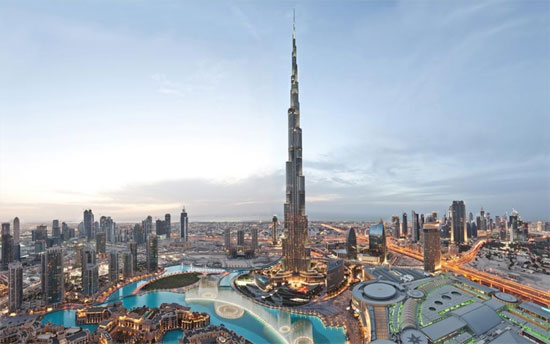
Those people who expected the downfall of the ruler should visit Dubai again to see the transformation. One of the successful Mangalorean businessmen who owns 6 well-known hotels in Dubai calls the city as the best place to do business, by meaningful and lawful ways.
Long big towers, among them the world renowned Burj Kalifa, (Burj Dubai for us when the work was on progress, soon it was financed by the ruler of Abu Dhabi and named after him.) Also, the Emirates Towers, Dubai Mall and its fish aquarium, the Miracle Garden, the Frame, the Dubai Knowledge Park, there are many world-renowned landmark places to visit which push the yester year - the only landmark building - the World Trade Centre to the background. Along with WTC, the other towers of the yesteryear such as Etisalat towers and some of the other towers have either lost their sheen or have been renamed. So also, some of the top residential towers are making their mark for their size, shape, and vibrancy.
One can see 'Work is in progress' everywhere in the emirates. Even the four large residential towers (I lived temporarily in such one building) has a great view of a spectacular Max Metro Station, Etisalat building, a building where a long restaurant emerges from its belly. Sadly, such views will soon be gone and will be the 'talk of the town', for the construction work will wipe out the previous view. Who knows soon a new view may emerge and that is the story of many places in Dubai.
Dubai Metro is another wonderful project that amuses me. It consists of a network of two main lines (Red and Green) while a third line, Blue is scheduled to open in 2029. One can observe people from the whole world traversing in directions and destinations. I recall when the first project was emerged during a recession period 15 years ago, (Between Shaikh Zayed Road and Jebel Ali, many people called it a 'failed project' but today the trains are so overcrowded that dual queues are in place so that commuters enter the train peacefully and systematically. The steps, Escalators, lifts and moving walk ways add to the pedestrian comfort. These are perfectly placed in between by spectacular grand concourses both sides of the metro station.
Not just the working fraternity but the worldwide tourists are to be seen in a city where the presence of local Arabs is bare minimum except for some pockets of Bur Dubai, the Baniyas Street (and the central Baniyas Square in Deira, Dubai) where the powerful Bani Yas tribal confederation, the ruling family's roots, that signifies the area's historical role as a bustling commercial hub near the creek, evolving from a Bedouin trading spot to a major urban centre after the 1960s development and dredging.
Once Baniyas Street was called Jamal Abdel Nasser Square (after the Egyptian leader) but was renamed to reflect its deep tribal origins and importance in Dubai's trade history, serving as a key marketplace and social centre for locals and traders and also housed the present Al Maktoum family.
The year 1960 also saw the development and dredging of Dubai Creek, a man-made canal which has transformed the area into a commercial hotspot. Today the creek has extended too farther and once must make several trips to arrive at the old Dubai Creek, where you can see Deira on the other side. Sitting in this street in great glory with my daughter, I sipped the Kashmiri Kahwa tea singing glory to a bygone era.
Being an old timer, I was fascinated to see the Dubai Museum which has maintained its glow and again a busy tourist place. In the bustling heart of Bur Dubai stands a timeless monument to the city's rich heritage – Al Fahidi Fort – the oldest existing building in Dubai, dating back to 1787. Strategically located at the southern end of Dubai Creek, which was a defensive structure, housed ruler's residence, a weapons arsenal, and even a prison. Over the years, the Dubai Museum has turned into a cultural cornerstone, offering residents and tourists an authentic look into pre-oil era of Dubai. The museum also highlighted desert and marine life, shedding light on the region's pearl diving history, once a key driver of the local economy. Among its prized collections were tools, artefacts, and trade items - some dating back to 3000 BC.
So, if you miss visiting other places of interest, just visit Dubai Museum and see what Dubai is all about. You will find all the things you missed at ‘One Place.’