Media Release
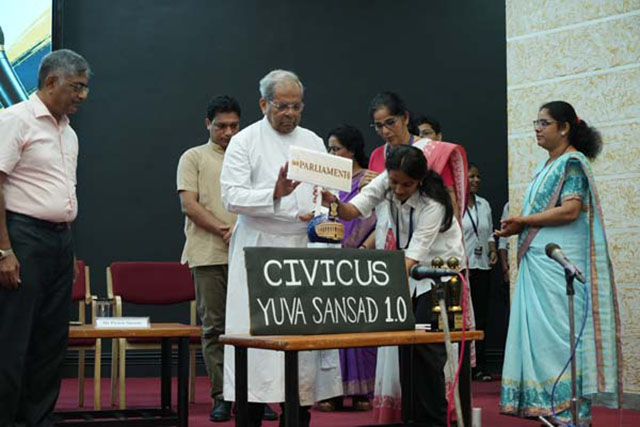
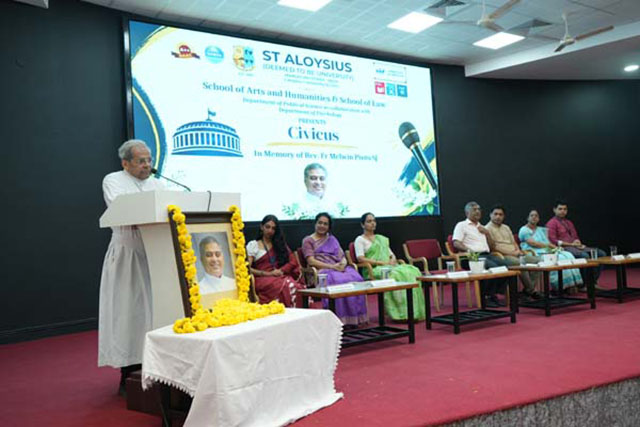
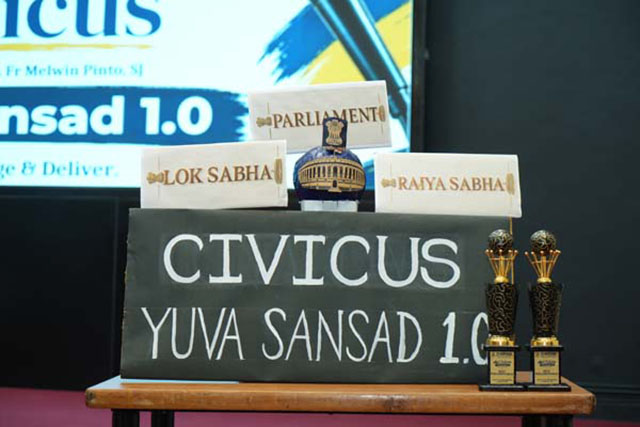
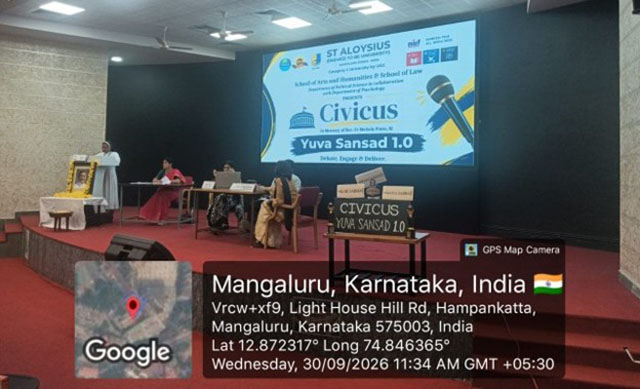
Mangaluru, Oct 5: The Department of Political Science, in collaboration with the Department of Psychology, under the School of Arts and Humanities and the School of Law, St Aloysius (Deemed to be University), organized Civicus – Yuva Sansad 1.0 on September 30 in Eric Mathias Hall, in memory of Fr Melwin Pinto, SJ, former rector of St Aloysius Institutions.
The programme was graced by the chief guest, Fr V Prashanth Madtha, SJ, former principal of the St Aloysius. The president of the programme was Steven Pinto, former SACAA president. The dignitaries included Fr Prashanth Sequeira, SJ, associate dean, School of Law; Dr Shalini Aiyyappa, HOD, department of psychology; Dr Rose Veera D’Souza; Dr Shakila Hegde, assistant dean and HOD, department of political science; and Maria Shaila D’Souza, staff convenor.
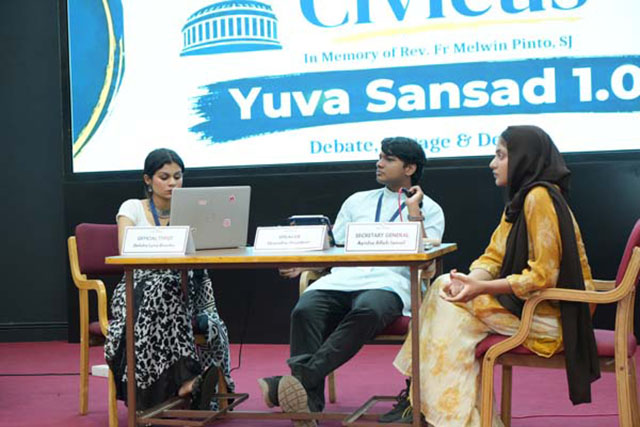
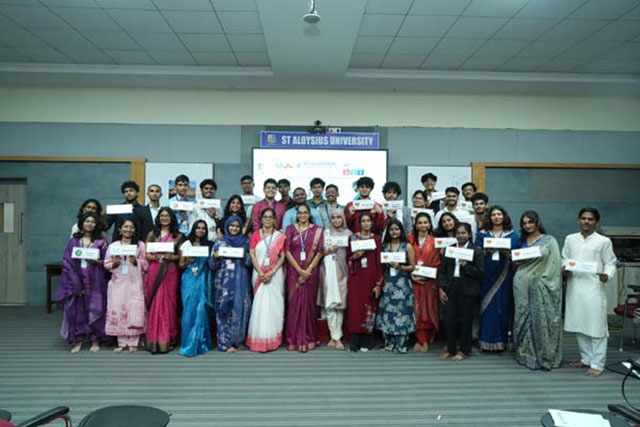
The session was judged by two judges – Dr Joyce Sabina Lobo, assistant professor, GFGC Uppinangady, and Ronston Sequeira, St Joseph's College of Law, Bengaluru.
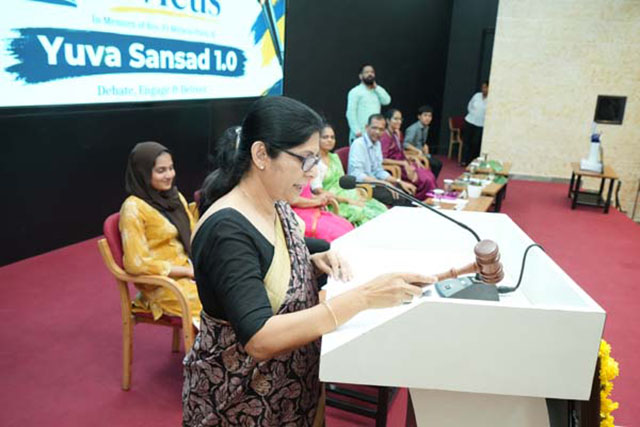
The inauguration highlighted the importance of parliamentary democracy, constructive dialogue, leadership, and active student participation in democratic processes. The official opening of the session was done by the chief guest by striking the gavel.
The programme reflected the spirit of its theme, ‘Debate, Engage & Deliver,’ encouraging students to express their perspectives responsibly and engage in meaningful discussions on contemporary issues.
The formal function concluded with a vote of thanks, expressing gratitude to the chief guest, university leadership, faculty coordinators, organizing committee, and participants for their valuable contributions towards the successful inauguration of Civicus – Yuva Sansad 1.0.
There were two committees with two agendas, which were based on the sustainable development goals, such as SDG 4: quality education, SDG 16: peace, justice and strong institutions, and SDG 17: partnerships for the goals.
Committee 1 - Promoting the national examination ecosystem in order to prevent paper leaks and ensure agency accountability in competitive entrance tests.
The primary agenda of the session was examination policy, which formed the core of the deliberations. Members of the house actively participated in discussions concerning the existing education system, its challenges, and the reforms necessary to make education more accessible, inclusive, skill-oriented, and responsive to the needs of the younger generation. The debate witnessed diverse perspectives, with members putting forward multiple suggestions and policy solutions. The discussions remained engaging and substantive, ultimately culminating in the House deliberating upon and passing a resolution on the agenda.
The session also witnessed a zero hour, during which members raised various issues of national importance. This provided participants with the opportunity to move beyond the principal agenda and bring pressing public concerns to the attention of the house. The zero hour generated several spontaneous and engaging discussions, reflecting the role of parliament as a forum for addressing matters affecting citizens and the nation at large.
The second half of the session took an unexpected and particularly memorable turn with the introduction of a No-Confidence Motion (NCM) against the ruling government. What began as a parliamentary simulation quickly developed into an intense political contest on the floor of the house.
Following spirited debate and deliberation, the ruling BJP government lost its majority, resulting in the NCM being carried. The unprecedented development added an element of unpredictability, excitement, and realism to the proceedings and made the session especially engaging for the participants.
Beyond the individual debates, the Yuva Sansad provided participants with practical exposure to parliamentary procedure, argumentation, negotiation, coalition-building, public policy, and democratic decision-making. The proceedings demonstrated that parliamentary democracy extends beyond speeches, requiring members to listen, negotiate, respond to opposing viewpoints, and work towards collective resolutions.
The session successfully combined substantive policy deliberation with the dynamism of parliamentary politics. From detailed discussions on education policy and the passage of a resolution to the spontaneity of zero hour and the unprecedented outcome of the no-confidence motion, the Yuva Sansad offered participants an engaging and memorable experience of parliamentary functioning.
Overall, the Yuva Sansad served its purpose of fostering constitutional awareness, democratic participation, leadership, critical thinking, and constructive debate among young people, while providing an engaging simulation of the complexities and unpredictability of parliamentary democracy.
Committee 2 - Ensure the right to expression by allowing humour and satire to balance lively deliberations and protect statutory regulations in the present context of the digital era.
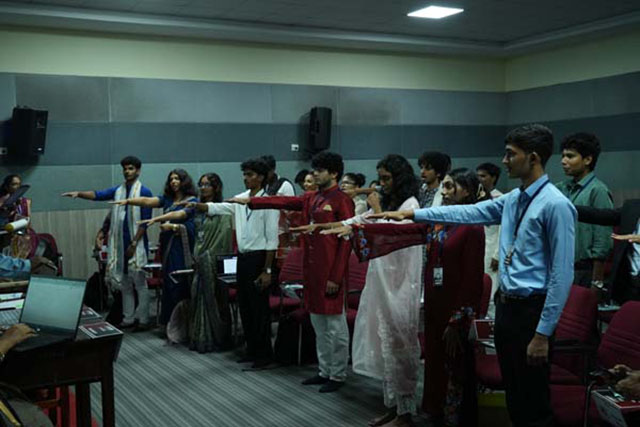
The session began with the rules of procedure session, followed by the formal proceedings, roll call, and oath-taking. The house then moved into the general speakers list, where members discussed freedom of speech and expression, the limits of satire and humour, hate speech, misinformation, deepfakes, defamation, and the role of the judiciary in regulating digital content. Several points of information further highlighted concerns surrounding political criticism, social media accountability, and the equal application of the law.
The house then moved into an unmoderated caucus, followed by a moderated caucus on the proposal to establish an independent body to regulate content on social media platforms. Members presented contrasting views on whether a new regulatory body was necessary, with some supporting an independent mechanism and others arguing that existing institutions and laws should instead be strengthened.
The zero hour further brought attention to issues of accountability, women’s safety, electoral independence, and political responsibility. After extensive deliberation, the house proceeded to voting, where the formal resolution proposing the formation of a body to regulate social media content in the public interest was passed.
Overall, the session reflected a wide range of perspectives and demonstrated the importance of constructive debate, accountability, and balancing freedom of expression with public interest and individual dignity.
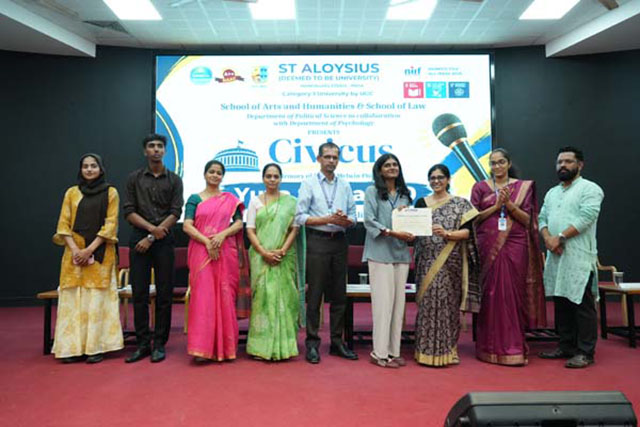
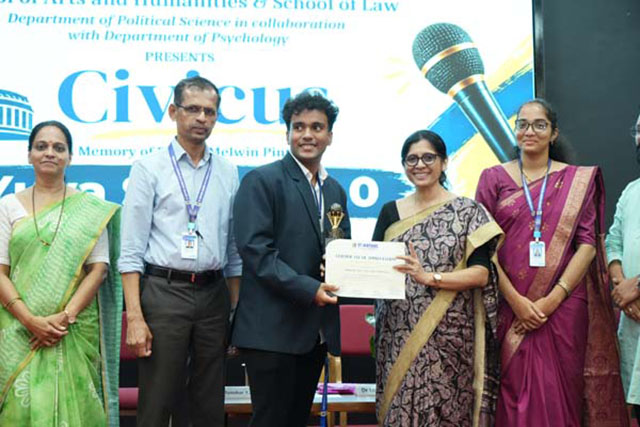
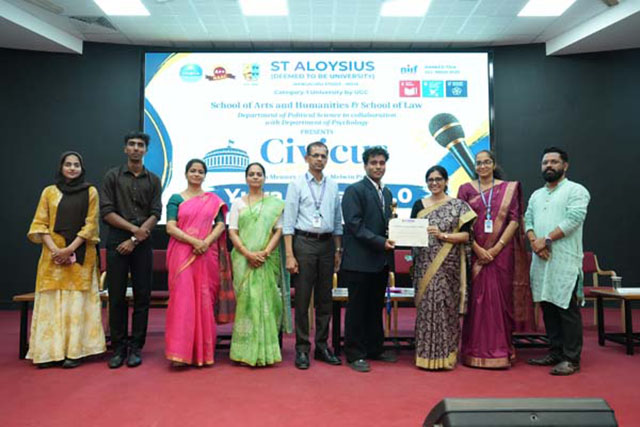
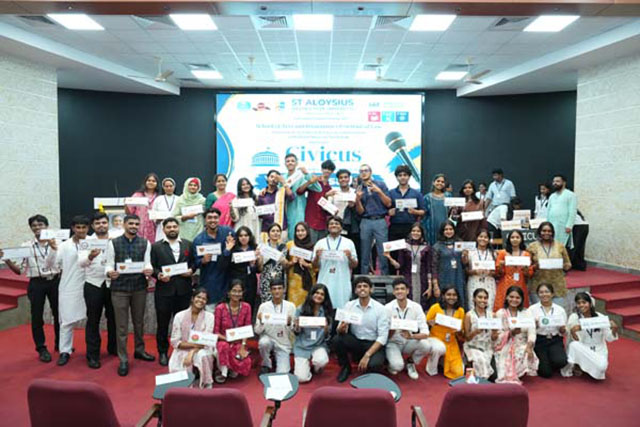
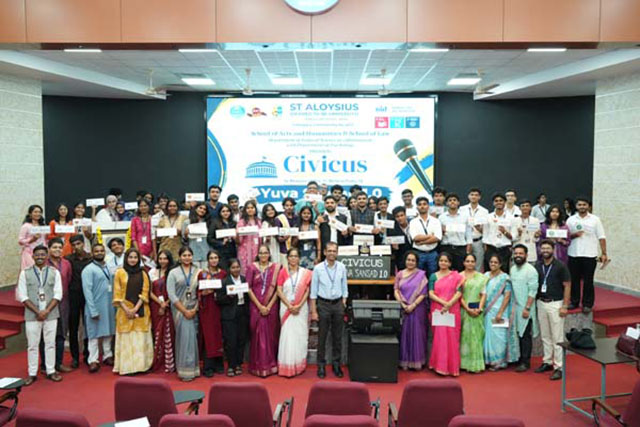
The valedictory programme was scheduled in Eric Mathias Hall. The chief guest was Dr Loveena Lobo, and the programme was presided over by Dr Manohar Serrao, dean, School of Arts and Humanities. The other dignitaries included Dr Shakila Hegde, assistant dean and HOD, department of political science; Olivia Lavita Lobo, School of Law; and Alwin D’Souza, department of political science. The official closing of the session was done by the chief guest by striking the gavel. Later, the prize distribution ceremony was conducted to recognize the best parliamentarian, special mention, and other awards. There were a total of 71 delegates.