Daijiworld Media Network – Hubballi
Hubballi, July 5: In a major leap towards sustainable urban waste management, Hubballi has commissioned Karnataka’s first green charcoal plant, transforming municipal solid waste into fuel in a landmark Rs 157-crore project aimed at tackling the growing garbage crisis faced by urban local bodies.
Solid waste management remains one of the most pressing civic challenges across India, with cities struggling under mounting piles of garbage that pose environmental and health hazards. The Hubballi-Dharwad twin cities are no exception, with waste disposal long remaining a persistent and complex problem.
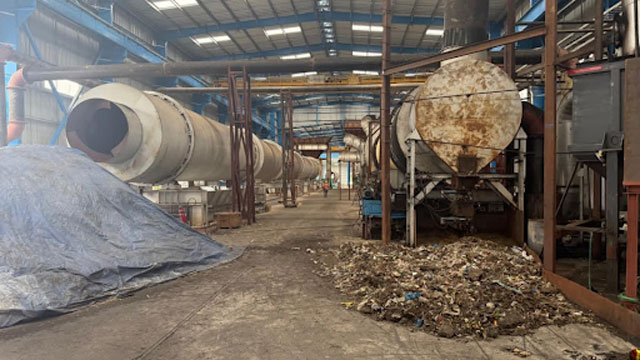
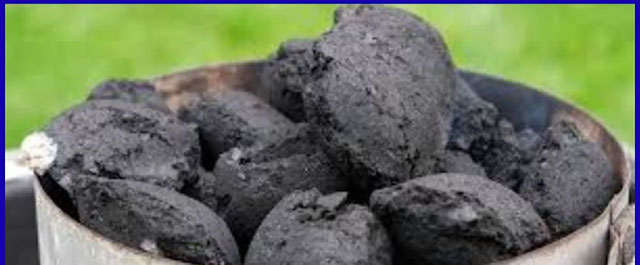
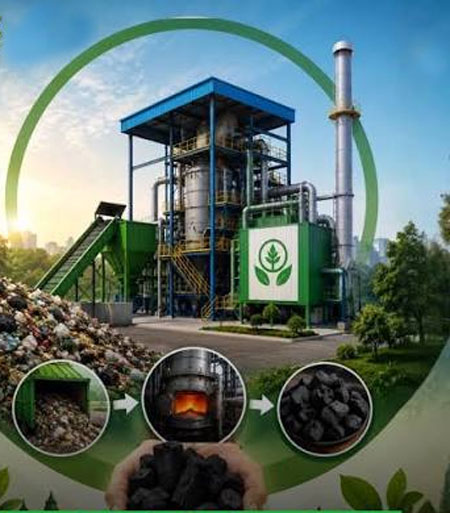
To address this, a large-scale waste-to-energy initiative has taken shape on the outskirts of Hubballi, where a dedicated green charcoal production facility has been established to convert municipal waste into usable fuel.
Significantly, the first such plant in the country was set up in Varanasi, the parliamentary constituency of Prime Minister Narendra Modi. The Hubballi facility is now the second in India and the first in Karnataka, placing the state on the national map for waste-to-energy innovation.
The project has been developed at Gobbur on an eight-acre site at a cost of Rs 157 crore. It is being operated by NTPC and is designed to process municipal solid waste into green charcoal, which will be supplied to the Kudligi thermal power plant in Vijayapura district.
Union Minister Pralhad Joshi, who outlined details of the project, said the plant has a capacity to process around 200 tonnes of waste per day. He added that two identical units are being developed to ensure uninterrupted operations even if one unit is temporarily non-functional.
“This initiative reflects the Prime Minister’s vision. Even if one unit faces a technical shutdown, the other will continue operations without disruption,” Joshi said.
According to civic officials, the Hubballi-Dharwad region generates nearly 500 to 600 tonnes of waste every day, of which around 300 tonnes is wet waste and the remainder is dry waste. Waste management has remained a long-standing challenge for the twin cities, often triggering environmental concerns.
The newly commissioned green charcoal plant is expected to significantly ease this burden. The facility comprises two processing units with a combined production capacity of 120 tonnes of green charcoal per day. Officials said nearly 30 to 35% of solid waste can be converted into charcoal, making it a viable and sustainable alternative for waste disposal.
Hubballi-Dharwad Mayor Jyoti Patil said the project marks a transformational step in addressing the city’s waste crisis. “This is Union Minister Pralhad Joshi’s vision. After Varanasi, this is only the second such facility in the country and the first in Karnataka. We are now converting waste into coal,” she said.
She further noted that the plant is currently in its trial phase and is expected to become fully operational by January 2027. Officials expressed optimism that once fully functional, the facility will significantly reduce the waste burden in the twin cities and offer a long-term, scientific solution to solid waste management.