Media Release
Mangaluru, July 2: The Internal Quality Assurance Cell (IQAC) of St Agnes College (Autonomous), Mangaluru, organised the twelfth Mother Mary Aloysia AC Endowment Lecture at the college's Centenary Auditorium on Thursday.
Instituted in memory of the college's revered founder, Mother Mary Aloysia AC, the annual lecture reflects her vision of promoting academic excellence, scientific temper and holistic education.
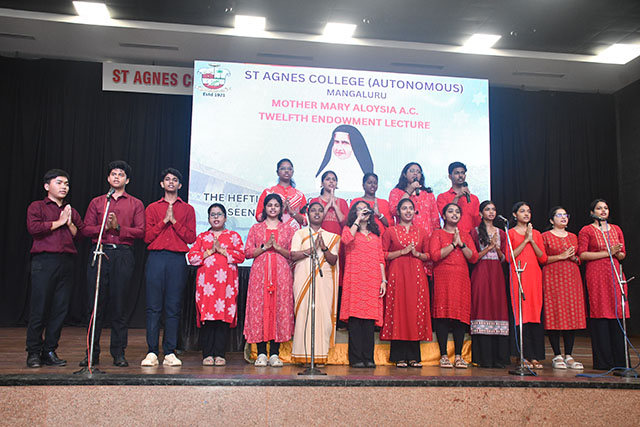
The programme commenced with a prayer, followed by a welcome by the master of ceremonies Raveena. The dignitaries paid floral tributes to Mother Mary Aloysia AC as a mark of reverence to the founder.
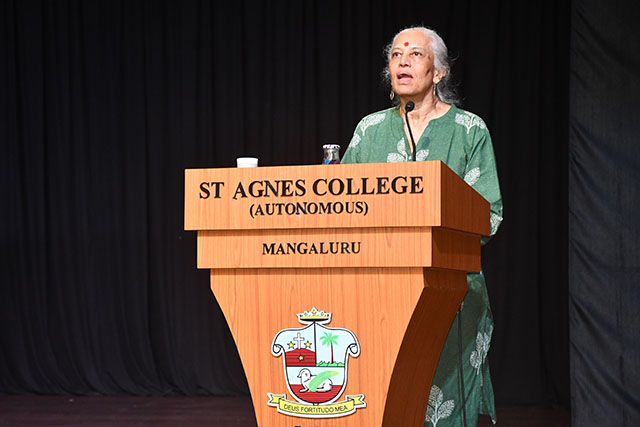
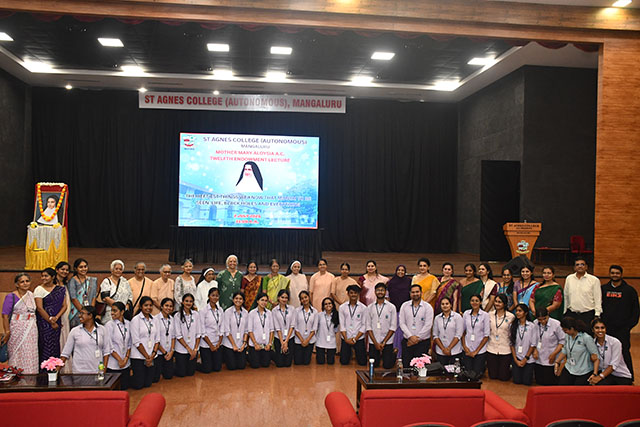
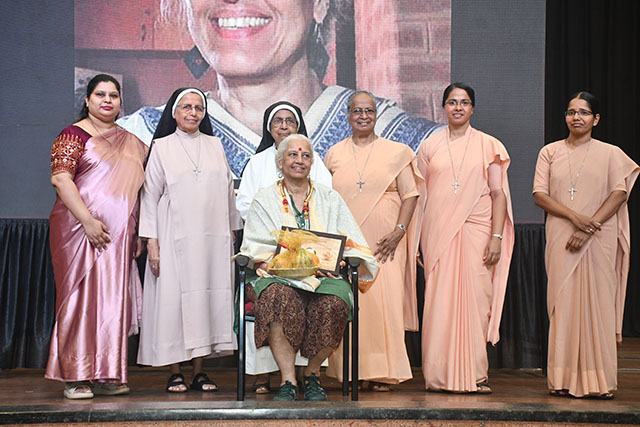
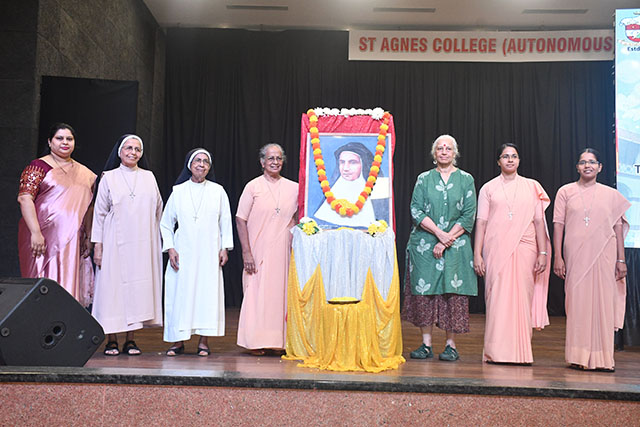
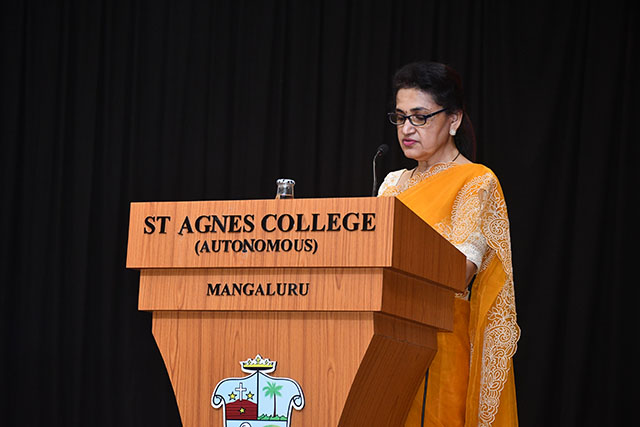
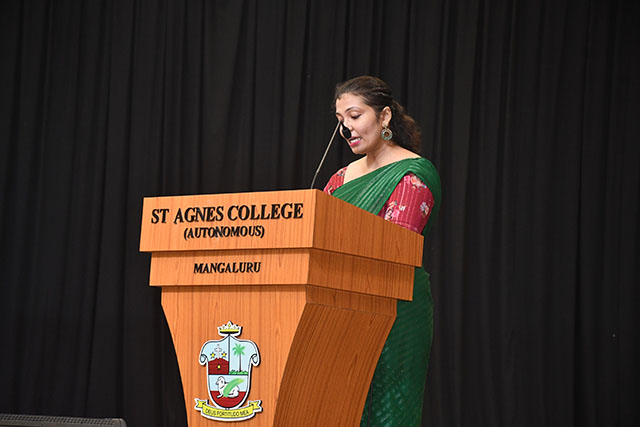
The invited speaker, Prof Prajval Shastri, a distinguished alumna of St Agnes College, retired professor at the Indian Institute of Astrophysics and an internationally renowned astrophysicist, was felicitated by the college in recognition of her outstanding contributions to the field of astrophysics. Sr Dr Roopa AC, vice principal, introduced the resource person, highlighting her illustrious academic career and pioneering scientific achievements.
Delivering the endowment lecture on "The Heftiest Things We Know That Munch to Be Seen: Life, Black Holes and Everything", Prof Shastri captivated the audience with an engaging exploration of black holes and the mysteries of the universe. Explaining Einstein's theory of relativity in simple terms, she described how the curvature of space-time caused by massive objects leads to the formation of black holes and how astronomers infer their existence by observing the motion of nearby stars and the radiation emitted by hot matter surrounding them.
Referring to the first-ever image of a black hole and the scientifically accurate depiction of the black hole Gargantua in the film Interstellar, she demonstrated how astronomical observations and advanced computer simulations have transformed our understanding of the cosmos. Reflecting on her own journey, Prof Shastri fondly recalled how the encouragement she received at St Agnes College nurtured her curiosity and inspired her pursuit of scientific research.
Emphasising the importance of sustained public support for scientific research and environmental responsibility, she concluded with the powerful reminder, "There is no Planet B."
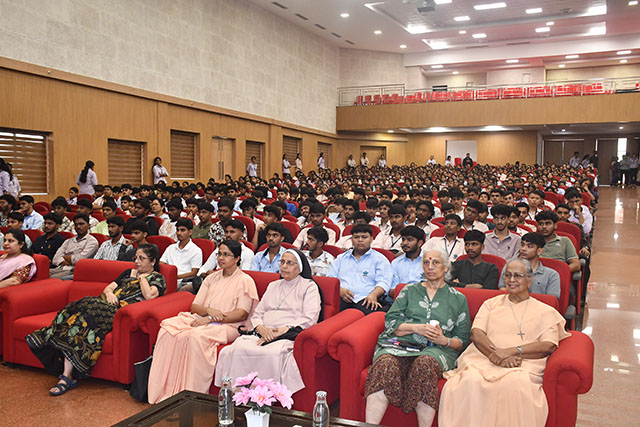
The lecture concluded with an interactive question-and-answer session, during which students enthusiastically engaged the speaker on topics ranging from black holes to space exploration and the future of astrophysics.
Malavika, head of the department of Computer Applications, proposed the vote of thanks, bringing the programme to a close.