Daijiworld Media Network - New Delhi
New Delhi, Apr 18: Narendra Modi on Saturday launched a sharp critique of the Indian National Congress, accusing it of spreading misinformation on delimitation and adopting what he described as an “anti-reform” and divisive political approach.
Addressing the nation a day after the failure of the Constitution (131st Amendment) Bill in the Lok Sabha, the Prime Minister said the debate extended beyond a single piece of legislation and reflected a broader ideological contest with what he termed “dynastic parties.”
He alleged that the Congress was continuing a “divide and rule” strategy and misleading the public by suggesting that delimitation would negatively impact certain states.
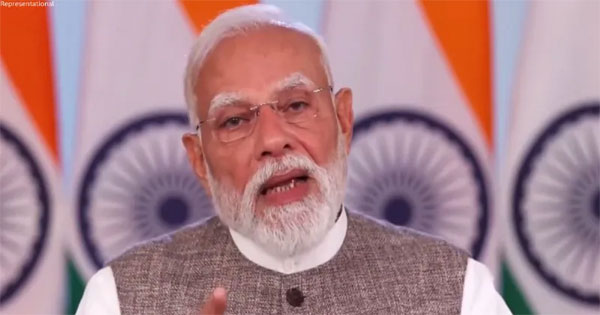
Defending the proposed women’s reservation framework, Modi said the Bill was aimed at securing rights for women rather than claiming political credit. “We could not secure the required two-thirds majority, but the support of women across the country remains with us,” he said, expressing disappointment over the Bill’s failure while vowing to continue efforts toward its implementation.
The Prime Minister also criticised regional parties such as the Dravida Munnetra Kazhagam, All India Trinamool Congress, and Samajwadi Party, accusing them of resisting reforms and fearing increased political participation by women.
According to Modi, expanding representation for women could challenge entrenched leadership structures within these parties. He argued that many women leaders emerging from grassroots governance could gain prominence if reservation policies were implemented.
Highlighting past policy differences, Modi said the Congress had opposed several key reforms linked to his government’s vision of a developed India, including the Goods and Services Tax, Citizenship Amendment Act, Uniform Civil Code, and the abrogation of Article 370.
He further claimed that the outcome of the women’s reservation Bill exposed a pattern of opposition to gender-focused reforms and suggested that women voters would take note of the positions adopted by various parties.
The Constitution (131st Amendment) Bill, 2026, which proposed 33 per cent reservation for women in Parliament, secured 298 votes in favour and 230 against, falling short of the two-thirds majority required for passage in the Lok Sabha.