Media Release
Mangaluru, Mar 7: In India, neurological diseases such as Multiple Sclerosis are increasingly being observed even among young people. The impact of these diseases is seen across all age groups. Considering various factors including genetic causes, continuous research is being carried out on disease-modifying therapies, said Dr Asha Kishore, director of the Parkinson’s and Movement Disorders Centre at Aster Cluster, Kerala.
She was speaking after inaugurating the International Clinical Neuroimmunology workshop organized by the Advanced Neuro Sciences Research Centre of K S Hegde Medical Academy, a constituent of Nitte (Deemed to be University), at the Avishkar Auditorium of A B Shetty Memorial Institute of Dental Sciences, Deralakatte.
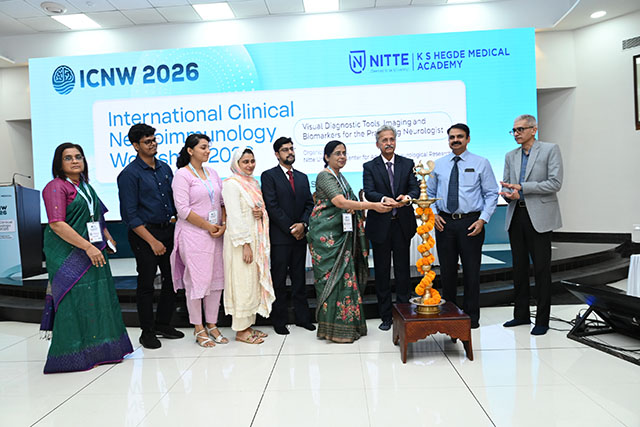
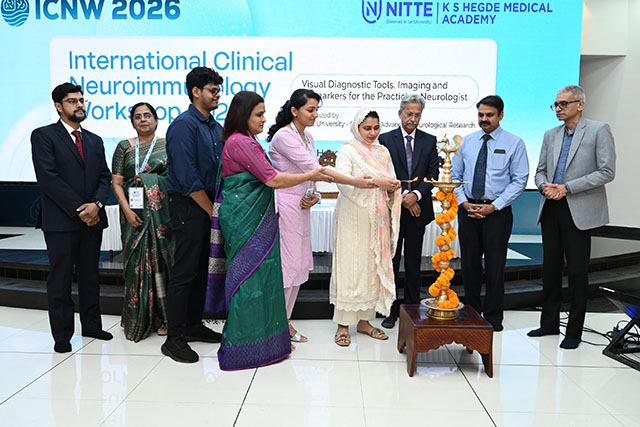
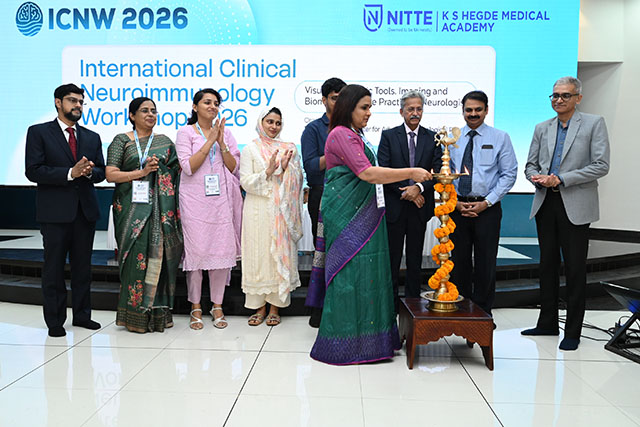
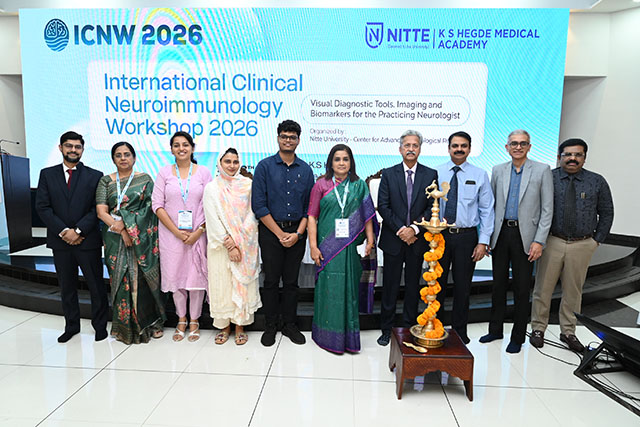
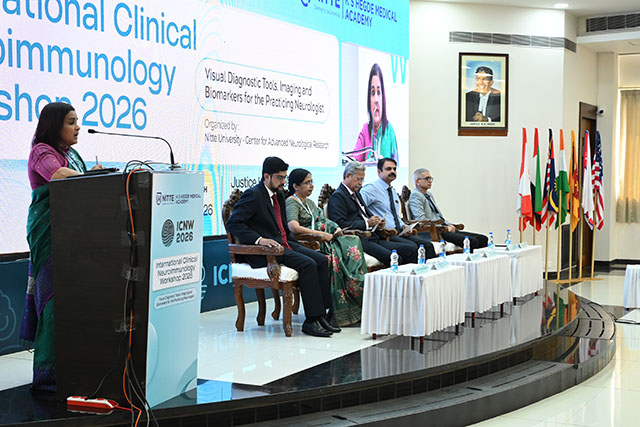
Dr Kishore said that in addition to clinical examinations, modern diagnostic methods such as CT scans, biograms and other advanced technologies are now being used to identify neurological disorders. Beyond steroid therapy, several new treatment methods have been developed. Such diseases require long-term treatment and continuous medical monitoring. Managing the side effects that arise during treatment is a major challenge.
She further stated that new-generation research is taking place in the field of neurology, and efforts are being made globally to develop improved treatment methods through translational research. In recent years, significant and transformative changes have taken place in the diagnosis and treatment of neurological diseases. Doctors, researchers and students must work with greater preparedness in the coming years in this field, she added.
Presiding over the programme, Prof Dr M S Moodithaya, vice-chancellor of Nitte (Deemed to be University), said that the research system at Nitte University is different from the conventional education system. Research and extension services make significant contributions to societal development. Research carried out in universities leads to new discoveries in the fields of medicine and science. Along with education, extension activities that serve society also play an important role.
He added that the university is planning impactful academic programmes next year, which will help achieve further progress in research and the medical field.
Guests of honour included Dr Harsha Halahalli, registrar of Nitte (Deemed to be University), and Immad Mohammed Ismail, Observer of the Karnataka Medical Council.
Dr Lekha Pandit, director of the Advanced Neuro Sciences Research Centre at K S Hegde Medical Academy, welcomed the gathering. Dr Alexander Lobo and Dr Suhan compered the programme. Dr Sandeep Rai, dean of K S Hegde Medical Academy, delivered the vote of thanks.
Dr Lekha Pandit said:
“Initially, we expected around 50 to 75 participants for the International Clinical Neuroimmunology Workshop. However, due to the excellent response from doctors and researchers, more than 175 participants have already registered. Experts will deliver lectures and discussions on the latest research related to neurology and the immune system, as well as new methods of disease diagnosis and treatment. This workshop will serve as an excellent platform for doctors, researchers and students to share new knowledge in the field of neurology.”