Daijiworld Media Network – New Delhi
New Delhi, Feb 25: Chief Justice of India Surya Kant on Wednesday asserted that he “will not allow anybody to defame the institution” and said “law will take its course,” as the Supreme Court took suo motu cognisance of contents in an NCERT Class 8 textbook referring to corruption in the judiciary.
A bench comprising the CJI along with Justices Joymalya Bagchi and Vipul M Pancholi was informed by senior advocate Kapil Sibal that “children of class 8 are taught about corruption in the judiciary,” terming the issue a matter of “grave concern.”
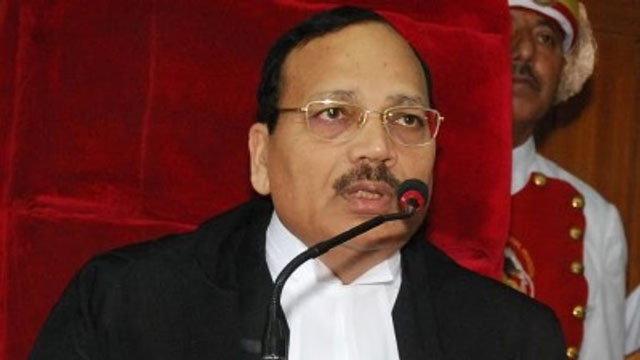
“As head of the institution, I have done my duty and have taken cognisance,” the CJI observed, describing the move as “calculated,” while refraining from elaborating further.
The controversy centres on a political science chapter published by the National Council of Educational Research and Training (NCERT), which highlights challenges facing India’s judicial system, including corruption, case backlog, and inadequate judicial strength.
Earlier editions of the textbook largely focused on the structure and functions of courts. However, the revised chapter includes a dedicated section on “corruption in the judiciary,” noting that judges are governed by a code of conduct that regulates their behaviour both inside and outside the courtroom.
The book also details the scale of pendency across courts, citing approximately 81,000 pending cases in the Supreme Court, 62.40 lakh in high courts, and 4.70 crore in district and subordinate courts.
It further quotes former Chief Justice of India B R Gavai, who in July 2025 stated that instances of corruption and misconduct within the judiciary negatively impact public confidence.
“However, the path to rebuilding this trust lies in the swift, decisive and transparent action taken to address and resolve these issues. Transparency and accountability are democratic virtues,” he was quoted as saying in the textbook.
The Supreme Court’s decision to take suo motu cognisance signals that the matter may now be examined judicially, even as debate intensifies over how institutional challenges are presented in school curricula.