Daijiworld Media Network – New Delhi
New Delhi, Feb 17: The Supreme Court of India has dismissed a disability compensation claim filed by a former Army personnel, ruling that a medical condition arising from habitual smoking cannot be linked to military service.
A Bench comprising Justices Aravind Kumar and Prasanna B. Varale upheld the order of the Armed Forces Tribunal, observing that the appellant’s medical records clearly indicated he was in the habit of smoking around ten bidis a day.
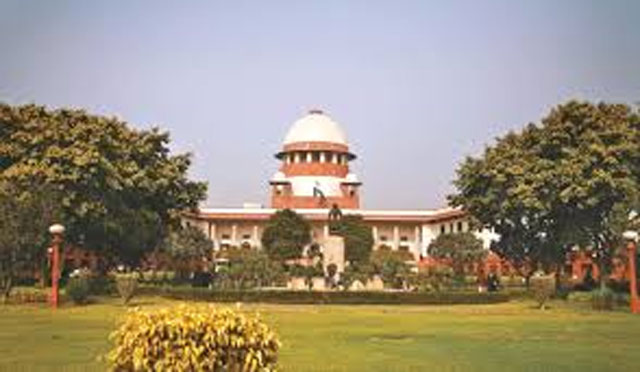
Referring to Regulation 173 of the Pension Regulations for the Army, 1961, and paragraph 6 of the Guide to Medical Officers, 2002, the Court noted that compensation cannot be granted for disabilities resulting from personal habits such as excessive use of alcohol, tobacco or drugs, or from sexually transmitted diseases, as these fall within an individual’s control.
“The appellant was in the habit of smoking bidis — that too ten bidis per day,” the Bench observed, adding that established medical principles recognise smoking as a significant risk factor for ischemic stroke. The Court elaborated that an ischemic stroke occurs when a blood clot or fatty plaque blocks an artery supplying blood to the brain, leading to restricted oxygen flow and brain tissue damage.
It further pointed out that recognised risk factors include hypertension, smoking, diabetes, high cholesterol, obesity and atrial fibrillation.
The Court concluded that the appellant’s medical condition — “Stroke Ischemic RT MCA Territory” — was neither attributable to nor aggravated by military service and therefore did not qualify for disability compensation under the Pension Regulations for the Army, 1961.
The Bench also rejected reliance on the earlier ruling in Bijender Singh v. Union of India & Ors. (2025), clarifying that the facts of that case were entirely different. In Bijender Singh, the appellant had been posted at the high-altitude Siachen Glacier, and the Court had taken note of the extreme service conditions while assessing disability.
In contrast, the present case involved no such exceptional circumstances, rendering the earlier precedent inapplicable, the Court held.