Daijiworld Media Network – Bengaluru
Bengaluru, Jan 31: A report by the Comptroller and Auditor General of India (CAG) has exposed serious lapses in the implementation of the Centre’s flagship Smart City Mission in Karnataka, stating that negligence has led to the failure of smart road projects across the state.
The report noted that in cities other than Bengaluru, smart roads were constructed without adequately providing essential utility corridors such as water supply lines, underground drainage connections, stormwater drains, optical fibre cables and gas pipelines. As a result, roads have had to be repeatedly dug up, which the report said is detrimental to the long-term durability of roads and causes inconvenience to public movement.
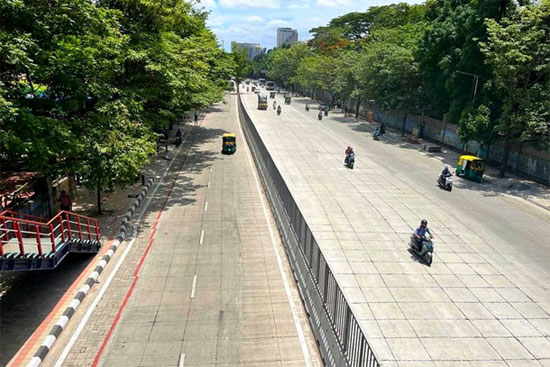
Representational image
The central government had identified seven cities—Bengaluru, Belagavi, Davanagere, Hubballi-Dharwad, Mangaluru, Shivamogga and Tumakuru—for transformation into Smart Cities. Projects were to be implemented under two components: Area-Based Development (ABD) and pan-city initiatives.
Each city was required to prepare a Smart City Proposal (SCP), outlining its vision, plans for mobilising resources, infrastructure upgrades, and intended outcomes related to smart applications.
According to the report, out of 135 targets specified in the Smart City Proposals, the cities achieved only 68 targets, partially achieved 43 targets, and failed to achieve 24 targets.
Of the 544 projects planned, 160 projects (30%) were dropped by the cities. Projects such as multi-utility bus terminals, flyovers, expansion of smart classrooms in PU colleges, and tunnel road construction were cancelled due to high costs and non-availability of land.
In Belagavi, Davanagere, Hubballi-Dharwad, Mangaluru, Shivamogga and Tumakuru, an allocation of Rs 817 crore was earmarked for Smart City projects from 2015–16 onwards. However, projects worth Rs 1,462 crore were taken up.
Although Rs 200 crore was earmarked for four Special Purpose Vehicles selected on a pilot basis, the actual capital available was only Rs 10 lac.
Other works were also dependent on government support. Consequently, out of 645 projects, only 45 were completed within the stipulated time. The report further mentioned that projects worth Rs 186.79 crore did not align with the specified objectives.
The report recommended that Smart Cities should utilise resources beyond government grants to ensure long-term sustainability of projects. It also called for the appointment of full-time CEOs, avoidance of delays in the tendering process, and cautious use of technology.
The CAG further advised adherence to expert recommendations, inclusion of local body representation in monitoring essential works, appointment of supervisory consultants by the state government for quality checks, and allowing flexibility for modifications based on local needs.