Decline in groundwater levels in Dakshina Kannada raises concern


Daijiworld Media Network – Mangaluru

Mangaluru, Jan 31: A decline in groundwater levels has been recorded in Mangaluru, Moodbidri and Ullal taluks of Dakshina Kannada (DK) district, causing concern among officials and residents.

Despite receiving adequate rainfall this year, overall fluctuation data for 2025 shows a drop in groundwater levels in these three taluks, while levels have improved in the remaining taluks of the district. In 2022, Ullal taluk had recorded the maximum groundwater depth level at 27.68 metres, which has risen to 14.67 metres by 2025. Meanwhile, groundwater levels have increased by about 4 metres in Kadaba, Bantwal and Sullia taluks.
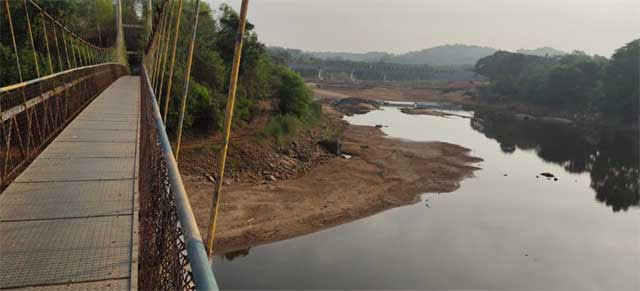
Officials from the groundwater development department stated that except for these three taluks, groundwater levels have increased in all other taluks, placing Dakshina Kannada district in the ‘safe’ category.

Groundwater level data is being compiled through 61 observation wells maintained by the department across all taluks in the district. Digital Water Level Recorders (DWLR) are being used to accurately monitor and record groundwater levels.

Senior geologists of the Dakshina Kannada groundwater department said that the primary reason for the decline in groundwater levels is the increase in population, which has led to higher water demand. Additionally, groundwater usage for agriculture and horticulture has also increased significantly.

Several measures have already been initiated to prevent further depletion of groundwater. Greater emphasis is being laid on rainwater harvesting. Priority is being given to rainwater collection, recharge of groundwater sources such as open wells and borewells, adoption of drip irrigation and sprinkler systems to improve agricultural water use efficiency, and construction of check dams. Awareness programmes are also being conducted at the gram panchayat level.

Obtaining a no-objection certificate from local bodies has been made mandatory for drilling borewells, and this rule is being strictly enforced. In certain cases, inspections are also carried out by a committee headed by the district deputy commissioner along with the groundwater department. There are plans to further tighten borewell regulations.

“While groundwater levels have not declined in most taluks of the district except for the three mentioned, maintaining groundwater levels in the future will require sustained efforts in rainwater harvesting, recharge and public awareness. Some industries and factories in and around Mangaluru are already harvesting rainwater and using it throughout the year, and this practice needs to be implemented on a wider scale,” said Sheikh Dawood, senior geologist, groundwater development department, Dakshina Kannada.


Top Stories

Comment on this article

  • Leo Lasrado, Mangalore/Ahmedabad

    Sun, Feb 01 2026

    Rain water is allowed to runoff to rivers.The Space Application Center of ISRO had successfully demonstrated that by constructing mud walls to stop this runoff and allow to soak the mud,will enhance the water level.Additionally,growing large trees on barren land can also help.With this available scientific knowledge,we certainly will be able to raise groundwater levels.This is the quickest and cheapest solution.

    DisAgree Agree [2] Reply Report Abuse

  • Rudolf Rodrigues, Mumbai-Mangalauru

    Sat, Jan 31 2026

    Main reason for the water table going low is rampant and unchecked drilling of deep bores; in the city to cater to the voracious demands of multiple skyscrapers scattered across the city; in the country side farmers who have converted their paddy for are drilling multiple borewells (with nobody to monitor them) to water their water-guzzling areca plantations; there has been no concomitant efforts to recharge these wells with the latest scientific methods; when one well dries up another one is bored and this abuse of ground water has been going on since decades without any check! With such a high concentration of tertiary care hospitals there is a humungous need of potable water; in fact most of these hospitals and high rises are at the mercy of tanker water supply (sources unknown) throughout the year! If the construction of skyscrapers continues then the potable water supply situation is bound to become very critical; don't understand on what basis permissions are being granted by MCC! As per reports 75% of open well water in the city is contaminated with sewage water! Bore water after a certain depth is harmful for drinking as it's contaminated with heavy metals and radon! Predictions by former World Bank Vice President Ismail Serageldin in 1995, and A.P.J. Abdul Kalam that in future wars will be fought over water!

    DisAgree Agree [9] Reply Report Abuse

  • Eva, Kirem

    Sat, Jan 31 2026

    Just few years ago we used to build temporary dams in every flowing water streams to help cultivate second season paddy feilds to grow rice and vegetable. Implementing dams once again may help to retain water.

    DisAgree Agree [13] Reply Report Abuse


Leave a Comment

Title: Decline in groundwater levels in Dakshina Kannada raises concern


You have 2000 characters left.

Disclaimer:

Please write your correct name and email address. Kindly do not post any personal, abusive, defamatory, infringing, obscene, indecent, discriminatory or unlawful or similar comments. Daijiworld.com will not be responsible for any defamatory message posted under this article.

Please note that sending false messages to insult, defame, intimidate, mislead or deceive people or to intentionally cause public disorder is punishable under law. It is obligatory on Daijiworld to provide the IP address and other details of senders of such comments, to the authority concerned upon request.

Hence, sending offensive comments using daijiworld will be purely at your own risk, and in no way will Daijiworld.com be held responsible.