Daijiworld Media Network - Tehran
Tehran, Jan 27: Iran’s violent crackdown on nationwide protests has killed at least 6,126 people, activists said on Tuesday, even as a US aircraft carrier strike group reached the Middle East, heightening fears of a wider regional conflict.
The USS Abraham Lincoln aircraft carrier, along with accompanying guided missile destroyers, arrived in the region, giving the United States the capability to strike Iran if tensions escalate further. The deployment comes amid strong signals from Gulf Arab states that they wish to stay out of any potential military confrontation, despite hosting American forces.
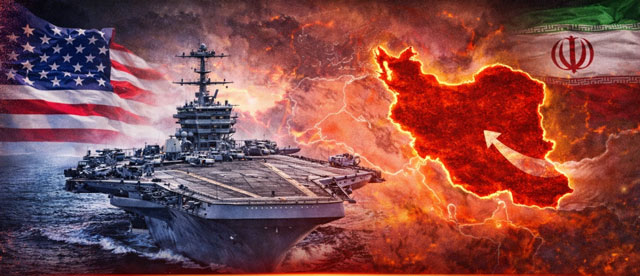
The unrest has also triggered reactions from Iranian-backed militias in the region, with some indicating readiness to launch new attacks. This follows warnings by US President Donald Trump, who threatened military action if Iran continues killing peaceful protesters or carries out mass executions.
Iran has warned that any attack could drag the entire Middle East into war. However, its military capabilities remain weakened following a June conflict with Israel that severely damaged its air defences. Analysts say Iran’s so-called “Axis of Resistance” has been left in disarray after sustained Israeli strikes on allied groups during the Gaza conflict.
According to the US-based Human Rights Activists News Agency, the dead include at least 5,777 protesters, 214 government-affiliated personnel, 86 children and 49 civilians not involved in demonstrations. The group said more than 41,800 people have been arrested so far. It relies on a network of activists inside Iran to verify deaths.
The Associated Press said it has been unable to independently confirm the figures due to Iran’s internet shutdowns and communication disruptions.
Iranian authorities have acknowledged a far lower death toll of 3,117, claiming many of those killed were “terrorists”. Rights groups have accused Tehran of routinely undercounting casualties during periods of unrest.
The protests, which began on December 28 over the collapse of the Iranian rial, quickly spread nationwide and were met with what activists describe as the most severe crackdown in decades. The scale of violence is only now emerging after more than two weeks of near-total internet blackout.
Iran’s UN ambassador, Amir Saeid Iravani, told the UN Security Council that Trump’s threats of military force were “neither ambiguous nor misinterpreted”, while accusing the US and Israel of backing armed groups—claims for which he provided no evidence.
Meanwhile, Iranian-backed groups including Yemen’s Houthi rebels and Iraq’s Kataib Hezbollah have issued fresh warnings against any attack on Iran, while Lebanon’s Hezbollah said it is preparing for “possible aggression” but stopped short of detailing its response.