Daijiworld Media Network - Mumbai
Mumbai, Jan 19: With the results of the 2026 Brihanmumbai Municipal Corporation elections now declared, political attention in Maharashtra has shifted swiftly from seat counts to a single, decisive question: who will occupy the powerful chair of Mumbai Mayor. Although the Bharatiya Janata Party has emerged as the largest party in the civic body, the final outcome remains uncertain and will depend on a crucial reservation draw scheduled later this week.
The Urban Development Ministry has announced that the reservation lottery for mayoral posts across all 29 municipal corporations in the state, including Mumbai, will be conducted on January 22, 2026, at Mantralaya. The draw will determine whether the Mayor’s post is reserved for the Open category, OBC, Scheduled Castes, Scheduled Tribes, or women—an outcome that could dramatically reshape the political equation in Mumbai.
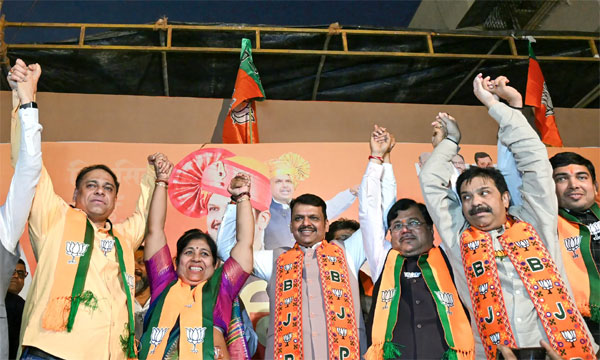
Until the reservation category is known, all parties remain in a holding pattern. Political observers, however, note a potential edge for Uddhav Thackeray-led Shiv Sena (UBT) if the post is reserved for the Scheduled Tribes category. Ahead of the polls, two wards in Mumbai were earmarked for ST candidates, both of which were won by Sena (UBT). Jitendra Valvi secured Ward 53, while Priyadarshani Thackeray emerged victorious in Ward 121. If the mayoral post is reserved for STs, Sena (UBT) would effectively be the only party with eligible candidates, opening the door to a surprise capture of the mayor’s office despite its lower overall seat tally.
The final results of the BMC elections, declared on January 16, saw the BJP leading with 89 seats, followed by Shiv Sena (UBT) with 65. The Eknath Shinde-led Shiv Sena secured 29 seats, Congress won 24, AIMIM 8, MNS 6, NCP (Ajit Pawar) 3, Samajwadi Party 2 and NCP-SP 1.
As anticipation builds, political rhetoric has intensified. Uddhav Thackeray struck an optimistic note, saying that if destiny permits, the mayoralty would come to his party. Chief minister Devendra Fadnavis, responding from Davos where he is attending the World Economic Forum, countered sharply, asserting that the decision was already sealed in favour of the ruling Mahayuti alliance.
Adding to the intrigue, deputy chief minister and Shiv Sena leader Eknath Shinde has shifted his 29 corporators to a luxury hotel, citing the need to guard against poaching and political manoeuvring ahead of the mayoral vote. Shinde has repeatedly maintained that the Mahayuti—comprising the BJP and his faction of the Shiv Sena—will retain control of Mumbai’s civic administration. Together, the alliance commands 118 seats, comfortably above the majority mark of 114.
Yet, the arithmetic could be overturned if the reservation lottery favours the ST category, setting the stage for an unexpected political twist in India’s financial capital.
Beyond Mumbai, the BJP has delivered a strong performance statewide, securing power in 19 of Maharashtra’s 29 municipal corporations. The party consolidated its hold in cities such as Pune, Pimpri-Chinchwad and Nagpur, while also making inroads in Sambhajinagar, challenging the influence of the Thackeray camp.
As January 22 approaches, Mumbai’s political circles remain on edge, with the mayor’s chair hanging in the balance and the reservation draw poised to decide whether numbers or nuance will ultimately prevail.