Daijiworld Media Network - Vijayawada
Vijayawada, Dec 27: The Andhra Pradesh government’s move to expand medical education through the public-private partnership (PPP) model has triggered widespread debate, with experts and stakeholders raising concerns over affordability, access, and the long-term impact on public healthcare.
Over the past three years, the state expanded government medical colleges from 11 to 17, while 19 private colleges are already operational. The previous Y.S. Jagan Mohan Reddy government initiated plans to add 10 more colleges under the PPP model, acquiring 835 acres of land for the purpose. Once fully functional, Andhra Pradesh is expected to have over 6,500 medical seats across government, private and PPP institutions.
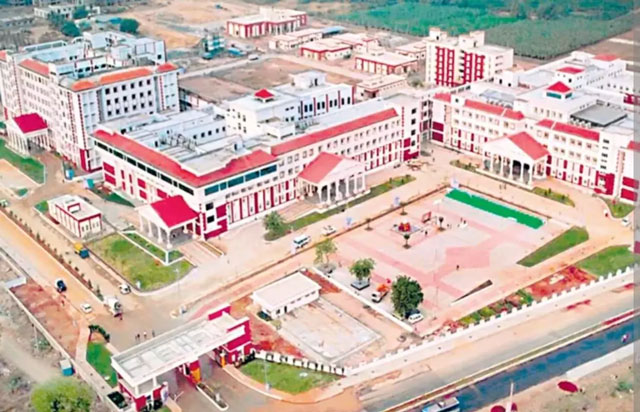
Each proposed college, estimated to cost around Rs 450 crore, is planned to be attached to a 650-bed district hospital. While government medical colleges traditionally offer subsidised education, a three-tier fee structure was designed to ensure financial sustainability, including higher fees for a significant portion of seats and a separate quota for non-resident Indians.
Following the change in government, the N. Chandrababu Naidu-led administration engaged KPMG in 2024 to prepare feasibility reports for medical colleges under a PPP framework, an approach strongly advocated by NITI Aayog. Under this model, land and district hospitals would be leased to private investors for up to 66 years at nominal rates, along with viability gap funding and guaranteed patient inflow through state health insurance schemes.
In return, private partners would be required to complete construction within two years, provide free outpatient services and reserve 70% of inpatient beds for government-referred patients treated under Ayushman Bharat package rates. The remaining beds could be used for commercial services.
However, the proposal has faced resistance from doctors, activists and public health experts, who allege that it amounts to privatisation of public assets. Critics fear that students from middle-class and poor backgrounds may lose access to affordable medical education, while job opportunities and free healthcare services could shrink.
Concerns have also been raised about risk-sharing in the contracts, with apprehensions that private investors may cut corners on faculty appointments, compromise on quality of care, or find ways to bypass obligations. Experts warn that if such projects fail, the government’s only recourse would be prolonged legal battles.
Public health specialists argue that handing over district hospitals for decades could weaken the public health system, especially when evidence suggests that strong primary care can significantly reduce hospitalisation needs. They also caution that rapid expansion of medical colleges without adequate faculty and planning could mirror the collapse seen in the engineering education sector after the IT boom.
Former Union Health Secretary Kannuru Sujatha Rao has stressed the need for an evidence-based assessment, considering changing disease patterns, demographics and technology, before committing to uniform large hospitals and long-term PPP arrangements. She also warned that commercialisation of medical education could worsen doctor shortages in rural and government facilities.
With protests mounting and questions over regulatory capacity, the PPP model for medical education in Andhra Pradesh continues to draw scrutiny, as debates intensify over balancing fiscal constraints with equity, quality and public welfare.