Daijiworld Media Network - Oregon
Oregon, Dec 16: In a development that could open new frontiers in infertility treatment, researchers at the Oregon Health & Science University (OHSU) in the United States have demonstrated that human skin cells can be used to create eggs capable of producing early-stage embryos. The findings, published in Nature Communications, have drawn global attention for their potential to help millions struggling with infertility.
The research, though still at an early and experimental stage, offers a proof of concept that eggs could one day be created from a patient’s own body cells, enabling genetically related children even in cases where functional eggs or sperm are absent. Scientists involved cautioned that it could take at least a decade before the technique is ready for initial clinical trials.
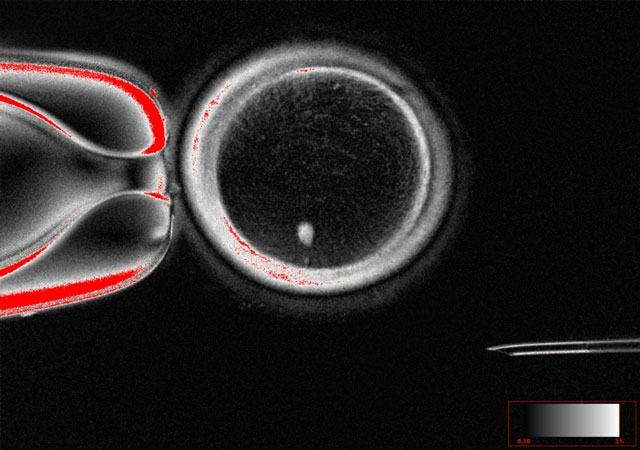
Infertility often arises from the absence of healthy gametes — eggs or sperm — forcing couples to rely on donor cells during treatments such as in-vitro fertilisation (IVF). The OHSU team aimed to overcome this limitation by developing eggs directly from a patient’s own cells, thereby addressing both biological and emotional challenges faced by infertile couples.
Human cells typically divide through mitosis, producing identical cells with the same chromosome count, while eggs and sperm are formed through meiosis, a specialised process that halves the chromosome number. Replicating meiosis in the laboratory has long been a scientific challenge due to the high risk of chromosomal errors.
The OHSU researchers introduced a novel approach they termed “mitomeiosis”, combining elements of both processes. Using a technique related to somatic cell nuclear transfer — famously used to clone Dolly the sheep — the team replaced the DNA of donor eggs with DNA from skin cells and induced them to behave like eggs. The goal was to produce eggs with half the normal chromosome count, allowing fertilisation with sperm.
Out of 82 modified eggs created and fertilised through standard IVF, only about 9 per cent developed into blastocysts, a critical early stage of embryo development. Many embryos showed chromosomal abnormalities, a challenge that also occurs naturally in human reproduction, particularly with advancing maternal age.
Senior author Shoukhrat Mitalipov described the work as a breakthrough, saying the team had developed a third method of cell division beyond what nature provides. Researchers now plan to focus on improving chromosome separation to reduce errors and ensure genetic stability.
Experts emphasised that significant scientific, ethical and legal hurdles remain before such technology can be used clinically. These include concerns over long-term safety, genetic imprinting, and the moral status of lab-created embryos, as well as regulatory barriers in countries where only natural eggs and sperm are legally permitted for fertility treatments.
Despite these challenges, scientists say the study marks a major step towards lab-generated eggs or sperm, with the potential to benefit older women, cancer survivors, people born without functioning ovaries, and even same-sex couples seeking genetically related children.