Daijiworld Media Network - Mumbai
Mumbai, Dec 12: In a major policy announcement aimed at transforming Mumbai’s ageing housing landscape, Deputy Chief Minister Eknath Shinde on Thursday informed the Legislative Assembly that the state government will introduce a separate regulatory framework to free the city from the decades-old pagdi system and ensure fair, transparent and timely redevelopment of such buildings. He assured that the rights of both tenants and landlords would be fully protected under the proposed mechanism.
Shinde said Mumbai has more than 19,000 cess buildings, widely known as pagdi structures, most of them constructed before 1960. While some have already undergone redevelopment and others have collapsed over time, nearly 13,000 buildings continue to remain in a dilapidated and unsafe condition. Tenants in these buildings are protected under the Maharashtra Rent Control Act, making their tenancy rights legally valid, he noted. However, landlords have long complained that tenants’ rehabilitation entitlements leave them with inadequate compensation, leading to disputes and poor redevelopment response across the city.
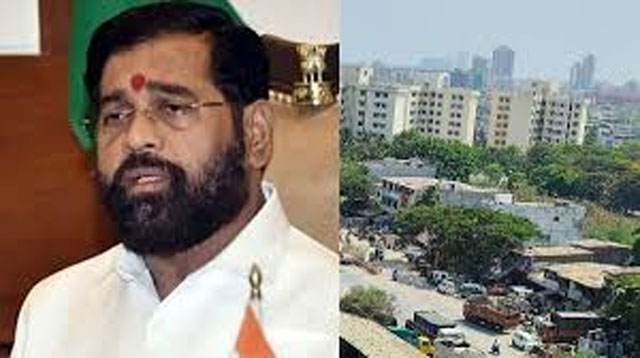
The Deputy Chief Minister said that while tenants require protection, a balanced and fair redevelopment model is equally important to safeguard the interests of landlords. He emphasised that simply offering higher FSI is insufficient, especially for residents from economically weaker and low-income groups, who need reconstruction of their homes at no financial burden. To address these challenges, the new regulatory framework will outline provisions that ensure both sides receive equitable benefits.
Shinde said the upcoming rules will provide FSI equivalent to the area occupied by tenants, restore original FSI based on land ownership to landlords, and offer incentive FSI required for cost-free reconstruction of the homes of pagdi tenants belonging to weaker sections. In cases where certain restrictions prevent the utilisation of the entire FSI, the unused portion will be compensated in the form of TDR. The new mechanism will act as an alternative to existing redevelopment options such as 33(7) and 33(9), which will continue to remain available.
The Deputy CM said this framework will pave the way for redevelopment of thousands of old pagdi buildings, preventing further collapses and loss of life and property. He noted that nearly 28,000 disputes between landlords and tenants are currently pending in small-cause courts, leaving many families entangled in litigation for decades. To speed up redevelopment, he announced that the government, with prior approval of the High Court, will establish additional fast-track courts dedicated to clearing these cases within the next three years.
Shinde added that the new system will help lakhs of Mumbai families living in unsafe and ageing buildings transition into secure ownership homes. He assured that neither tenants nor landlords will face injustice and emphasised that the government remains committed to resolving any difficulties that may arise during implementation.