Daijiworld Media Network - Taiz
Taiz, Oct 10: Residents of Yemen’s southwestern city of Taiz are facing growing fears of a prolonged siege after Houthi fighters captured territory to the south, cutting off the main road connecting the city with other government-held areas and threatening supplies of food, fuel and medicines.
The renewed siege has revived painful memories of the devastating blockade imposed between 2015 and 2016, when pro-government forces were confined to an enclave in the city centre and residents struggled to obtain basic necessities.
“Those were difficult days,” recalled 37-year-old Iskandar Abdullah, a Taiz resident who lived through the earlier siege. “We witnessed the horrors of the siege and experienced the bitterness of life in all its terrifying details. I hope those painful days never return.”
The latest escalation began in early September, when the Iran-backed Houthis launched an offensive along the Red Sea coast of Taiz governorate. The group subsequently took control of the port city of Mocha and the Dhubab district, where the strategically important Bab al-Mandeb Strait is located. The strait is a major international shipping route through which approximately 12 per cent of global trade passes.
The Houthis, who have controlled Yemen’s densely populated northwest, including the capital Sanaa, since the conflict began in 2014, continued advancing into the countryside surrounding Taiz despite a counteroffensive launched by Saudi-backed government forces in early October.
Government forces regained some lost territory, but the Houthis captured the town of al-Turbah by October 4, severing the last major road linking Taiz city with other government-controlled areas.
The closure has left residents increasingly concerned about access to essential supplies. Although the Houthis had maintained a partial siege on Taiz for years by controlling several access points, the latest territorial gains have further restricted movement and disrupted supply routes.
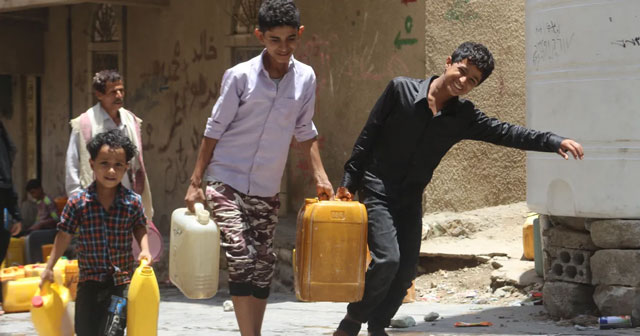
During the 2015–2016 siege, residents endured what Abdullah described as appalling humanitarian and economic conditions. Drinking water, food, fuel and medicines were scarce, and supplies often had to be smuggled across rugged mountain terrain by people and donkeys. Even oxygen cylinders needed by sick and wounded patients were transported through these difficult routes.
The earlier siege was eventually broken in 2016 when pro-government forces recaptured territory south of the city. In 2024, following domestic and international pressure, the Houthis agreed to reopen another important route from the east connecting Taiz with Sanaa and other Houthi-controlled areas in northern Yemen.
However, the route has now been closed following attempted incursions by Houthi fighters, according to security sources who spoke to Al Jazeera. The crossing had become a crucial supply channel, carrying a substantial portion of the food entering the city.
Nabil Jamil, director-general of the planning and development office in Taiz governorate, said the current blockade was more extensive than the one imposed in 2015.
“This time, the siege does not only affect the governorate’s main roads, but also most of the secondary roads connecting the rural districts themselves,” Jamil said.
He estimated that approximately 2.8 million people lived in government-controlled areas of Taiz governorate, while another 200,000 people had recently been displaced by fighting along the coast and in rural areas. All of them face the prospect of worsening humanitarian conditions if access routes remain closed, he warned.
The impact of the renewed siege has already become visible in the city. Within less than a week of the blockade, streets appeared almost deserted amid a shortage of fuel, which had previously entered through the al-Turbah route from Aden.
On the black market, the price of a 20-litre container of petrol reportedly surged from 30,000 Yemeni riyals, equivalent to around $19, to 90,000 riyals, or approximately $58.
Markets and grocery shops have also experienced a rush of customers seeking to stock up on essential items amid fears that supplies could run out. Residents have accused some traders of hoarding goods and exploiting the crisis in the absence of effective market oversight.
Wafiq Saleh, a journalist specialising in economic affairs, said prices of essential commodities, particularly wheat and flour, had risen noticeably, while the prices of vegetables and fruits had doubled because of difficulties transporting produce into the city.
“Traders in the city have food stocks sufficient to last several months,” Saleh said. However, he alleged that some traders had started increasing prices as soon as fighting intensified on the city's outskirts.
Despite the deteriorating situation, residents are hoping government forces will regain the lost territory or advance from areas west of Taiz to reopen access routes. Fighting continues in the surrounding countryside, while the Houthis remain in a strong position in areas south of the city.
Journalist Salman al-Maqrami, who specialises in Houthi affairs, said the siege appeared aimed at weakening the unity of forces opposing the group in Taiz, a city that has long been a centre of resistance to Houthi rule.
He argued that the offensive could also be intended as retaliation against a population largely hostile to the group. Capturing Taiz would carry symbolic significance for the Houthis, demonstrating their ability to threaten territories controlled by the internationally recognised government, even where local populations oppose them.
However, lawyers and rights advocates have warned that the consequences of a prolonged battle for Taiz would fall most heavily on civilians.
Nabil Sharyan, a lawyer and head of the Justice for Rights and Development Organization (JRDO), said civilians must not be used as instruments of pressure in the conflict.
He warned that a prolonged siege could have devastating consequences, particularly for patients, children, women and elderly people who depend on access to hospitals, medical services and medicines.
Restrictions on movement would also affect students, employees and families who need to travel between districts or outside the governorate, he said.
Sharyan urged the international community, human rights organisations and humanitarian agencies to press for the reopening of roads and crossings, the uninterrupted movement of food and other essential goods, and safe access to healthcare.
He stressed that civilians must be able to obtain their basic necessities in conditions that respect their dignity and fundamental rights.
Jamil said the local authorities in Taiz had sent a letter to the United Nations requesting assistance to address the crisis and its humanitarian consequences.
Their immediate priorities include opening safe roads and corridors for civilians, particularly those requiring medical treatment, and ensuring that food and medicines can reach the city.
“We are still waiting for a response or intervention on the ground,” Jamil said.