Daijiworld Media Network - New Delhi
New Delhi, Aug 30: Tiny button batteries found in toys, remote controls, watches, hearing aids, car keys, calculators, musical greeting cards, thermometers and other household gadgets can pose a serious and potentially life-threatening danger to children if swallowed.
Doctors warn that when a button battery becomes lodged in a child's oesophagus, severe tissue damage can develop within as little as two hours. The child may initially appear completely well, making immediate medical evaluation essential even when parents did not witness the swallowing.
According to paediatric specialists, young children may mistake the small, round and shiny batteries for sweets, coins or other harmless objects. Once a battery comes into contact with moist tissue, it can generate an electrical current that produces hydroxide ions and creates a highly alkaline environment. This chemical reaction can rapidly burn the lining of the oesophagus.
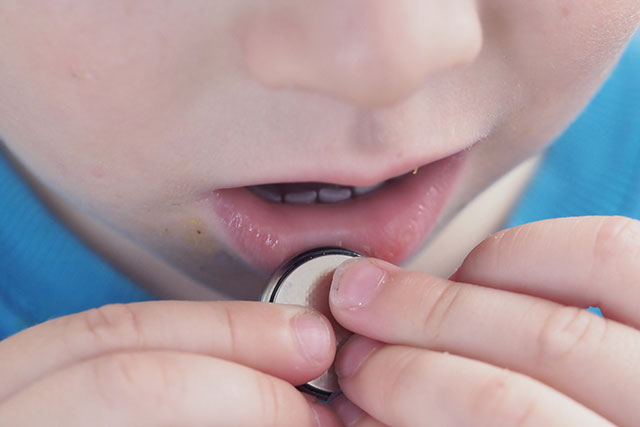
The resulting injury can cause severe burns, deep ulceration and even perforation. Damage can extend to surrounding structures and blood vessels, potentially resulting in severe bleeding, infection and other life-threatening complications. Importantly, the danger does not necessarily end after the battery has been removed. Serious complications, including injury to major blood vessels, can appear days or even weeks after the initial injury.
Children who have swallowed a button battery may suddenly refuse food or drinks, drool excessively, vomit or experience difficulty or pain while swallowing. They may complain of pain or discomfort in the throat, neck or chest, develop persistent coughing, wheezing or noisy breathing, experience breathing difficulty or become unusually irritable or lethargic.
However, experts stress that symptoms may be absent initially. Parents may also fail to notice the swallowing incident. Therefore, if there is any possibility that a child has swallowed a button battery, medical attention should not be delayed while waiting for symptoms.
The child should be taken to the nearest emergency department immediately. If the child is at least 12 months old, can swallow safely, and the battery may have been swallowed within the previous 12 hours, the National Capital Poison Center recommends giving two teaspoons of honey every 10 minutes, for up to six doses, while travelling to the emergency department, particularly when a lithium coin cell may have been swallowed. Honey can help slow the development of tissue injury, but it does not remove the battery and must never delay emergency treatment.
Honey should not be given to children below one year of age, to a child who cannot swallow safely or when doing so would delay reaching emergency care. Apart from the recommended honey, the child should not be given food or drink until medical assessment has ruled out an oesophageal battery.
Parents should never induce vomiting or assume that a child is safe simply because the child appears normal. A suspected battery ingestion should be treated as an emergency.
An urgent X-ray is generally required to determine the battery's location. In children, imaging is used to establish whether the battery is lodged in the oesophagus or has passed into the stomach or beyond. When an oesophageal battery is suspected, frontal and lateral views can help establish its position and orientation.
If the battery is lodged in the oesophagus, it must be removed immediately, usually through endoscopy. The National Capital Poison Center warns that serious burns can occur within two hours. Removal should not be postponed because the child has recently eaten or because honey has been administered.
The extent of injury depends on several factors, including the battery's size, type, location and the length of time it remains lodged. Large lithium coin cells, particularly those around 20 mm in diameter, are among the batteries most frequently associated with severe oesophageal injuries.
Even after successful removal, doctors may need to monitor the child closely because tissue damage can continue to evolve. Possible complications include deep oesophageal ulceration, perforation, infection, narrowing of the oesophagus known as a stricture, swallowing difficulties, injury to nearby structures and severe or delayed bleeding. Rarely, major blood vessels can be affected, creating a catastrophic risk.
The reason for the severe injury is the chemical reaction generated when the battery contacts moist tissue. The electrical current around the battery produces hydroxide, creating an alkaline environment capable of rapidly damaging tissue.
Medical experts therefore emphasise prevention. Parents and caregivers should keep both new and used button batteries completely out of children's reach and store spare batteries in a secure location. Used batteries should be disposed of safely and promptly.
Battery compartments in toys and electronic devices should be checked regularly to ensure that their covers are tightly secured and cannot easily be opened by children. Particular care is required with hearing-aid batteries, remote controls, watches, car keys, calculators, musical cards and other small electronic devices.
Loose batteries should never be left in handbags, bedside tables, drawers or other locations accessible to children. Grandparents, babysitters, domestic caregivers and other family members should also be made aware of the danger.
Recent research has also examined newer coin-cell battery designs intended to reduce oesophageal injury. A 2026 preclinical study found that a titanium-based lithium coin-cell battery caused substantially less visible oesophageal injury than conventional lithium batteries. However, researchers stressed that the newer battery can still generate alkaline hydroxide and that existing emergency-management protocols should continue to be followed.
A swallowed button battery may be tiny, but the consequences can be devastating. If a child may have swallowed one, parents should not wait for symptoms or attempt home treatment as a substitute for medical care. Immediate emergency evaluation, appropriate X-rays and rapid removal of a battery lodged in the oesophagus can prevent severe complications and may save the child's life.
When it comes to button-battery ingestion, every minute counts.