Daijiworld Media Network - New Delhi
Tehran, Jul 27: Iran has confirmed that the United States is communicating with Tehran through third-party mediators, including Pakistan and Qatar, even as uncertainty continues to surround the future of bilateral nuclear negotiations.
Iranian Foreign Ministry spokesperson Esmaeil Baghaei, speaking in an interview with Austrian broadcaster ORF, said indirect exchanges between the two countries are ongoing. According to Iranian media reports, Baghaei stressed that any meaningful dialogue would require the restoration of trust, arguing that Washington had undermined the conditions necessary for constructive engagement.
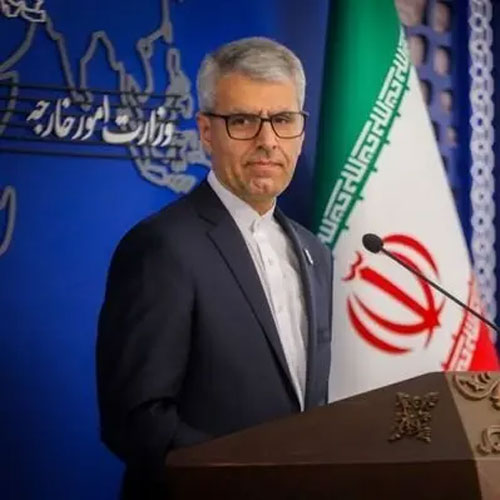
He accused the United States of failing to honour its commitments under the memorandum of understanding (MoU) signed between the two countries, claiming that Washington had effectively breached all of its obligations.
Baghaei said Iran's immediate focus remains safeguarding its national sovereignty, territorial integrity and the security of its citizens. He also accused the United States of carrying out actions that, according to Tehran, amount to war crimes.
The MoU, signed on June 18, envisaged fresh negotiations within 60 days aimed at reaching a comprehensive agreement. However, those plans have been thrown into doubt following renewed hostilities and escalating tensions between the two countries over the past fortnight.
Meanwhile, US President Donald Trump reiterated that Iran is interested in negotiating with Washington but maintained that the United States would not permit Tehran to develop nuclear weapons under any circumstances.
Speaking at the White House Correspondents' Dinner, Trump said Iranian representatives were in contact with the US and expressed a willingness to reach an agreement. However, he suggested the timing was not yet right for formal negotiations.
"They are talking to us right now. They'd love to make a deal," Trump said, while adding that he remained open to discussions when conditions permit.
The US President reaffirmed that preventing Iran from acquiring nuclear weapons remains the cornerstone of his administration's foreign policy, arguing that such a capability would pose a serious threat to the United States, Israel and the broader Middle East.
Trump also claimed that recent US military operations had inflicted extensive damage on Iran's armed forces. Without providing supporting evidence, he asserted that Iran had suffered major losses in its air force, naval assets, radar infrastructure and drone capabilities, saying the country's military strength had been significantly weakened.
Despite the exchange of indirect diplomatic messages, both sides continue to publicly maintain firm positions, leaving the future of the proposed negotiations uncertain amid ongoing regional tensions.