Daijiworld Media Network - New Delhi
New Delhi, Jul 15: A Delhi court has permitted jailed student activist Umar Khalid to resume two video meetings (e-mulakats) every week with his mother and other family members, noting that he had been using the facility for six years without breaching any prison regulations.
Additional Sessions Judge Sameer Bajpai of the Karkardooma Courts passed the order while disposing of an application filed by Khalid, who is an accused in the larger conspiracy case related to the 2020 northeast Delhi riots.
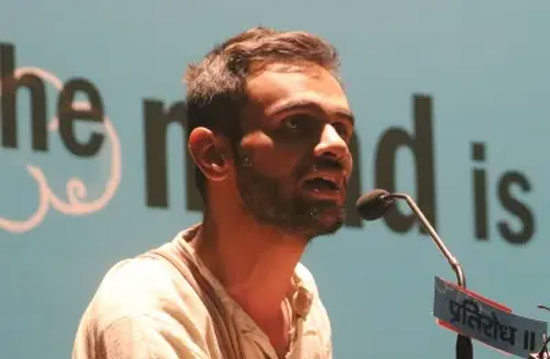
The court observed that Khalid had consistently availed two weekly e-mulakats since his incarceration and had not violated any provision of the Delhi Prison Rules during that period. It therefore directed prison authorities to restore the earlier arrangement, allowing him two video interactions each week with his family. A copy of the order has also been sent to the Superintendent of the concerned Central Jail for compliance.
Khalid had approached the court after jail authorities reduced his entitlement from two weekly e-mulakats to one beginning in May 2026. His counsel argued that the restriction had been imposed despite there being no misconduct or violation of prison rules on his part.
The jail administration opposed the plea, contending that the applicable prison rules provide for only one e-mulakat per week and that the earlier practice of allowing two had been discontinued in accordance with the regulations.
After hearing both sides, the court held that Khalid's record of complying with prison rules over the past six years justified continuation of the earlier arrangement and allowed his application.
Earlier this month, the same court rejected the regular bail applications of Khalid and co-accused Sharjeel Imam in the larger conspiracy case, ruling that it was bound by the Supreme Court's earlier decision denying them bail. The trial court said it could not reconsider the matter until the conditions laid down by the apex court were fulfilled.
The Supreme Court had previously stated that the accused could renew their bail applications only after the prosecution completed the examination of protected witnesses or after one year had elapsed from its January 5 order, whichever occurred first.
The case relates to the alleged larger conspiracy behind the communal violence that erupted in northeast Delhi in February 2020. Khalid and Imam are among several individuals charged under the Unlawful Activities (Prevention) Act (UAPA) and other criminal laws.
Earlier this year, the Supreme Court dismissed the bail pleas of Khalid and Imam, observing that the prosecution had placed sufficient prima facie material on record to attract the restrictions on bail under Section 43D(5) of the UAPA. However, the court granted bail to five other accused in the same case—Gulfisha Fatima, Meeran Haider, Shifa Ur Rehman, Mohd Saleem Khan and Shadab Ahmed.
In a subsequent development, the apex court granted six months' interim bail to Tasleem Ahmed and Khalid Saifi while referring to a larger Bench the legal question of whether prolonged incarceration and delays in trial can justify granting bail despite the stringent provisions of the UAPA.
The Supreme Court noted differing judicial opinions on the interpretation of its earlier ruling in Union of India vs K.A. Najeeb and directed that the issue be placed before the Chief Justice of India for consideration by an appropriate larger Bench.
While granting interim bail to Ahmed and Saifi, the court clarified that it was not expressing any opinion on the merits of the case but took into account the lengthy period of their incarceration and the unlikelihood of the trial concluding in the near future.