Daijiworld Media Network – New Delhi
New Delhi, Jul 9: Heavy rainfall during the monsoon season often leads to a rise in childhood illnesses and injuries, with hospitals witnessing an increase in emergency visits following spells of rain, according to a paediatric expert.
Dr Amin Kaba, Consultant in Paediatric Medicine at Narayana Health SRCC Children's Hospital, Mumbai, said weather forecasts could serve as an important tool in helping hospitals anticipate seasonal health trends and prepare for a surge in paediatric cases.
According to Dr Kaba, hospitals observe a recurring pattern every monsoon, with children developing infections and other health complications a few days after heavy rainfall.
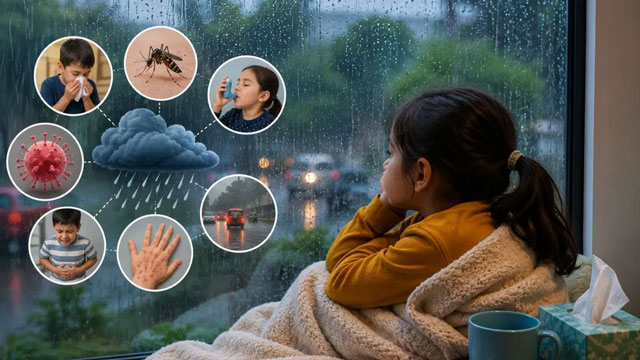
He attributed the rise in illnesses to increased exposure to damp conditions, stagnant water, contaminated surfaces and mosquitoes, while waterlogging creates favourable conditions for bacteria and disease-carrying insects to thrive.
Doctors commonly report an increase in viral fevers, respiratory infections, asthma flare-ups, allergic reactions, gastrointestinal infections, skin diseases, hepatitis A, typhoid, leptospirosis, gastroenteritis and mosquito-borne illnesses such as dengue, malaria, chikungunya and Japanese encephalitis during the rainy season.
Apart from infections, the monsoon also increases the risk of injuries among children. Slippery staircases, wet playgrounds, damp school corridors and waterlogged roads often result in falls, fractures, sprains, cuts and head injuries requiring emergency medical attention.
Dr Kaba noted that children with asthma and allergies are particularly vulnerable during the monsoon, as damp weather encourages the growth of mould and fungi, while increased humidity and airborne allergens can trigger breathing difficulties.
He said healthcare professionals are increasingly exploring the use of rainfall forecasts and environmental data to better anticipate patient loads and improve emergency preparedness during the monsoon.
Emphasising the growing link between changing weather patterns and public health, Dr Kaba urged parents to remain vigilant during the rainy season and take preventive measures to protect children from infections and accidents.