Daijiworld Media Network - Beirut
Beirut, Jun 28: Israeli forces carried out fresh airstrikes in southern Lebanon on Sunday, just two days after Lebanon and Israel signed a US-backed framework agreement intended to pave the way for ending decades of conflict. The renewed military action came amid sharp opposition from Hezbollah, which warned that the agreement could trigger internal instability in Lebanon.
According to Lebanon's state-run National News Agency, multiple Israeli strikes targeted areas in southern Lebanon on Sunday. The Israeli military also announced separately that one of its soldiers had been killed during combat operations in the region.
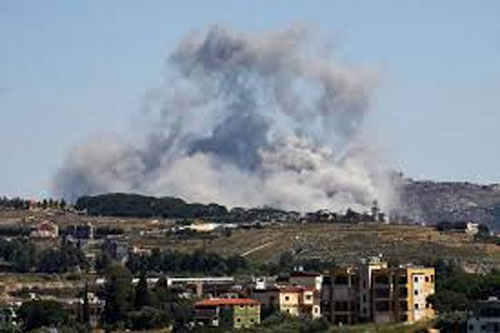
Israeli military chief Eyal Zamir later said he had approved plans for continued operations inside what Israel describes as its "security zone" in southern Lebanon, stating that military activities would continue in accordance with the ceasefire arrangements.
The latest escalation follows an Israeli strike on Saturday that killed one person in southern Lebanon, according to the Lebanese Health Ministry. The Israeli military said the operation targeted Hezbollah members allegedly operating near the security zone, which extends roughly 10 kilometres inside Lebanese territory.
The renewed violence has raised concerns over the durability of the framework agreement signed in Washington on Friday after five rounds of negotiations between Lebanon and Israel. The US-mediated accord is designed to establish a roadmap toward lasting peace between the two countries, which have officially remained in a state of war for decades.
Under the agreement, any withdrawal of Israeli forces from occupied Lebanese territory is linked to Lebanon's ability to ensure the verified disarmament of Hezbollah, the Iran-backed armed group that has maintained a significant military presence in southern Lebanon.
Lebanese President Joseph Aoun reaffirmed his government's commitment to implementing the agreement during a telephone conversation with US President Donald Trump on Saturday, saying Lebanon would fulfil its responsibilities under the framework.
Israeli Prime Minister Benjamin Netanyahu welcomed the accord, describing it as a historic agreement for Israel.
Hezbollah, however, has strongly rejected the deal. The group's Secretary-General Naim Qassem declared the agreement "null and void", calling it a surrender of Lebanon's sovereignty.
Opposition to the agreement was also visible on the streets of Beirut. Supporters of Hezbollah staged demonstrations on Friday evening, while protesters on Sunday burned signs carrying the slogan "Lebanon First" along the airport road in southern Beirut after earlier displays expressing support for Iran had reportedly been removed.
Hezbollah legislator Hassan Fadlallah condemned the agreement, describing it as an accord of humiliation that would never be implemented. He further alleged that the authorities were risking internal discord by shifting the country's focus away from confrontation with Israel towards domestic conflict.
Throughout the negotiations, Hezbollah had urged Lebanese officials to align their position with Iran's parallel discussions with the United States, while Tehran maintained that any broader regional ceasefire should also include Lebanon.
In a telephone conversation with Lebanese Parliament Speaker Nabih Berri, Iranian Parliament Speaker Mohammad Bagher Ghalibaf reiterated Iran's position, saying Tehran remained committed to ending the conflict in Lebanon, facilitating the return of displaced residents and securing Israel's withdrawal from Lebanese territory.
According to the text of the agreement released by the US State Department, Lebanon and Israel expressed their intention to permanently end the conflict, address its root causes and formally conclude the long-standing state of war between the two countries.
The agreement also states that the Lebanese Armed Forces will restore effective state authority across the country's territory following the verified disarmament of non-state armed groups.
Despite the agreement, Israeli Defence Minister Israel Katz has stated that Israeli forces will remain deployed in southern Lebanon for as long as Hezbollah continues to possess weapons, indicating that significant challenges remain before the framework can be fully implemented.