Daijiworld Media Network - Mumbai
Mumbai, Jun 7: The Maharashtra government has put on hold its proposed legislation on Devasthan Inam lands following strong opposition from temple organisations, trustees and Hindu groups across the state.
Revenue Minister Chandrashekhar Bawankule announced that the draft legislation, titled Maharashtra Devasthan Inam Abolition Draft 2026, has been withdrawn for the time being and that consultations on objections and suggestions will continue until August 15.
The draft law was placed in the public domain on May 7, with the government inviting public feedback until June 5. The proposed legislation was aimed at protecting Devasthan lands, removing encroachments and providing legal safeguards for temple properties.
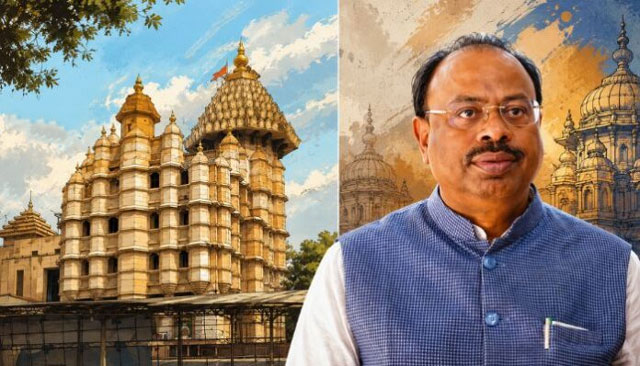
Addressing mediapersons in Nagpur, Bawankule said the draft had led to several misconceptions and that a broader consultation process was necessary to address concerns. He added that a significant portion of Devasthan lands remained unusable due to encroachments and that the government intended to make such lands encroachment-free.
The proposal faced opposition from several temple organisations, including the Maharashtra Mandir Mahasangh, Ashtavinayak Temple Committee, Vishva Hindu Parishad and temple trustees from different parts of the state.
The groups argued that certain provisions in the draft law could affect temple ownership and control over their lands by granting rights to existing occupants, cultivators, priests, managers and others associated with the properties.
Welcoming the government's decision, Maharashtra Mandir Mahasangh national organiser Sunil Ghanwat described it as a major victory for temple trustees and Hindu organisations.
He said the decision reflected the success of coordinated efforts by temple bodies and Hindu groups across the state.
Ghanwat also welcomed the government's stated intention to reclaim Devasthan lands, remove encroachments, seek legal remedies where required and ensure temples do not suffer losses arising from long-standing possession disputes.
He further demanded that representatives of temple organisations be included in the proposed 15-member committee, headed by the Additional Chief Secretary (Revenue), which will oversee the consultation process.
Temple organisations have also urged the government to ensure that funds donated by devotees are used solely for temple renovation, religious activities and the promotion of Hindu traditions, and not diverted towards secular or government welfare schemes.
Among other demands, they called for an end to political interference in temple funds, utilisation of resources from larger temples for the restoration of neglected shrines, and a monthly honorarium of Rs 10,000 to Rs 15,000 for priests, Guravs, Purohits and other temple service providers working in villages.
The government is expected to continue consultations with stakeholders before taking a final decision on the proposed legislation.