Daijiworld Media Network - New Delhi
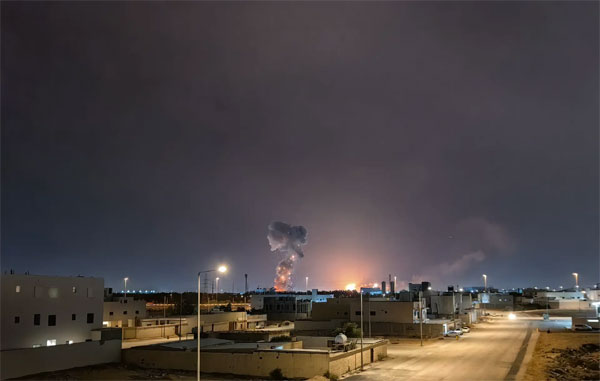
New Delhi, Apr 30: Amid rising instability across the Middle East, from Gaza to the Gulf, regional analysts and political voices are increasingly warning that the core security threat is evolving beyond traditional state rivalries, driven instead by the growing overlap of terror networks and ideological movements.
In this changing environment, India is gradually being viewed as a potential balancing force in the region. During a discussion titled “Crisis in the Middle East: Are We Entering a New Regional Order?”, Egyptian parliamentarian Mohamed M Farid told Usanas Foundation CEO Abhinav Pandya that India’s role as a constructive and neutral partner would be welcomed across West Asia.
He noted that as countries in the region reassess their strategic alignments, there is growing scope for deeper economic and security cooperation with India.
Farid stressed that modern terrorism is no longer confined to one geography, describing it as a global challenge requiring both containment and dialogue. He also highlighted the changing nature of militant and ideological organisations operating across the region, including networks such as the Muslim Brotherhood, which he said function through layered structures involving media outreach, recruitment systems, and affiliated civil society groups.
He argued that such organisations often thrive on political instability and narratives of victimhood, particularly among youth, and expand during periods of governance vacuums. Similar concerns, he said, are visible in multiple conflict zones, where populations are increasingly weary of prolonged unrest linked to armed groups.
Referring to regional examples, he pointed to frustration in Lebanon over the role of Hezbollah in repeated conflicts, and growing disillusionment in Gaza, where public sentiment against Hamas has reportedly increased among younger generations.
On Iran, Farid said that hardline elements, including the Islamic Revolutionary Guard Corps (IRGC), continue to influence regional dynamics through support for proxy groups. He emphasised that any long-term resolution would require addressing nuclear concerns, ballistic missile capabilities, maritime security, and the activity of proxy forces.
India, meanwhile, has consistently advocated for peace and stability in the region. New Delhi has supported ceasefire initiatives, called for uninterrupted energy flows, and expressed concern over disruptions to trade routes such as the Strait of Hormuz.
Maintaining balanced relations with all major stakeholders—including the United States, Israel, and Iran—India has positioned itself as a neutral diplomatic actor capable of engaging across divides without escalating tensions.
Experts believe this approach has strengthened India’s credibility in West Asia, particularly as countries seek alternative partners beyond traditional power blocs. Farid noted that India’s expanding cooperation with Arab nations, especially Egypt, could play a meaningful role in shaping future regional engagement, with significant potential for deeper economic and strategic collaboration in the evolving Middle East order.